• Fri frakt över 249 kr
  • •
  • Snabba leveranser
  • •
  • Billiga böcker
Kundservice

Du är på sajten för privatpersoner.

Företag, bibliotek eller offentlig verksamhet?

Du handlar på classic.bokus.com, där alla dina funktioner finns intakta.
Till classic.bokus.com
Bokus logotyp. Gå till startsidan.
  • Erbjudanden
  • Nyheter
  • Student
  • Topplistor
  • Barn & ungdom
  • Bokus Play
  • E-böcker
  • Pocketböcker
  • Spel & pussel

10% rabatt på allt med kod NYSTART10 →

Sidfot

Mina sidor

    Hjälp

    • Kundservice
    • Vanliga frågor och svar
    • Frakt och leverans
    • Retur vid ångerrätt
    • Reklamera vara
    • Betalning
    • Köpvillkor
    • Allmänna villkor
    • Information om webbplatsens tillgänglighet

    Om Bokus

    • Om oss
    • Pressrum
    • För studenter
    • För företag
    • För bibliotek och offentlig verksamhet
    • För leverantörer
    • Hållbarhet

    Populärt

    • Aktuella erbjudanden
    • Presentkort
    • Studentlitteratur
    • Nya böcker
    • Topplistor
    • Signerade böcker
    • Engelska böcker

    Inspiration

    • Boktips
    • BookTok
    • Populära bokserier
    • Barnbokskaraktärer
    • Populära författare
    Logotyp för Bokus
    Följ oss på Facebook (extern länk)Följ oss på Instagram (extern länk)Följ oss på YouTube (extern länk)Följ oss på TikTok (extern länk)
    bokus @ CookiesAnpassa cookiesIntegritetspolicyKöpvillkor
    Till Citymail hemsida (extern länk)Till Budbee hemsida (extern länk)Till Postnord hemsida (extern länk)Till Schenker hemsida (extern länk)Till Early Bird hemsida (extern länk)Till Walleys hemsida (extern länk)
    1. Skönlitteratur
    2. Litteraturvetenskap
    3. Litteraturvetenskap

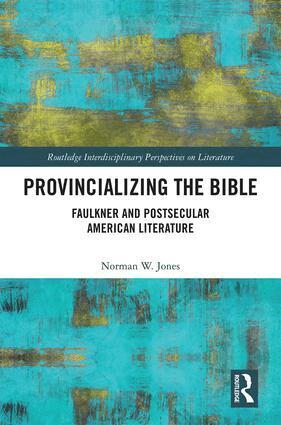
    Provincializing the Bible

    Faulkner and Postsecular American Literature

    AvNorman Jones

    Inbunden, Engelska, 2018

    Del i serien Routledge Interdisciplinary Perspectives on Literature

    2 786 kr

    Beställningsvara. Skickas inom 10-15 vardagar. Fri frakt över 249 kr.

    Fler format och utgåvor

    Häftad

    815 kr

    E-bok

    967 kr

    E-bok

    964 kr

    Beskrivning

    Why, in our supposedly secular age, does the Bible feature prominently in so many influential and innovative works of contemporary U.S. literature? More pointedly, why would a book indelibly allied with a long history of institutionalized oppressions play a supporting role—and not simply as an object of critique—in a wide variety of landmark literary representations of marginalized subjectivities? The answers to these questions go beyond mere playful re-appropriations or subversive resignifications of biblical themes, figures, and forms. This book shows how certain contemporary authors invoke the Bible in ways that undermine clear distinctions between "subversive" and "traditional"—indeed, that undermine clear distinctions between "secular" and "sacred." By tracing a key source of such complex literary invocations of the Bible back to William Faulkner’s major novels, Provincializing the Bible argues that these literary works, which might be termed postsecular, ironically provincialize the Bible as a means of reevaluating and revalorizing its significance in contemporary American culture.

    Produktinformation

    • Utgivningsdatum:2018-02-07
    • Mått:152 x 229 x 14 mm
    • Vikt:380 g
    • Format:Inbunden
    • Språk:Engelska
    • Serie:Routledge Interdisciplinary Perspectives on Literature
    • Antal sidor:176
    • Förlag:Taylor & Francis Ltd
    • ISBN:9781138502123

    Utforska kategorier

    • Litteraturvetenskap inom Skönlitteratur

    Mer om författaren

    Norman W. Jones is Associate Professor of English at The Ohio State University. Author of The Bible and Literature: The Basics as well as Gay and Lesbian Historical Fiction: Sexual Mystery and Post-Secular Narrative, he is also co-editor of The King James Bible after 400 Years: Literary, Linguistic, and Cultural Influences.

    Innehållsförteckning

    • Introduction; 1: The Bible as Ghost in Faulkner’s Novels; 2: The Literary as Biblical; 3: Eggshell Shibboleths as Intertextual Marginalization; 4: Postsecular Reading as Eucharistically Queer; Conclusion