• Fri frakt över 249 kr
  • •
  • Snabba leveranser
  • •
  • Billiga böcker
Kundservice

Du är på sajten för privatpersoner.

Företag, bibliotek eller offentlig verksamhet?

Du handlar på classic.bokus.com, där alla dina funktioner finns intakta.
Till classic.bokus.com
Bokus logotyp. Gå till startsidan.
  • Erbjudanden
  • Nyheter
  • Student
  • Topplistor
  • Barn & ungdom
  • Bokus Play
  • E-böcker
  • Pocketböcker
  • Spel & pussel

10% rabatt på allt med kod: NYSTART10 →

Sidfot

Mina sidor

    Hjälp

    • Kundservice
    • Vanliga frågor och svar
    • Frakt och leverans
    • Retur vid ångerrätt
    • Reklamera vara
    • Betalning
    • Köpvillkor
    • Allmänna villkor
    • Information om webbplatsens tillgänglighet

    Om Bokus

    • Om oss
    • Pressrum
    • För studenter
    • För företag
    • För bibliotek och offentlig verksamhet
    • För leverantörer
    • Hållbarhet

    Populärt

    • Aktuella erbjudanden
    • Presentkort
    • Studentlitteratur
    • Nya böcker
    • Topplistor
    • Signerade böcker
    • Engelska böcker

    Inspiration

    • Boktips
    • BookTok
    • Populära bokserier
    • Barnbokskaraktärer
    • Populära författare
    Logotyp för Bokus
    Följ oss på Facebook (extern länk)Följ oss på Instagram (extern länk)Följ oss på YouTube (extern länk)Följ oss på TikTok (extern länk)
    bokus @ CookiesAnpassa cookiesIntegritetspolicyKöpvillkor
    Till Citymail hemsida (extern länk)Till Budbee hemsida (extern länk)Till Postnord hemsida (extern länk)Till Schenker hemsida (extern länk)Till Early Bird hemsida (extern länk)Till Walleys hemsida (extern länk)
    1. Historia och arkeologi
    2. Historia
    3. Forntidens historia

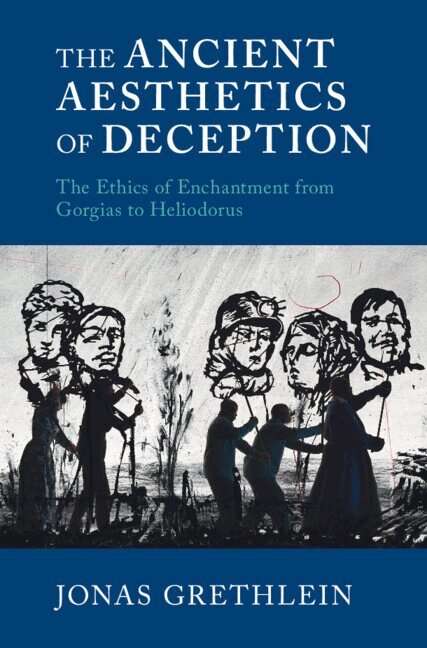
    The Ancient Aesthetics of Deception

    The Ethics of Enchantment from Gorgias to Heliodorus

    AvJonas Grethlein

    Inbunden, Engelska, 2021

    509 kr

    Beställningsvara. Skickas inom 10-15 vardagar. Fri frakt över 249 kr.

    Beskrivning

    The concept of mimesis has dominated reflection on the nature and role, in Greek literature, of representation. Jonas Grethlein, in his ambitious new book, takes this reflection a step further. He argues that, beyond mimesis, there was an important but unacknowledged strand of reflection focused instead on the nuanced idea of apatē (often translated into English as 'deceit'), oscillating between notions of 'deception' and 'aesthetic illusion'. Many authors from Gorgias and Plato to Philo, Plutarch and Clement of Alexandria used this key concept to entwine aesthetics with ethics. In creatively exploring the various reconfigurations of apatē, and placing these in their socio-historical contexts, the book offers a bold new history of ancient aesthetics. It also explores the present significance of the aesthetics of deception, unlocking the potential of ancient reflection for current debates on the ethical dimension of representation. It will appeal to scholars in classics and literary theory alike.

    Produktinformation

    • Utgivningsdatum:2021-09-16
    • Mått:158 x 235 x 23 mm
    • Vikt:610 g
    • Format:Inbunden
    • Språk:Engelska
    • Antal sidor:332
    • Förlag:Cambridge University Press
    • ISBN:9781316518816

    Utforska kategorier

    • Forntidens historia inom Historia och arkeologi

    Mer om författaren

    Jonas Grethlein is Professor of Greek in the Seminar für Klassische Philologie at the Ruprecht-Karls-Universität Heidelberg. His publications include The Greeks and their Past: Poetry, Oratory and History in the Fifth Century BCE (Cambridge, 2010), Experience and Teleology in Ancient Historiography: Futures Past from Herodotus to Augustine (Cambridge, 2013) and Aesthetic Experience and Classical Antiquity: The Significance of Form in Narratives and Pictures (Cambridge, 2017).

    Innehållsförteckning

    • 1. Gorgias and the justice of tragic apatē; 2. The circulation and significance of apatē in the Classical era; 3. The dramatic entanglement of aesthetic illusion with deceit in Sophocles' Electra; 4. Immersion and corruption in Plato's Republic; 5. The void of Hellenistic criticism; 6. The appeal and challenge of apatē in Imperial criticism: Plutarch's De audiendis poetis; 7. Lucian and the spell of philosophy; 8. How to read ekphrasis: Tabula Cebetis; 9. Christian polemics against idolatry: Clement of Alexandria's Protrepticus; 10. The aesthetics of deception reconfigured in Heliodorus' Ethiopica; 11. From deep-fake to psychotherapy: The aesthetics of deception today.