• Fri frakt över 249 kr
  • •
  • Snabba leveranser
  • •
  • Billiga böcker
Kundservice

Du är på sajten för privatpersoner.

Företag, bibliotek eller offentlig verksamhet?

Du handlar på classic.bokus.com, där alla dina funktioner finns intakta.
Till classic.bokus.com
Bokus logotyp. Gå till startsidan.
  • Erbjudanden
  • Nyheter
  • Student
  • Topplistor
  • Barn & ungdom
  • Bokus Play
  • E-böcker
  • Pocketböcker
  • Spel & pussel

10% rabatt på allt med kod NYSTART10 →

Sidfot

Mina sidor

    Hjälp

    • Kundservice
    • Vanliga frågor och svar
    • Frakt och leverans
    • Retur vid ångerrätt
    • Reklamera vara
    • Betalning
    • Köpvillkor
    • Allmänna villkor
    • Information om webbplatsens tillgänglighet

    Om Bokus

    • Om oss
    • Pressrum
    • För studenter
    • För företag
    • För bibliotek och offentlig verksamhet
    • För leverantörer
    • Hållbarhet

    Populärt

    • Aktuella erbjudanden
    • Presentkort
    • Studentlitteratur
    • Nya böcker
    • Topplistor
    • Signerade böcker
    • Engelska böcker

    Inspiration

    • Boktips
    • BookTok
    • Populära bokserier
    • Barnbokskaraktärer
    • Populära författare
    Logotyp för Bokus
    Följ oss på Facebook (extern länk)Följ oss på Instagram (extern länk)Följ oss på YouTube (extern länk)Följ oss på TikTok (extern länk)
    bokus @ CookiesAnpassa cookiesIntegritetspolicyKöpvillkor
    Till Citymail hemsida (extern länk)Till Budbee hemsida (extern länk)Till Postnord hemsida (extern länk)Till Schenker hemsida (extern länk)Till Early Bird hemsida (extern länk)Till Walleys hemsida (extern länk)
    1. Språk och ordböcker
    2. Språk: referensverk och allmänt
    3. Språk: historia och allmänt

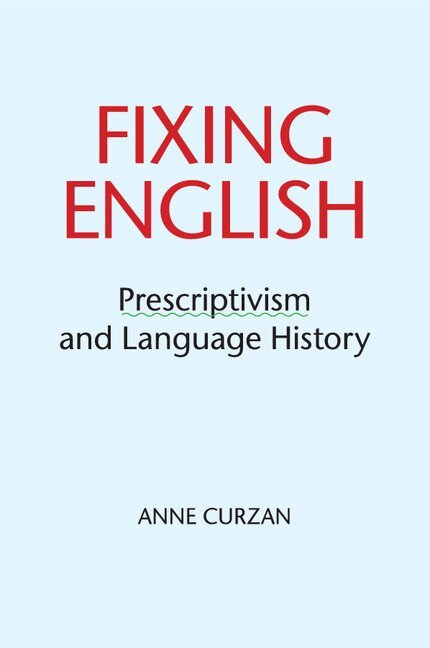
    Fixing English

    Prescriptivism and Language History

    AvAnne Curzan

    Häftad, Engelska, 2016

    477 kr

    Beställningsvara. Skickas inom 10-15 vardagar. Fri frakt över 249 kr.

    Fler format och utgåvor

    Inbunden

    1 444 kr

    E-bok

    553 kr

    E-bok

    554 kr

    Beskrivning

    Over the past 300 years, attempts have been made to prescribe how we should and should not use the English language. The efforts have been institutionalized in places such as usage guides, dictionaries, and school curricula. Such authorities have aspired to 'fix' the language, sometimes by keeping English exactly where it is, but also by trying to improve the current state of the language. Anne Curzan demonstrates the important role prescriptivism plays in the history of the English language, as a sociolinguistic factor in language change and as a vital meta-discourse about language. Starting with a pioneering new definition of prescriptivism as a linguistic phenomenon, she highlights the significant role played by Microsoft's grammar checker, debates about 'real words', non-sexist language reform, and efforts to reappropriate stigmatized terms. Essential reading for anyone interested in the regulation of language, the book is a fascinating re-examination of how we tell language history.

    Produktinformation

    • Utgivningsdatum:2016-04-28
    • Mått:153 x 229 x 11 mm
    • Vikt:310 g
    • Format:Häftad
    • Språk:Engelska
    • Antal sidor:208
    • Förlag:Cambridge University Press
    • ISBN:9781316604885

    Utforska kategorier

    • Språk: historia och allmänt inom Språk och ordböcker

    Mer om författaren

    Anne Curzan is Professor of English in the Department of English Language and Literature at the University of Michigan.

    Recensioner i media

    'Anne Curzan takes prescriptivism seriously; this informative, engaging and readable book deserves serious attention from anyone with an interest in the history - or the future - of English.' Deborah Cameron, University of Oxford

    Innehållsförteckning

    • Introduction: does prescriptivism fail?; 1. Prescriptivism's umbrella: standards, style, restoration, and political intervention; 2. Prescriptivism's lessons: scope and 'The history of English'; 3. Checking grammar and grammar checkers; 4. Dictionaries and the idea of 'real words'; 5. Non-sexist language reform and its effects; 6. Reappropriation and challenges to institutionalized prescriptivism; 7. Finding shared ground: public conversations about prescriptivism.