• Fri frakt över 249 kr
  • •
  • Snabba leveranser
  • •
  • Billiga böcker
Kundservice

Du är på sajten för privatpersoner.

Företag, bibliotek eller offentlig verksamhet?

Du handlar på classic.bokus.com, där alla dina funktioner finns intakta.
Till classic.bokus.com
Bokus logotyp. Gå till startsidan.
  • Erbjudanden
  • Nyheter
  • Student
  • Topplistor
  • Barn & ungdom
  • Bokus Play
  • E-böcker
  • Pocketböcker
  • Spel & pussel

10% studentrabatt med kod TERM26

Sidfot

Mina sidor

    Hjälp

    • Kundservice
    • Vanliga frågor och svar
    • Frakt och leverans
    • Retur vid ångerrätt
    • Reklamera vara
    • Betalning
    • Köpvillkor
    • Allmänna villkor
    • Information om webbplatsens tillgänglighet

    Om Bokus

    • Om oss
    • Pressrum
    • För studenter
    • För företag
    • För bibliotek och offentlig verksamhet
    • För leverantörer
    • Hållbarhet

    Populärt

    • Aktuella erbjudanden
    • Presentkort
    • Studentlitteratur
    • Nya böcker
    • Topplistor
    • Signerade böcker
    • Engelska böcker

    Inspiration

    • Boktips
    • BookTok
    • Populära bokserier
    • Barnbokskaraktärer
    • Populära författare
    Logotyp för Bokus
    Följ oss på Facebook (extern länk)Följ oss på Instagram (extern länk)Följ oss på YouTube (extern länk)Följ oss på TikTok (extern länk)
    bokus @ CookiesAnpassa cookiesIntegritetspolicyKöpvillkor
    Till Citymail hemsida (extern länk)Till Budbee hemsida (extern länk)Till Postnord hemsida (extern länk)Till Schenker hemsida (extern länk)Till Early Bird hemsida (extern länk)Till Walleys hemsida (extern länk)
    1. Juridik
    2. Rättsvetenskap
    3. Juridik: metod och teori
    • -10% student

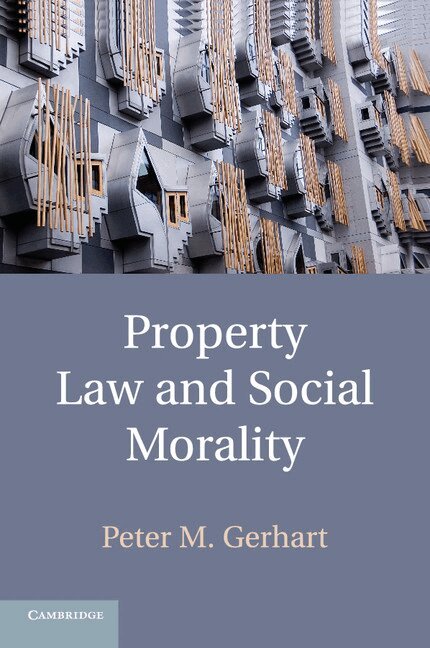
    Property Law and Social Morality

    AvPeter M. Gerhart

    Häftad, Engelska, 2016

    426 kr

    Beställningsvara. Skickas inom 10-15 vardagar. Fri frakt över 249 kr.

    Fler format och utgåvor

    Inbunden

    1 240 kr

    Beskrivning

    Property Law and Social Morality develops a theory of property that highlights the social construction of obligations that individuals owe each other. By viewing property law through the lens of obligations rather than through the lens of rights, the author affirms the existence of important property rights (when no obligation to another exists) and defines the scope of those rights (when an obligation to another does exist). By describing the scope of the decisions that individuals are permitted to make and the requirements of other-regarding decisions, the author develops a single theory to explain the dynamics of private and common property, including exclusion, nuisance, shared decision making, and decision making over time. The development of social recognition norms adds to our understanding of property evolution, and the principle of equal freedom underlying social recognition that limit government interference with property rights.

    Produktinformation

    • Utgivningsdatum:2016-09-01
    • Mått:152 x 229 x 18 mm
    • Vikt:468 g
    • Format:Häftad
    • Språk:Engelska
    • Antal sidor:348
    • Förlag:Cambridge University Press
    • ISBN:9781316621134

    Ingår i kampanjer

    -10% student

    Utforska kategorier

    • Juridik: metod och teori inom Juridik

    Mer om författaren

    Professor Gerhart has been a dean; a legal scholar in antitrust, regulated industries, international trade, international transactions and international intellectual property law, and torts and property; a scholar of globalization; and a practising attorney. A graduate of Columbia Law School, he has taught at Ohio State University and Case Western Reserve Law School and, as a visiting professor, at the law schools of Georgetown and the University of Texas, the Central European University in Budapest, and the Weatherhead School of Business at Case Western Reserve. He is the author of Tort Law and Social Morality (Cambridge, 2010) and has published articles in a wide variety of fields.

    Innehållsförteckning

    • Part I. A Unified Theory: 1. Property's values; 2. An overview of the theory; 3. Owner as decision maker; 4. Ownership and social recognition; 5. Other-regarding decision making; 6. Assigning burdens and benefits; Part II. Applications: 7. Exclusion; 8. Nuisance: spatial coordination; 9. Concurrent decision makers; 10. Temporal coordination; Part III. Legislative Regulation and Social Morality: 11. A theory of legislative regulation; 12. The takings power; 13. Legislative regulation and due process; 14. The promise of unity.