• Fri frakt över 249 kr
  • •
  • Snabba leveranser
  • •
  • Billiga böcker
Kundservice

Du är på sajten för privatpersoner.

Företag, bibliotek eller offentlig verksamhet?

Du handlar på classic.bokus.com, där alla dina funktioner finns intakta.
Till classic.bokus.com
Bokus logotyp. Gå till startsidan.
  • Erbjudanden
  • Nyheter
  • Student
  • Topplistor
  • Barn & ungdom
  • Bokus Play
  • E-böcker
  • Pocketböcker
  • Spel & pussel

10% studentrabatt med kod TERM26

Sidfot

Mina sidor

    Hjälp

    • Kundservice
    • Vanliga frågor och svar
    • Frakt och leverans
    • Retur vid ångerrätt
    • Reklamera vara
    • Betalning
    • Köpvillkor
    • Allmänna villkor
    • Information om webbplatsens tillgänglighet

    Om Bokus

    • Om oss
    • Pressrum
    • För studenter
    • För företag
    • För bibliotek och offentlig verksamhet
    • För leverantörer
    • Hållbarhet

    Populärt

    • Aktuella erbjudanden
    • Presentkort
    • Studentlitteratur
    • Nya böcker
    • Topplistor
    • Signerade böcker
    • Engelska böcker

    Inspiration

    • Boktips
    • BookTok
    • Populära bokserier
    • Barnbokskaraktärer
    • Populära författare
    Logotyp för Bokus
    Följ oss på Facebook (extern länk)Följ oss på Instagram (extern länk)Följ oss på YouTube (extern länk)Följ oss på TikTok (extern länk)
    bokus @ CookiesAnpassa cookiesIntegritetspolicyKöpvillkor
    Till Citymail hemsida (extern länk)Till Budbee hemsida (extern länk)Till Postnord hemsida (extern länk)Till Schenker hemsida (extern länk)Till Early Bird hemsida (extern länk)Till Walleys hemsida (extern länk)
    1. Skönlitteratur
    2. Litteraturvetenskap
    3. Litteraturvetenskap

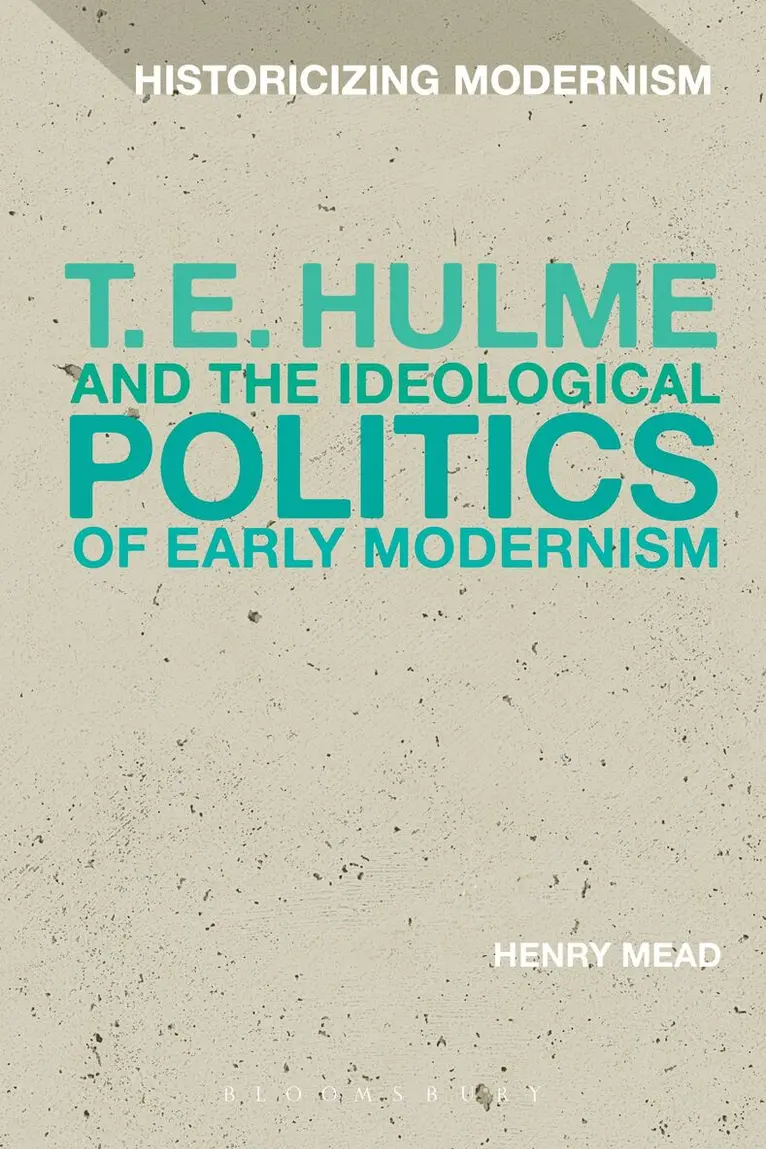
    T. E. Hulme and the Ideological Politics of Early Modernism

    AvHenry Mead,Matthew Feldman

    Häftad, Engelska, 2017

    Del i serien Historicizing Modernism

    631 kr

    Beställningsvara. Skickas inom 10-15 vardagar. Fri frakt över 249 kr.

    Fler format och utgåvor

    E-bok

    677 kr

    Inbunden

    2 084 kr

    E-bok

    677 kr

    Beskrivning

    Drawing on a range of archival materials, this book explores the writing career of the poet, philosopher, art critic, and political commentator T.E. Hulme, a key figure in British modernism. T.E. Hulme and the Ideological Politics of Early Modernism reveals for the first time the full extent of Hulme's relationship with New Age, a leading radical journal before the Great War, focussing particularly on his exchange of ideas with its editor, A.R. Orage.Through a ground-breaking account of Hulme's reading in continental literature, and his combative exchanges amongst the bohemian networks of Edwardian London, Mead shows how 'the strange death of Liberal England’ coincided with Hulme’s emergence as what T.S. Eliot called ‘the forerunner of… the twentieth century mind'. Tracing his debts to French Symbolism, evolutionary psychology, Neo-Royalism, and philosophical pragmatism, the book shows how Hulme combined anarchist and conservative impulses in his journey towards a ‘religious attitude’. The result is a nuanced account of Hulme's ideological politics, complicating the received view of his work as proto-fascist.

    Produktinformation

    • Utgivningsdatum:2017-03-23
    • Mått:150 x 232 x 18 mm
    • Vikt:440 g
    • Format:Häftad
    • Språk:Engelska
    • Serie:Historicizing Modernism
    • Antal sidor:288
    • Förlag:Bloomsbury Publishing PLC
    • ISBN:9781350028432

    Utforska kategorier

    • Litteraturvetenskap inom Skönlitteratur

    Mer om författaren

    Henry Mead is a Research Associate at Teesside University, UK, and Bergen University, Norway. He is the co-editor (with Matthew Feldman and Erik Tonning) of Broadcasting in the Modernist Era (Bloomsbury, 2013).

    Recensioner i media

    Meticulously researched ... This is the fullest account yet of Hulme's intellectual engagement with his multiple contexts.

    Innehållsförteckning

    • Introduction 1 The Discord Club 2 Orage and Hulme – From Vitalism to a Conservative Ethic 3 The Politics of Classicism 4 Varieties of Abstraction 5 ‘War Notes’, Sorel and Maeztu Conclusion