• Fri frakt över 249 kr
  • •
  • Snabba leveranser
  • •
  • Billiga böcker
Kundservice

Du är på sajten för privatpersoner.

Företag, bibliotek eller offentlig verksamhet?

Du handlar på classic.bokus.com, där alla dina funktioner finns intakta.
Till classic.bokus.com
Bokus logotyp. Gå till startsidan.
  • Erbjudanden
  • Nyheter
  • Student
  • Topplistor
  • Barn & ungdom
  • Bokus Play
  • E-böcker
  • Pocketböcker
  • Spel & pussel

10% rabatt på allt med kod: NYSTART10 →

Sidfot

Mina sidor

    Hjälp

    • Kundservice
    • Vanliga frågor och svar
    • Frakt och leverans
    • Retur vid ångerrätt
    • Reklamera vara
    • Betalning
    • Köpvillkor
    • Allmänna villkor
    • Information om webbplatsens tillgänglighet

    Om Bokus

    • Om oss
    • Pressrum
    • För studenter
    • För företag
    • För bibliotek och offentlig verksamhet
    • För leverantörer
    • Hållbarhet

    Populärt

    • Aktuella erbjudanden
    • Presentkort
    • Studentlitteratur
    • Nya böcker
    • Topplistor
    • Signerade böcker
    • Engelska böcker

    Inspiration

    • Boktips
    • BookTok
    • Populära bokserier
    • Barnbokskaraktärer
    • Populära författare
    Logotyp för Bokus
    Följ oss på Facebook (extern länk)Följ oss på Instagram (extern länk)Följ oss på YouTube (extern länk)Följ oss på TikTok (extern länk)
    bokus @ CookiesAnpassa cookiesIntegritetspolicyKöpvillkor
    Till Citymail hemsida (extern länk)Till Budbee hemsida (extern länk)Till Postnord hemsida (extern länk)Till Schenker hemsida (extern länk)Till Early Bird hemsida (extern länk)Till Walleys hemsida (extern länk)
    1. Naturvetenskap och teknik
    2. Teknik och industri
    3. Byggnadsteknik

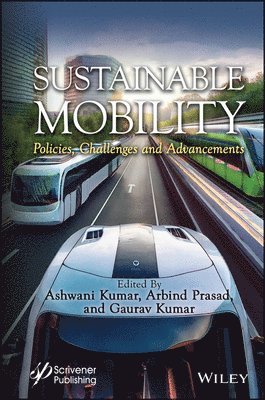
    Sustainable Mobility

    Policies, Challenges and Advancements

    AvAshwani Kumar,Arbind Prasad

    Inbunden, Engelska, 2024

    2 073 kr

    Beställningsvara. Skickas inom 5-8 vardagar. Fri frakt över 249 kr.

    Beskrivning

    This book is essential for anyone interested in understanding and implementing sustainable transportation practices, as it provides comprehensive insights into the challenges, advancements, and policies related to sustainable mobility. Sustainable transportation refers to any means of transportation that is “green” and has a low impact on the environment. The goal of sustainable transportation is to balance our current and future needs. As per the United Nations Brundtland Commission (WCED, 1987), sustainable mobility can be defined as “mobility that satisfies the needs of present generations without compromising future generations”, but in the modern era, we are compromising the needs of the next generation in terms of pollution, depletion of fossil fuels, global warming, poor air quality, and hazardous gases. The three main pillars of sustainability, economics, environment, and social issues, are crushed by modern development, so there is a need to shift from traditional means of transportation to sustainable transportation. Under the vision of sustainable mobility, better infrastructure and services will be provided to support the movement of goods and people. This outcome will be achieved only if four goals are pursued simultaneously: developing the right policy, building awareness, developing intelligent transportation, and creating green vehicles. Sustainable Mobility: Policies, Challenges and Advancements will discuss transitions from conventional to sustainable mobility, infrastructure development challenges in this transition period, new vehicle policies, and the latest autonomous vehicles for intelligent transportation. The main highlights of the book are energy efficient technologies for transportation, accessibility and safety of the transport system, environmental footprint, health impacts, economic development, and social growth. Sustainable mobility is essential to economic and social development. The environmental impacts of transport can be reduced by reducing the weight of vehicles, creating sustainable styles of driving, reducing the friction of tires, encouraging electric and hybrid vehicles, improving the walking and cycling environment in cities, and enhancing the role of public transport, especially electric vehicles. Going green and sustainable is not only beneficial for the company, but it also maximizes the benefits of an environmental focus in the long term.

    Produktinformation

    • Utgivningsdatum:2024-11-29
    • Vikt:699 g
    • Format:Inbunden
    • Språk:Engelska
    • Antal sidor:336
    • Förlag:John Wiley & Sons Inc
    • ISBN:9781394166145

    Utforska kategorier

    • Byggnadsteknik inom Naturvetenskap och teknik

    Mer om författaren

    Ashwani Kumar, PhD, is a senior lecturer teaching Mechanical Engineering in the Technical Education Department, Uttar Pradesh, India. He has 12 years of research and academic experience in mechanical and materials engineering. Additionally, he has published 90 research articles in various journals, book chapters, and conferences and has authored, co-authored, or edited 16 books. He has participated as an invited speaker and served on the advisory and review boards for various international conferences, webinars, and workshops. Arbind Prasad, PhD, is an assistant professor and department head in the Department of Science and Technology, Katihar Engineering College, Katihar, Bihar, India. He has filed four patents, as well as written ten international journal papers and edited four books, 11 book chapters, and 15 reputed conference papers. He has been invited to deliver talks at various organizations of repute and coordinated various faculty development programs, short term courses, symposiums, national seminars, workshops, and completed research projects sponsored by various government organizations in India. Gaurav Kumar, PhD, is an assistant professor and department head in the Department of Mechatronics Engineering, Indian Institute of Information Technology, Bhagalpur, India. His current research interests include electric vehicles, rotor dynamics, and vibration analysis of electrical machines, particularly active magnetic bearings, induction machines, and switched reluctance motors. He has filed three Indian patents and published eight peer-reviewed journals and nine conference articles.

    Innehållsförteckning

    • Aim and Scope xvPreface xviiAcknowledgement xxi1 Sustainable Mobility: Clean Energy Integration with Electric Vehicle Technology 1Pranjal Barman, Lachit Dutta, Sushanta Bordoloi, Manash Pratim Sarma, Anamika Kalita, Swapna Bharali and Brian Azzopardi1.1 Introduction 21.2 Transportation and Carbon Emission 31.3 Transportation Electrification 41.4 Electric Vehicle Integration with Renewable Sources 91.5 Solar Energy 121.6 Wind Energy 131.7 Integration with the Grid 151.8 State-of-the-Art Methods 171.9 Opportunities and Challenges 221.10 Conclusion 22Acknowledgement 23References 232 Sustainable Mobility Policies in Developed and Developing Countries 29Reetu Gour and Nikki Baliyan2.1 Introduction 292.2 Pollution by Air and Effect of Greenhouse Gases 312.3 Promotion of Cycling and Walking 322.4 Sustainable Trade and Global Governance 342.4.1 Socioeconomic Impacts 352.4.2 Technology Aspects 362.4.3 Role of Smart Connectivity in Sustainable Mobility 362.5 Discussion 372.6 Conclusion 38References 393 Transitions from IC Engine to EV and HEV: Current Status of EV in India 45Puneet Kumar and Apurva Goyal3.1 Introduction 463.2 Changing Electric Vehicles Trend 473.3 Case Study: Maruti Suzuki and EV Market 493.4 Numerous Downsides to Electric Cars 503.4.1 Ultra Expensive 503.4.2 Transport Not a Considerable Contributor to Emissions 513.4.3 Batteries as the Major Emitter 523.4.4 Need of Societal Change 523.5 Zero Emissions is a Myth 523.6 Prolonged Charging Time 523.7 Carbon Footprints 533.8 Degrading Battery Performance from Fast Charging 533.9 Underdeveloped Charging Infrastructure 543.10 Impractical for Inner-City Inhabitants and Lack of Resale Value 543.11 Reasons Behind Slow Adoption of Electric Vehicles in India 563.12 Conclusion 57References 574 Alternative Source Systems of In-Vehicle Electricity Production 61Dinesh Kumar Patel, Sachin Kumar, Vipin Kumar Sharma, Hari Om Sharma and Arbind Prasad4.1 Introduction 624.2 Electric Vehicles (EVs) 634.3 Passenger Electric Vehicle 644.3.1 Plug-In Battery Electric Vehicle (PBEV) 654.3.2 Plug-In Hybrid Electric Vehicle (PHEV) 654.3.3 Hybrid Electric Vehicles (HEV) 654.3.4 Commercial Electric Vehicle 664.3.4.1 Plug-In Battery Electric Vehicles 664.3.4.2 Plug-In Hybrid Electric Vehicles 674.3.4.3 Hydraulic Hybrid Electric Vehicle 684.4 Integration of Different Renewable Energy Resources with Power System of In-Vehicle Electricity Production 684.4.1 Fuel Cell Electric Vehicles (FCEVs) 684.4.2 Electric Vehicle Integration with Wind Energy 684.4.3 Electric Vehicle Integration with Solar Energy 694.4.4 Distribution Grid Management with Electrical Network 704.5 Factors Affecting Adoption of Alternative Fuel Vehicles 714.6 Conclusion on Market Penetration of Alternative Fuel Vehicles 71References 725 Autonomous Navigation of Unmanned Aerial Vehicle Using Reinforcement Learning 79Payal Bansal, Jyotsna Joshi, Surender Hans and Ashwani Kumar5.1 Introduction 805.2 Literature Review 805.3 Technology Used 815.3.1 System Architecture Overview 815.3.2 Reinforcement Learning and Control 825.3.3 Elements of Reinforcement Learning 835.4 Markov Decision Process (MDP) 835.4.1 Value Function and Action-Value Function 845.4.2 Q-Learning Algorithm 855.4.3 SARSA Algorithm 885.4.4 Robot Operating System (ROS) 895.5 Implementation: Flow of the Project Flow 905.6 Controller Design of Unmanned Aerial Vehicle (UAV) 925.6.1 Controller Design 935.6.2 Training Procedure of UAV 945.7 Results and Discussion 955.7.1 Experimental Results 965.8 Conclusion and Future Scope 98References 996 IoT-Based Automatic Vehicle Accident & Rash Driving Alert System 105Payal Bansal6.1 Introduction 1066.2 Problem and Necessity 1076.3 Need for the System 1086.3.1 IoT Architecture 1086.3.2 Sonar Sensor 1116.3.3 Data Processing and Analysis 1136.4 User Interface and Reporting 1156.4.1 Results and Impact 1166.4.2 Challenges and Limitations 1176.4.3 Future Enhancements 1196.4.4 Architectural Design of the Work 1206.6 Implementation: Tools for Controlling & Processing 1236.7 Hardware Setup 1246.7.1 Result 1266.7.2 Conclusion 1286.8 Applications 128Bibliography 1297 Mobile Edge Communication, Computing and Caching (MEC3) in Vehicle Communication 131Payal Bansal7.1 Introduction to MEC3 in Vehicle Communication 1327.2 What is Mobile EDGE? 1327.2.1 Advantages of Mobile EDGE Computing 1337.3 Mobile Edge Communication (MEC) 1337.3.1 How We Can Use MEC 1347.3.2 Opportunities in Mobile Edge Computing 1357.3.3 Challenges of Mobile Edge Computing 1367.3.4 Mobile Edge Computing Uses 1367.3.5 Multi-Access vs. Mobile Edge Computing 1377.3.6 Mobile Edge Computing Importance 1387.4 Mobile Edge Caching 1397.4.1 The Architecture of Mobile Edge Caching 1397.5 Technology Description 1417.5.1 Advantages and Disadvantages of MEC 3 1437.6 Applications of MEC 3 1447.7 Conclusion 145Bibliography 1458 IoT-Based Automatic Vehicle Tracking and Accident Alert System 149Priyanshu Gupta, Parth Tripathi, Pallavie Tyagi and Sanjay Kumar Singh8.1 Introduction 1508.2 Literature Review 1518.3 Methodology 1528.4 Programming Code 1548.5 Results and Discussion 1568.6 Conclusion and Future Scope 157Bibliography 1579 Interfacing of GPS and GSM with the Help of NodeMCU for Vehicle Monitoring and Tracking 159Sandesh Singh, Ajay Suri, Vaibhav Patel, Ujjwal Shukla and Harshita Sisodia9.1 Introduction 1609.2 Problem Statement 1619.3 Literature Review 1629.4 Monitoring and Tracking of Vehicles 1639.5 Result and Discussion 1689.6 Conclusion 168References 17110 A Comprehensive Analysis of Cell Balancing in BMS for Electric Vehicle 173Rahul Sarker, Subir Datta, Ksh. Robert Singh and Apurba Kr. Das10.1 Introduction 17410.2 Cell Balancing Methods 17510.2.1 Passive Cell Balancing 17510.2.1.1 Proposed Block Diagram of Passive Cell Balancing 17610.2.2 Active Cell Balancing 17810.3 Proposed Topology 18110.3.1 Working Modes for Two Cells 18210.3.2 Algorithm for Two Cells Balancing 18310.3.2.1 Block Diagram of Proposed Active Cell Balancing for Two Cell 18410.3.3 SOC-Voltage-Based Inductive Buck Boost Active Cell Balancing 18510.4 Conclusion 190References 19011 Analyzing and Testing of Fuel Cell Hybrid Electric Vehicles 193Shrey Agrawal, Raghav Gupta and Manoj Sindhwani11.1 Introduction 19411.2 Battery Management System 19511.2.1 Classification 19611.2.2 Challenges of Fuel Cell Hybrid Electric Vehicles 19911.3 System Setup 19911.3.1 Block Diagram 19911.3.2 Components 19911.3.3 System Methodology 20111.4 Simulations 20211.4.1 Efficiency and Continuous Torque Capability 20211.4.2 National Renewable Energy Laboratory (NREL) 20211.4.3 Output Graphs 20311.5 Conclusion 205References 20612 Cyberattacks, Threats and Challenges of Cybersecurity: An Outline 207Tanishq Soni, Deepali Gupta, Ramneet Kaur, Avinash Sharma and Gifty Gupta12.1 Introduction 20812.2 Background Work 20912.3 Security Properties and CIA Triad 21212.3.1 Confidentiality 21212.3.2 Integrity 21212.3.3 Availability 21312.4 Types of Cyber Threats 21312.4.1 Cybercrime 21312.4.2 Cyber Terrorism 21312.4.3 Cyber Warfare 21412.5 Types of Cyberattacks 21412.5.1 Denial of Service 21412.5.2 Trojan Horse 21412.5.3 Malware 21512.5.4 SQL Injection Attack 21512.5.5 Man-in-the-Middle 21612.5.6 Reconnaissance Attack 21612.6 Challenges in Cybersecurity 21612.6.1 Cybersecurity Challenges in Education 21612.6.2 Cybersecurity Challenges in Smart Grid 21612.6.3 Cybersecurity Challenges in IoT and Cloud Computing 21712.6.4 Cybersecurity Challenges in Connected Home Ecosystem 21712.7 Bibliometric Analysis and Discussion 21712.8 Conclusion 220References 22013 Opportunities and Challenges of Data-Driven Cybersecurity for Smart Cities: Blockchain-Driven Approach 223Tanishq Soni, Ramneet Kaur, Deepali Gupta, Avinash Sharma and Gifty Gupta13.1 Introduction 22413.2 Background Work 22713.3 Attacks on the Layers of IoT-Enabled Smart City 22913.4 Issues and Challenges in Smart Cities 23113.5 Blockchain and its Types 23213.6 Smart City Issues with Blockchain 23313.7 Conclusion 234References 23514 On Renewable Energy Source Selection Problem Using T-Spherical Fuzzy Soft Dombi Aggregation Operators 237Mohit Pal, Himanshu Dhumras, Gaurav Garg and Varun Shukla14.1 Introduction 23814.2 Preliminaries 24014.3 T-Spherical Fuzzy Soft Dombi Aggregation Operators 24114.4 Application of T-Spherical Fuzzy Soft Dombi Aggregation Operators in Renewable Energy Source Selection 24614.5 Conclusion and Scope for Future Work 251References 25115 Detection of Weather with Hypothesis Testing Performed Through VGG19 Model Utilizing Adam Optimizer 255Kanwarpartap Singh Gill, Avinash Sharma, Vatsala Anand and Rupesh Gupta15.1 Introduction 25615.2 Literature 25815.3 Input Dataset 26115.4 Data Validation 26215.5 Weather Classification Using VGG19 Model 26315.6 Results 26415.6.1 Weather Classification Using VGG19 Model on Adam Optimizer 26415.6.2 Classification Output of Dataset Parameters After Model Optimization 26515.6.3 Confusion Matrix Comparison of Dataset Parameters 26615.7 Conclusion 267References 26816 Enhanced Ride-Through Capability of a Hybrid Microgrid Under Symmetric and Asymmetric Faults 271Asis Kumar Mallick, Ullash Kumar Rout, Ajit Kumar Barisal and P. K. Satpathy16.1 Introduction 27216.2 Design of the Hybrid Microgrid 27216.2.1 AC Bus Faults - LG, LL, LLG, LLLG, LLL 27316.2.2 dc Bus Faults: Pole to Ground, Pole to Ground and Pole to Pole Fault 27316.3 HMG Inverter Control 27416.3.1 Problem Formulation 27416.4 Grid-Tied Inverter Control 27716.5 Fault Analysis 27816.5.1 LG Fault (A-G) 28016.6 LLG Fault (A-B-G) 28216.7 LL Fault (A-B) 28316.8 LLL and LLLG Faults 28416.9 dc Bus Fault 28716.10 Conclusion 288Acknowledgements 288References 288About the Editors 291Index 293