• Fri frakt över 249 kr
  • •
  • Snabba leveranser
  • •
  • Billiga böcker
Kundservice

Du är på sajten för privatpersoner.

Företag, bibliotek eller offentlig verksamhet?

Du handlar på classic.bokus.com, där alla dina funktioner finns intakta.
Till classic.bokus.com
Bokus logotyp. Gå till startsidan.
  • Erbjudanden
  • Nyheter
  • Student
  • Topplistor
  • Barn & ungdom
  • Bokus Play
  • E-böcker
  • Pocketböcker
  • Spel & pussel

10% rabatt på allt med kod NYSTART10 →

Sidfot

Mina sidor

    Hjälp

    • Kundservice
    • Vanliga frågor och svar
    • Frakt och leverans
    • Retur vid ångerrätt
    • Reklamera vara
    • Betalning
    • Köpvillkor
    • Allmänna villkor
    • Information om webbplatsens tillgänglighet

    Om Bokus

    • Om oss
    • Pressrum
    • För studenter
    • För företag
    • För bibliotek och offentlig verksamhet
    • För leverantörer
    • Hållbarhet

    Populärt

    • Aktuella erbjudanden
    • Presentkort
    • Studentlitteratur
    • Nya böcker
    • Topplistor
    • Signerade böcker
    • Engelska böcker

    Inspiration

    • Boktips
    • BookTok
    • Populära bokserier
    • Barnbokskaraktärer
    • Populära författare
    Logotyp för Bokus
    Följ oss på Facebook (extern länk)Följ oss på Instagram (extern länk)Följ oss på YouTube (extern länk)Följ oss på TikTok (extern länk)
    bokus @ CookiesAnpassa cookiesIntegritetspolicyKöpvillkor
    Till Citymail hemsida (extern länk)Till Budbee hemsida (extern länk)Till Postnord hemsida (extern länk)Till Schenker hemsida (extern länk)Till Early Bird hemsida (extern länk)Till Walleys hemsida (extern länk)
    1. Naturvetenskap och teknik
    2. Matematik och naturvetenskap
    3. Fysik
    4. Klassisk mekanik

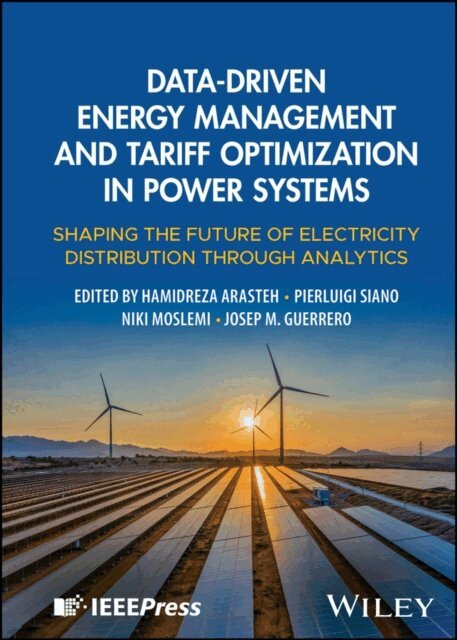
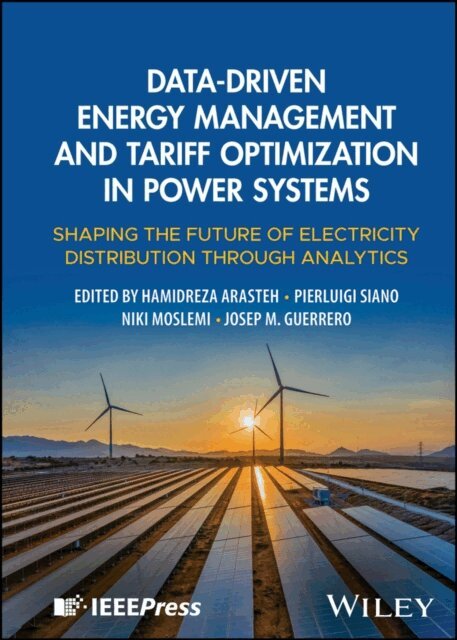
    Data-Driven Energy Management and Tariff Optimization in Power Systems

    Shaping the Future of Electricity Distribution through Analytics

    AvHamidreza Arasteh,Hamidreza Arasteh

    Inbunden, Engelska, 2025

    1 669 kr

    Beställningsvara. Skickas inom 5-8 vardagar. Fri frakt över 249 kr.

    Beskrivning

    Presents a comprehensive guide to transforming power systems through data Data-Driven Energy Management and Tariff Optimization in Power Systems offers an authoritative examination of how data science is reshaping the energy landscape. As the electricity sector grapples with increasing complexity, this timely volume responds to a growing demand for adaptive strategies that enable accurate forecasting, intelligent tariff design, and optimized resource allocation, underpinned by advanced analytics and machine learning. Drawing on global expertise and real-world case studies, the book bridges the theoretical and practical dimensions of energy systems management, providing deep insight into how data collected from smart meters, SCADA systems, and IoT devices can be mined for predictive modeling, demand response, and peak load management. The book’s accessible structure and didactic approach make it suitable for a wide readership, while its breadth of topics ensures relevance across the spectrum of energy challenges. Integrating rigorous analysis with application-oriented strategies, this book: Presents advanced techniques in machine learning, predictive modeling, and pattern recognition tailored to energy management and tariff designProvides accessible explanations of complex algorithms through a didactic and visual teaching style, including informative tables and illustrationsHighlights tools for grid stability, demand forecasting, and peak load management using high-resolution energy dataAddresses the integration of renewable energy sources into existing infrastructures through data-driven optimizationDesigned for a broad audience, Data-Driven Energy Management and Tariff Optimization in Power Systems is ideal for upper-level undergraduate and graduate courses in energy management, power systems analytics, and smart grids as part of electrical engineering or energy policy programs. It is also an essential reference for power system engineers, energy analysts, researchers, and policymakers involved in grid planning and optimization.

    Produktinformation

    • Utgivningsdatum:2025-12-11
    • Mått:178 x 254 x 18 mm
    • Vikt:866 g
    • Format:Inbunden
    • Språk:Engelska
    • Antal sidor:288
    • Förlag:John Wiley & Sons Inc
    • ISBN:9781394290277

    Utforska kategorier

    • Klassisk mekanik inom Naturvetenskap och teknik
    • Energiteknik inom Naturvetenskap och teknik
    • Databaser inom Data och IT

    Mer om författaren

    Hamidreza Arasteh is an Assistant Professor in the Power Systems Operation and Planning Research Department at the Niroo Research Institute, Tehran, Iran, and a Research Assistant at the Center for Research on Microgrids (CROM), Huanjiang Laboratory, Zhuji, Shaoxing, Zhejiang, China. He specializes in energy management, smart grids, microgrids, and electricity markets, with numerous research contributions in energy management and the integration of data analytics into power system operations. Pierluigi Siano is a Professor and Scientific Director of the Smart Grids and Smart Cities Laboratory at the University of Salerno, Italy. A Senior Member of IEEE, his research focuses on demand response, distributed energy resources, and power system planning. He serves on editorial boards for several prestigious journals in the field. Niki Moslemi is Head of the Power Systems Operation and Planning Research Department at the Niroo Research Institute in Tehran, Iran. She brings decades of experience in power quality, load forecasting, system resiliency, and data-driven energy strategies. Her leadership and research span multiple high-impact projects within the energy sector. Josep M. Guerrero is with Zhejiang University, Hangzhou, Zhejiang, China, a Director of the Center for Research on Microgrids (CROM), Huanjiang Laboratory, Zhuji, Shaoxing, China, and a Distinguished Senior Researcher at the Department of Electrical Engineering, University of Valladolid, Spain. His research interests include various aspects of microgrids, including power electronics and distributed energy resources.

    Innehållsförteckning

    • About the Editors xiiiList of Contributors xvPreface xix1 Fundamentals of Power System Data and Analytics 1Pouya Ramezanzadeh, Mohsen Parsa Moghaddam, and Reza Zamani1.1 Introduction 11.2 Background 21.2.1 Concept, Opportunities, and Challenges of Present and Future Power Systems 21.2.2 Transformation in the Power Industry 31.2.3 Drivers and Barriers 61.3 Data-rich Power Systems 61.3.1 Data Sources and Types 81.3.2 Data Structure 101.4 Data Analytics in Power Systems 111.4.1 What Is Data Analytics? 121.4.2 Analytics Techniques 121.5 Data Analytics-Based Decision-Making in Future Power Systems 131.5.1 Decision Framework 151.5.1.1 Uncertainty Issues 151.5.1.2 Behavioral Analytics 151.5.1.3 Policy Mechanisms 151.5.2 Computational Aspects 161.6 Conclusion 161.7 Future Trends and Challenges 16References 172 Advanced Predictive Modeling for Energy Consumption and Demand 21Seyed Mohsen Hashemi and Abbas Marini2.1 The Role of Load Forecasting in Power System Planning 212.2 Need for Short-Term Demand Forecasting 222.3 Components of Power Demand and Factors Affecting Demand Growth 222.3.1 Electricity Demand from the Consumer Type Perspective 232.3.2 Electricity Demand from the Supply Perspective 232.4 Electricity Demand in Networks with High Renewable Energy Sources 242.5 Machine Learning and Its Applications in Demand Forecast 252.5.1 Application of Clustering in Load Forecasting 272.6 The Impact of Macro-decisions on Long-term Load Forecasting 282.6.1 Natural Gas as a Primary Energy Carrier for Heating Demand 292.7 Conclusion 34References 353 Demand Response and Customer-Centric Energy Management 39Alireza Mansoori, Mohsen Parsa Moghaddam, and Reza Zamani3.1 Introduction 393.2 Background 393.3 Future Power Systems Aspects, Trends, and Challenges 413.4 Transforming to Customer-Centric Era 413.4.1 Differences Between Customer-Centric DR Solution and OtherWays in the FuturePower System 423.4.2 Drivers and Enablers 423.5 Customer-Centric Power System Structure 453.5.1 Physical Layer 453.5.1.1 Physical Resources 453.5.1.2 Physical Constraints of the System 463.5.2 Cyber-Social Layers 493.5.2.1 Centralized Approach (Traditional) 503.5.2.2 Decentralized Approach (Future) 503.6 Conclusion and Future Trends 54References 574 Applications of Data Mining in Industrial Tariff Design and Energy Management: Concepts and Practical Insights 61Hamidreza Arasteh, Niki Moslemi, Majid Miri Larimi, Pierluigi Siano, Sobhan Naderian, andJosep M. Guerrero4.1 Introduction 614.1.1 Data Mining: Concepts, Procedures, and Tools 614.1.2 Energy Management and the Role of Data Mining 654.1.3 Aims and Scope 664.2 Investigating Industrial Load Data: Analysis Through Various Indexes 674.3 Classification of Industries 864.4 Discussion and Conclusions 90References 925 Data-Driven Tariff Design for Equitable Energy Distribution 95Salah Bahramara, Hamidreza Arasteh, Asrin Seyedzahedi, and Khabat Ghamari5.1 Introduction 955.1.1 Literature Review and Contributions 965.1.2 Chapter Organization 975.2 Proposed Approach and Formulations 975.3 Describing the Case Study 985.4 Simulation Results 1005.5 Conclusions and Future Works 100References 1056 Applying Artificial Intelligence to Improve the Penetration of Renewable Energy in Power Systems 107Abbas Marini and Seyed Mohsen Hashemi6.1 Introduction 1076.2 Machine Learning Techniques 1096.2.1 Artificial Neural Network and Deep Neural Network 1106.2.2 Convolutional Neural Network 1116.2.3 Recurrent Neural Network 1116.2.4 Long Short-Term Memory 1126.3 General View of ML/DL Methods for RES Integration 1126.3.1 Data Preprocessing 1146.3.1.1 Normalization 1156.3.1.2 Wrong/Missing Values and Outliers 1156.3.1.3 Data Resolution 1156.3.1.4 Inactive Time Data 1166.3.1.5 Data Augmentation 1166.3.1.6 Correlation 1166.3.1.7 Data Clustering 1166.3.2 Deterministic/Probabilistic Forecasting Methods 1166.3.2.1 Deterministic Methods 1166.3.2.2 Probabilistic Forecasting Methods 1196.3.3 Evaluation Measures 1196.4 ML/DL Application for Integration of RES 1216.4.1 Renewable Resources Data Prediction/Planning 1226.4.2 RES Power Generation Prediction/Operation 1256.4.3 Electric Load and Demand Forecasting 1266.4.4 Stability Analysis 1276.4.4.1 Security Assessment 1286.4.4.2 Stability Assessment 1296.5 Integrated Machine Learning and Optimization Approach 1296.6 Conclusion 131References 1327 Machine Learning-Based Solutions for Renewable Energy Integration: Applications, Optimization, and Grid Stability 135Ali Paeizi, Mohammad Mehdi Amiri, Sasan Azad, and Mohammad Taghi Ameli7.1 Introduction 1357.2 Machine Learning Importance in RESs Sector 1377.2.1 AI-Based Algorithms in RESs 1377.2.2 ML Algorithms Application in RESs 1407.3 Role of ML in Optimizing Renewable Energy Generation 1507.3.1 Different Programming Models in RES Optimization 1507.3.2 Optimization Objectives in RESs 1507.3.3 ML Applications in Optimizing Renewable Energy Generation 1517.4 Ensuring Grid Stability Through ML-Based Forecasting 1557.4.1 Grid Stability Forecasting 1557.4.2 Grid Stability Through ML-Based Forecasting 1577.5 Challenges and Future Direction in ML-Based Approaches to RESs 1597.5.1 Challenges in ML-Based Approaches to RESs 1607.5.2 Future Directions in ML-Based Approaches to RESs 1617.6 Conclusion 162References 1638 Application of Artificial Neural Networks in Solar Photovoltaic Power Forecasting 167Hamid Jabari, Afshin Ebrahimi, Ardalan Shafiei-Ghazani, and Farkhondeh Jabari8.1 RES Share inWorld Energy Transition 1678.2 Applications of PV Panels in Energy Systems 1688.3 Disadvantages of PV Panels 1698.4 Importance of PV Power Forecasting 1708.5 Proposed Algorithm for PV Power Prediction 1708.6 Numerical Results and Discussions 1728.7 Concluding Remarks 172References 1759 Power System Resilience Evaluation: Data Challenges and Solutions 179Mohammad Reza Sheibani, Habibollah Raoufi, and Javad Nezafat Namini9.1 Introduction 1799.2 A Review of Power System Resilience Metrics 1809.3 The General Framework for the Resilience Assessment of the Power System 1829.4 Data Required for Power System Resilience Studies 1829.4.1 Data of Natural Origin 1849.4.2 Basic Data of the Power System 1849.4.3 Data on Failure and Restoration Rates 1869.5 Data Analysis and Correction 1879.6 Disaster Forecasting in Power System Resilience Studies 1889.7 Modeling the Impact of Disaster on Power System Performance 1899.8 Static Model in Machine Learning 1909.9 Spatiotemporal Random Process 1929.9.1 Dynamic Model for Chain Failures 1929.9.2 Nonstationary Failure-Recovery-Impact Processes 1929.10 Lessons Learned and Concluding Remarks 1939.11 Future Work 194References 19410 Nonintrusive Load Monitoring in Smart Grids Using Deep Learning Approach 197Sobhan Naderian and Hamidreza Arasteh10.1 Introduction 19710.2 Deep Learning Neural Networks 19910.2.1 RNN 19910.2.2 LSTM 19910.2.3 CNN 20010.2.4 Convolutional Layer 20110.2.5 Pooling Layer 20110.2.6 Fully Connected Layer 20110.3 The Proposed Method 20110.3.1 Pre-Processing and Preparing Data 20110.3.2 Proposed Method Architecture 20210.3.3 Proposed Method’s Parameters 20210.3.4 Performance Evaluation 20310.4 Results and Discussion 20410.5 Challenges and Future Trends 20610.6 Conclusion 206References 20711 Power System Cyber-Physical Security and Resiliency Based on Data-Driven Methods 211Hamed Delkhosh, Mahdi Ghaedi, and Maryam Azimi11.1 Introduction 21111.2 Fundamental Concepts 21211.2.1 Cyber-Physical Power System (CPPS) 21211.2.2 Security and Resiliency 21411.3 Role of Data Analytics 21511.3.1 Basic Methods 21511.3.1.1 Supervised Learning (SL) 21511.3.1.2 Unsupervised Learning (UL) 21611.3.2 Advanced Techniques 21611.3.2.1 Dimensionality Reduction (DR) 21711.3.2.2 Feature Engineering 21711.3.2.3 Reinforcement Learning 21711.3.2.4 Integrated Models 21811.4 Interdependency Modeling 21811.4.1 Direct Modeling 22011.4.2 Testbeds 22011.4.3 Game-Theoretic 22111.4.4 Machine Learning 22211.5 Cyber-Physical Threats 22311.5.1 Physical Attacks 22411.5.2 Cyberattacks 22511.5.2.1 Confidentiality 22511.5.2.2 Availability 22611.5.2.3 Integrity 22611.5.3 Coordinated Attacks 22711.6 Defense Framework 22811.6.1 Preventive Measures 22811.6.1.1 Supply Chain Security 22911.6.1.2 Access Control 22911.6.1.3 Personnel Training 23011.6.1.4 Resource Allocation 23011.6.1.5 Infrastructure Hardening 23111.6.1.6 Moving Target Defense 23111.6.2 Mitigation Actions 23211.6.2.1 Attack Detection 23211.6.2.2 Data Recovery 23311.6.2.3 Reconfiguration and Restoration 23311.6.2.4 Forensic Analysis 23411.7 Conclusion 234References 23512 Application of Artificial Intelligence in Undervoltage Load Shedding in Digitalized Power Systems: An In-Depth Review 239Nazanin Pourmoradi, Sasan Azad, Mohammad Mehdi Amiri, and Miadreza Shafie-khah12.1 Introduction 23912.2 Load-Shedding Strategies 24012.2.1 Conventional LS 24012.2.2 Adaptive LS 24012.2.3 AI-Based LS 24112.3 Principles of UVLS 24212.3.1 Amount of Load Shed 24212.3.2 Location for LS 24312.3.3 Application of VSI for UVLS 24312.4 AI-Based Methods 24412.5 Case Study 24812.5.1 Database Generation 24812.5.2 Offline Training 24812.5.3 Online Application 24912.6 Future Challenges and Transfer Learning 24912.7 Conclusion 251References 252Index 257