• Fri frakt över 249 kr
  • •
  • Snabba leveranser
  • •
  • Billiga böcker
Kundservice

Du är på sajten för privatpersoner.

Företag, bibliotek eller offentlig verksamhet?

Du handlar på classic.bokus.com, där alla dina funktioner finns intakta.
Till classic.bokus.com
Bokus logotyp. Gå till startsidan.
  • Erbjudanden
  • Nyheter
  • Student
  • Topplistor
  • Barn & ungdom
  • Bokus Play
  • E-böcker
  • Pocketböcker
  • Spel & pussel

10% studentrabatt med kod TERM26

Sidfot

Mina sidor

    Hjälp

    • Kundservice
    • Vanliga frågor och svar
    • Frakt och leverans
    • Retur vid ångerrätt
    • Reklamera vara
    • Betalning
    • Köpvillkor
    • Allmänna villkor
    • Information om webbplatsens tillgänglighet

    Om Bokus

    • Om oss
    • Pressrum
    • För studenter
    • För företag
    • För bibliotek och offentlig verksamhet
    • För leverantörer
    • Hållbarhet

    Populärt

    • Aktuella erbjudanden
    • Presentkort
    • Studentlitteratur
    • Nya böcker
    • Topplistor
    • Signerade böcker
    • Engelska böcker

    Inspiration

    • Boktips
    • BookTok
    • Populära bokserier
    • Barnbokskaraktärer
    • Populära författare
    Logotyp för Bokus
    Följ oss på Facebook (extern länk)Följ oss på Instagram (extern länk)Följ oss på YouTube (extern länk)Följ oss på TikTok (extern länk)
    bokus @ CookiesAnpassa cookiesIntegritetspolicyKöpvillkor
    Till Citymail hemsida (extern länk)Till Budbee hemsida (extern länk)Till Postnord hemsida (extern länk)Till Schenker hemsida (extern länk)Till Early Bird hemsida (extern länk)Till Walleys hemsida (extern länk)
    1. Ekonomi och Ledarskap
    2. Företagsekonomi
    3. Redovisning och finansiering
    4. Finansiering
    • Nyhet

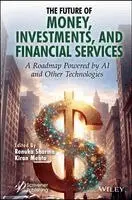
    Future of Money, Investments, and Financial Services

    A Roadmap Powered by AI and Other Technologies

    AvRenuka Sharma,Kiran Mehta

    Inbunden, Engelska, 2026

    2 350 kr

    Beställningsvara. Skickas inom 5-8 vardagar. Fri frakt över 249 kr.

    Beskrivning

    Navigate the most significant shift in the history of finance with this essential guide to leveraging AI, blockchain, and data analytics to drive growth and manage risk in an increasingly tech-driven economy. Finance is undergoing a fundamental transformation. The rapid rise of artificial intelligence (AI) represents the most significant shift the financial sector has ever experienced, reshaping how money is created, invested, managed, and exchanged. AI is no longer a supporting tool; it is redefining the meaning and structure of finance itself. This book explores this transformation and the technologies driving it, offering an in-depth exploration of how cutting-edge technologies are transforming the financial sector. In this groundbreaking edited volume, experts from various fields provide invaluable insights into how AI, blockchain, data analytics, and other innovations are revolutionizing the way we think about money, investments, and financial services. From the evolution of digital currencies to the future of personalized financial advice, this book provides a comprehensive look at the technological advancements shaping the future of finance. As industries and economies around the world rapidly adapt to these technological disruptions, this vital resource delves into the practical implications of these advancements, offering strategies for harnessing their power to drive growth, manage risk, and enhance decision-making. Whether you’re an investor or a business leader navigating the complexities of AI-driven financial services, this book offers essential knowledge and actionable insights to succeed in an increasingly tech-driven financial world. Readers will find the volume: Explores the transformative role of AI and emerging technologies in revolutionizing financial services and investment strategies;Provides a comprehensive roadmap for businesses and individuals looking to stay ahead in the rapidly evolving financial landscape;Features contributions from leading experts, offering practical insights and real-world applications for the future of finance;Discusses the intersection of technology and finance, highlighting key trends that will shape the future of money management;Offers actionable strategies for leveraging technological advancements to enhance financial decision-making and investment outcomes.Audience Academics, researchers, students, financial and investment institutions, as well as asset management firms seeking to understand the implications of artificial intelligence and other technologies.

    Produktinformation

    • Utgivningsdatum:2026-07-27
    • Format:Inbunden
    • Språk:Engelska
    • Antal sidor:448
    • Förlag:John Wiley & Sons Inc
    • ISBN:9781394339402

    Utforska kategorier

    • Finansiering inom Ekonomi och Ledarskap

    Mer om författaren

    Renuka Sharma, PhD is a Professor of Finance at the Chitkara Business School, Chitkara University, Punjab, India with more than 20 years of extensive teaching and research experience. She has published more than 70 research papers in national and international journals and edited two books with Wiley-Scrivener: “Decentralized Finance and Blockchain” and “Deep Learning Tools for Predicting Stock Market Movements”. Her research focuses on innovation, responsible investment, corporate governance, behavioral biases, risk management, and portfolios. Kiran Mehta, PhD is a Professor of Finance at the Chitkara Business School, Chitkara University, Punjab, India with more than 20 years of teaching and research experience. She has edited two books with Wiley-Scrivener: “Decentralized Finance and Blockchain” and “Deep Learning Tools for Predicting Stock Market Movements”. Her research focuses on sustainable business and entrepreneurship, cryptocurrency, ethical investments, and female entrepreneurship.

    Innehållsförteckning

    • Preface xixPart I: Introduction to AI in Finance 11 The Rise of Artificial Intelligence in the Indian Banking Industry 3Bhavna Sharma, Renu Bala and Meenakshi1.1 Introduction 41.2 Previous Research 61.3 Applications of AI in Banking Sector 101.4 How Banks are Using AI 141.5 Challenges Face by the Banks in AI 171.6 Implications of the Study 172 The Evolution of Finance and the Rise of AI 25Sonal Trivedi and Mufaro Dzingirai2.1 Introduction 262.2 Historical Evolution of Finance 282.3 AI Applications in Financial Services 302.4 Impact of AI on Financial Markets 322.5 Conclusion 353 Harnessing Artificial Intelligence for Sustainable Development and Empowering Social Finance Systems 39Ram Singh, Vinay Pal Singh and Ajit Singh Tomar3.1 Introduction 403.2 Review of Literature 443.3 Objectives and Methodology 473.4 Artificial Intelligence in Sustainable Development of Social Finance Systems 473.5 Systemic Inefficiencies in Resource Allocation and Social Impact Financing 503.6 Examining the Ethical Implications of AI Deployment in Social Finance Systems 523.7 Impact on Financial Accessibility and Environmental Conservation 543.8 Challenges in Deploying AI for Sustainable Development in India 563.9 Opportunities for AI in Sustainable Development in India 573.10 Findings and Suggestions 583.11 Conclusion 603.12 Future Directions for Research 614 Benefits of Financial Inclusion to Financial Institutions, Technology Firms and the Government: Implications for Digital Financial Inclusion 65Peterson K. Ozili4.1 Introduction 654.2 Conceptual Framework 674.3 Financial Inclusion Benefits to Financial Institutions, Technology Firms, and the Government 684.4 Criticism of Corporate and Government Interests in Financial Inclusion 724.5 Conclusion 73Part II: AI in Investment Management 775 Revolutionizing Finance: Machine Learning for Smart Portfolio Optimization 79Nitin Kulshrestha5.1 Introduction 805.2 Review of Literature 825.3 Quantitative Finance Applications 835.4 Role of Machine Learning in Quantitative Finance 845.5 Comparative Analysis of ML Models 865.6 Algorithms for Smart Portfolio Management 885.7 Application of Artificial Intelligence in Algorithmic Trading 905.8 Concerns and Considerations 925.9 Future Directions of Algorithmic Trading and Portfolio Optimization 955.10 Challenges in Algorithmic Trading and Portfolio Optimization 975.11 Conclusion 1006 Dependency of Machine Learning Based Prediction Performance on Market Specificity, Window Length, and Algorithm Choice in the Context of Global Stock Indices 105Jasleen Kaur and Khushdeep Dharni6.1 Introduction 1066.2 Background of the Study 1086.3 Materials and Methods 109x Contents6.4 Results 1176.5 Discussion 1246.6 Conclusion 1257 Analysis of Portfolio Using Machine Learning for Selected ESG Companies in India: A PCA Approach 133Kapil Shrimal, Priyanka Mathur and Nidhi Solanki7.1 Introduction 1347.2 Background of the Study 1367.3 Literature Review 1377.4 Research Gap 1397.5 Research Questions 1407.6 Purpose of the Study 1407.7 ESG in Investment Decisions 1427.8 Principal Component Analysis (PCA) in Financial Analysis 1457.9 Research Methodology 1487.10 Data Analysis and Results 1487.11 Discussion 1587.12 Practical Implications for Investors and Portfolio Managers 1607.13 Limitations of the Study and Areas for Improvement 1607.14 Upcoming Research Plans in the Domain of Machine Learning in the Field of ESG Investing 1617.15 Recommendations 1627.16 Conclusion 1628 Detecting Information Flow Between Cryptocurrencies Using Transfer Entropy 167Faniza Joshi, Shivani Inder and Manisha Dheer8.1 Introduction 168xii Contents8.2 Real-Time Information Sharing 1708.3 Data 1768.4 Findings 1778.5 Conclusion 187Part III: AI in Risk Management and Compliance 1939 Combat against Financial Fraud in Indian Banking Sector: A Cyber Security Measures in the Era of AI 195Bhaveshkumar Parmar and Hetal Thaker9.1 Overview of Financial Fraud in the Indian Banking Sector 1969.2 Literature Review 1979.3 Observed Financial Frauds in Indian Banking 1999.4 Understanding Industry 5.0 and Its Implications 2069.5 Cybersecurity Measures for Industry 5.0 20810 Potential of Ethical AI in Detection of Insurance Claim Fraud 217Shefali Saluja and Preeti Kaushal10.1 Introduction 21810.2 Literature Review 220Contents xiii10.3 Research Methodology 22710.4 Discussion and Analysis 22710.5 Conclusion 23110.6 Implications of the Study 23311 Ensuring Ethical Adoption of AI: Addressing Bias and Fairness in Financial Services 237Jeevesh Sharma and Swati Jain11.1 Introduction 23811.2 AI Adoption in Financial Services 24011.3 Ethical AI's Significance in Finance 24211.4 Challenges and Risks of Bias 24411.5 Ethical Concerns and Risks Associated with AI Implementation in Financial Services 24611.6 Effect of Ethical Concerns in Ai on Stakeholders 24811.7 Solutions to Address Ethical Concerns in AI-Powered Financial Services 24911.8 Regulatory Aspect for Ethical AI in Financial Services 24911.9 Strategies and Tactics for Executing Ethical AI in Financial Services 25011.10 Conclusion 250Part IV: AI in Customer Engagement and Personalization 25312 AI in Customer Engagement and Personalization 255Kanthavel R., Adline Freeda R. and Dhaya R.12.1 Introduction 25612.2 Credit Risk Assessment with AI 25612.3 Fraud Detection and Prevention in Digital Age 25812.4 Navigating Regulatory Compliance with AI Solutions 26112.5 Conclusion 26413 AI-Driven Financial Amenities: Exploring Customer Satisfaction and Behavioural Magnitudes Towards the Return Expectations in Equity Markets 267Aparna Vajpayee13.1 Introduction 26813.2 Review of Literature 26913.3 Research Gap 27213.4 Research Methodology 27313.5 Analysis 27613.6 Key Outcomes 28113.7 Discussion 28213.8 Implications for Practice 28313.9 Conclusion 283Part V: Ethical and Future Considerations 29114 Ethical Frontiers: Navigating AI's Integration in the Behavioral Finance 293Dilpreet Kaur, Arun Sharma, Supriya Bajaj and Bisman Kaur14.1 Introduction 29314.2 Literature Review 29414.3 Objectives 29614.4 Challenges of Bias in AI Models 29614.5 Impact of Bias on Financial Decision Making 29914.6 Emerging Trends in AI and Finance 30214.7 Key Findings 30414.8 Implications 30414.9 Conclusion 30414.10 Scope for Future Research 30515 From Data to Decisions: A Bibliometric Analysis of the Role of Artificial Intelligence in Financial Innovation 309Vimmy Bajaj and Vijaya Patil15.1 Introduction 31015.2 Research Methodology and Data Collection 31315.3 Bibliometric Analysis and Discussion 31415.4 Conclusion 33116 The Convergence of AI and ESG in Financial Decision-Making: A Roadmap for Sustainable Fintech Solutions 335Priya Sachdeva and Archan Mitra16.1 Introduction 33616.2 Literature Review 33916.3 Research Methodology 34416.4 Case Studies 34616.5 Data Analysis 34916.6 Findings 35316.7 Actionable Strategies to Effectively Leverage AI in ESG Practices 35516.8 Conclusion 35817 Revolutionizing Sustainable Energy Financing: The Role of Decentralized Finance (DeFi) in an AI-Driven Financial Landscape 363Gagandeep Singh, Jasdeep Singh Walia and Nancy Sahni17.1 Introduction 36417.2 Review of Literature 36517.3 Impediments to Mainstream DeFi Adoption 36917.4 Roadmap for Seamless DeFi Adoption 37817.5 Implications of the Study 38017.6 Conclusion 38318 Ethical Finance in the Age of AI: Balancing Privacy and Security 387Yatisha Kalia, Gitika Arora and C.A. Nitin Arora18.1 Introduction 38818.2 Role of AI in Finance 38918.3 Literature Review 39018.4 Ethical Dilemmas in Financial AI 39118.5 Balancing Privacy and Security 39418.6 Regulatory and Legal Landscape 39818.7 Case Studies 39918.8 Discussion 40218.9 Conclusion 403References 404Index 409