• Fri frakt över 249 kr
  • •
  • Snabba leveranser
  • •
  • Billiga böcker
Kundservice

Du är på sajten för privatpersoner.

Företag, bibliotek eller offentlig verksamhet?

Du handlar på classic.bokus.com, där alla dina funktioner finns intakta.
Till classic.bokus.com
Bokus logotyp. Gå till startsidan.
  • Erbjudanden
  • Nyheter
  • Student
  • Topplistor
  • Barn & ungdom
  • Bokus Play
  • E-böcker
  • Pocketböcker
  • Spel & pussel

10% rabatt på allt med kod: NYSTART10 →

Sidfot

Mina sidor

    Hjälp

    • Kundservice
    • Vanliga frågor och svar
    • Frakt och leverans
    • Retur vid ångerrätt
    • Reklamera vara
    • Betalning
    • Köpvillkor
    • Allmänna villkor
    • Information om webbplatsens tillgänglighet

    Om Bokus

    • Om oss
    • Pressrum
    • För studenter
    • För företag
    • För bibliotek och offentlig verksamhet
    • För leverantörer
    • Hållbarhet

    Populärt

    • Aktuella erbjudanden
    • Presentkort
    • Studentlitteratur
    • Nya böcker
    • Topplistor
    • Signerade böcker
    • Engelska böcker

    Inspiration

    • Boktips
    • BookTok
    • Populära bokserier
    • Barnbokskaraktärer
    • Populära författare
    Logotyp för Bokus
    Följ oss på Facebook (extern länk)Följ oss på Instagram (extern länk)Följ oss på YouTube (extern länk)Följ oss på TikTok (extern länk)
    bokus @ CookiesAnpassa cookiesIntegritetspolicyKöpvillkor
    Till Citymail hemsida (extern länk)Till Budbee hemsida (extern länk)Till Postnord hemsida (extern länk)Till Schenker hemsida (extern länk)Till Early Bird hemsida (extern länk)Till Walleys hemsida (extern länk)
    1. Psykologi och pedagogik
    2. Psykologi
    3. Socialpsykologi och gruppsykologi

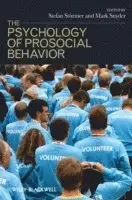
    Psychology of Prosocial Behavior

    Group Processes, Intergroup Relations, and Helping

    AvStefan Stürmer,Stefan Stürmer

    Häftad, Engelska, 2009

    658 kr

    Beställningsvara. Skickas inom 5-8 vardagar. Fri frakt över 249 kr.

    Beskrivning

    The Psychology of Prosocial Behavior provides original contributions that examine current perspectives and promising directions for future research on helping behaviors and related core issues. Covers contributions which deal explicitly with interventions designed to foster out-group helping (and to improve its quality) in real world settingsProvides the reader with a cohesive look at helping and prosocial behaviors using a combination of theoretical work with research on interventions in applied settingsExamines helping from multiple perspectives in order to recognize the diverse influences that promote actions for the benefit of othersContributors to this volume include cutting-edge researchers using both field studies and laboratory experiments

    Produktinformation

    • Utgivningsdatum:2009-08-14
    • Mått:152 x 226 x 25 mm
    • Vikt:658 g
    • Format:Häftad
    • Språk:Engelska
    • Antal sidor:464
    • Förlag:John Wiley and Sons Ltd
    • ISBN:9781405178808

    Utforska kategorier

    • Socialpsykologi och gruppsykologi inom Psykologi och pedagogik

    Mer om författaren

    Stefan Stürmer, Ph.D., is Professor of Psychology at the Fern Universität in Hagen (Germany), and the Chair in Social Psychology. In his research, he investigates inter- and intragroup processes, with a particular emphasis on the role of group processes in social movement participation, cooperation, helping, and altruism. He also serves as a consultant for various city councils and community agencies, concerning measures and policies to foster community action and civic participation. Mark Snyder, Ph.D., is Professor of Psychology at the University of Minnesota, where he holds the McKnight Presidential Chair in Psychology and is the Director of the Center for the Study of the Individual and Society. His research examines the motivational foundations of individual and collective action. He is recipient of the Society for Personality and Social Psychology’s Donald T. Campbell Award and the Kurt Lewin Award of the Society for the Psychological Study of Social Issues. He is the author of the book, Public Appearances/Private Realities: The Psychology of Self-Monitoring, and co-editor of Cooperation: The Political Psychology of Effective Human Interaction.

    Recensioner i media

    "This book is essential reading for anybody who is interested in prosocial behaviour, or in applying social identity processes to relevant real-world situations." (Psychologist, January 2010)

    Innehållsförteckning

    • List of Contributors AcknowledgmentsIntroduction:The Psychological Study of Group Processes and Intergroup Relations in Prosocial Behavior: Past, Present, Future: Stefan Stürmer (FernUniversität Hagen) and Mark Snyder (University of Minnesota).Part I: Motivations for Helping In-Group and Out-Group Members:1. The Tribal Instinct Hypothesis: Evolution and the Social Psychology of Intergroup Relations: Mark van Vugt (University of Kent at Canterbury) and Justin H. Park (University of Groningen, The Netherlands).2. Helping "Us" versus "Them": Towards a Group-Level Theory of Helping and Altruism Within and Across Group Boundaries: Stefan Stürmer (FernUniversität Hagen) and Mark Snyder (University of Minnesota).3. Stigmas and Prosocial Behavior: Are People Reluctant to Help Stigmatized Persons?: John B. Pryor (Illinois State University), Glenn D. Reeder (Illinois State University), Andrew E. Monroe (University of Oregon), and Arati Patel (Illinois State University).4. The Strategic Side of Out-Group Helping: Esther van Leeuwen (Free University Amsterdam) and Susanne Täuber (Friedrich-Schiller-University Jena).Part II: Consequences of Giving or Receiving Help in the Context of Groups:5. Discrimination Against Out-Group Members in Helping Situations: Donald A. Saucier (Kansas State University), Jessica L. McManus (Kansas State University), and Sara J. Smith (Kansas State University).6. Receiving Help: Consequences for the Recipient: Samer Halabi (Zefat Academic College) and Arie Nadler (Tel Aviv University).7. Turning to Others in Times of Change: Social Identity and Coping with Stress: Jolanda Jetten (University of Queensland/University of Exeter), S. Alexander Haslam (University of Exeter), Aarti Iyer (University of Queensland), and Catherine Haslam (University of Exeter).8. Volunteering Across the Life Span: Doing Well by Doing Good: Jane Allyn Piliavin (Professor Emerita, University of Wisconsin-Madison).Part III: Intervention Strategies: Targeting Individuals, Groups, and Organizations:9. Perspective Taking and Intergroup Helping: Mark H. Davis (Eckerd College) and Angela T. Maitner (University of Kent).10. Recategorization and Prosocial Behavior: Common In-Group Identity and a Dual Identity: John F. Dovidio (Yale University), Samuel L. Gaertner (University of Delaware), Nurit Shnabel (Yale University), Tamar Saguy (University of Connecticut), and James Johnson (University of North Carolina).11. Groups, Identities, and Bystander Behavior: How Group Processes Can Be Used to Promote Helping: Mark Levine (Lancaster University) and Clare Cassidy (deceased, formerly University of St. Andrews).12. Influences of Psychological Sense of Community on Voluntary Helping and Prosocial Action: Allen M. Omoto (Claremont Graduate University) and Mark Snyder (University of Minnesota).13. Empowering the Volunteer Organization: What Volunteer Organizations Can Do to Recruit, Content, and Retain Volunteers: Naomi Ellemers (Leiden University) and Edwin J. Boezeman (Leiden University).Part IV: The Broader Picture: Political and Societal Implications:14. Interpersonal and Intergroup Helping Relations as Power Relations: Implications for Real-World Helping: Arie Nadler (Tel Aviv University).15. Beyond Help: A Social Psychology of Collective Solidarity and Social Cohesion: Stephen Reicher (University of St. Andrews) and S. Alexander Haslam (University of Exeter).16. Cross-Group Helping: Perspectives on Why and Why Not: Stephen C. Wright (Simon Fraser University) and Norann T. Richard (Simon Fraser University).17. Helping Disadvantaged Out-Groups Challenge Unjust Inequality: The Role of Group-Based Emotions: Aarti Iyer (University of Queensland) and Colin Wayne Leach (University of Connecticut).Bibliography.Author Index.Subject Index.