Häftad, Engelska, 2012
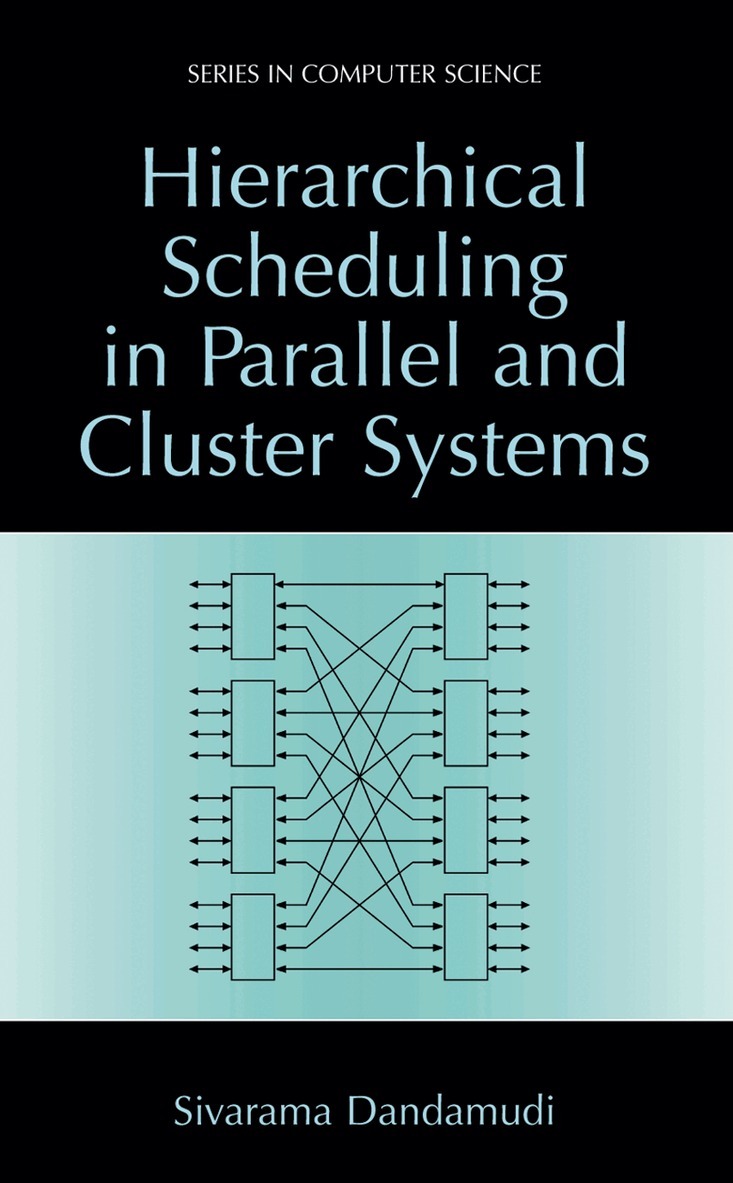
Hierarchical Scheduling in Parallel and Cluster Systems
1685 kr
Beställningsvara. Skickas inom 10-15 vardagar. Fri frakt över 249 kr.
Beskrivning
Multiple processor systems are an important class of parallel systems. Over the years, several architectures have been proposed to build such systems to satisfy the requirements of high performance computing. These architectures span a wide variety of system types. At the low end of the spectrum, we can build a small, shared-memory parallel system with tens of processors. These systems typically use a bus to interconnect the processors and memory. Such systems, for example, are becoming commonplace in high-performance graph ics workstations. These systems are called uniform memory access (UMA) multiprocessors because they provide uniform access of memory to all pro cessors. These systems provide a single address space, which is preferred by programmers. This architecture, however, cannot be extended even to medium systems with hundreds of processors due to bus bandwidth limitations. To scale systems to medium range i. e. , to hundreds of processors, non-bus interconnection networks have been proposed. These systems, for example, use a multistage dynamic interconnection network. Such systems also provide global, shared memory like the UMA systems. However, they introduce local and remote memories, which lead to non-uniform memory access (NUMA) architecture. Distributed-memory architecture is used for systems with thousands of pro cessors. These systems differ from the shared-memory architectures in that there is no globally accessible shared memory. Instead, they use message pass ing to facilitate communication among the processors. As a result, they do not provide single address space.
Produktinformation
- Utgivningsdatum: 2012-09-24
- Mått: 155 x 235 x 16 mm
- Vikt: 429 g
- Format: Häftad
- Språk: Engelska
- Serie: Series in Computer Science
- Antal sidor: 251
- Förlag: Springer-Verlag New York Inc.
- ISBN: 9781461349389
Utforska kategorier
Betyg & recensioner
0 recensioner
Inga recensioner tillgängliga.