• Fri frakt över 249 kr
  • •
  • Snabba leveranser
  • •
  • Billiga böcker
Kundservice

Du är på sajten för privatpersoner.

Företag, bibliotek eller offentlig verksamhet?

Du handlar på classic.bokus.com, där alla dina funktioner finns intakta.
Till classic.bokus.com
Bokus logotyp. Gå till startsidan.
  • Erbjudanden
  • Nyheter
  • Student
  • Topplistor
  • Barn & ungdom
  • Bokus Play
  • E-böcker
  • Pocketböcker
  • Spel & pussel

10% studentrabatt med kod TERM26

Sidfot

Mina sidor

    Hjälp

    • Kundservice
    • Vanliga frågor och svar
    • Frakt och leverans
    • Retur vid ångerrätt
    • Reklamera vara
    • Betalning
    • Köpvillkor
    • Allmänna villkor
    • Information om webbplatsens tillgänglighet

    Om Bokus

    • Om oss
    • Pressrum
    • För studenter
    • För företag
    • För bibliotek och offentlig verksamhet
    • För leverantörer
    • Hållbarhet

    Populärt

    • Aktuella erbjudanden
    • Presentkort
    • Studentlitteratur
    • Nya böcker
    • Topplistor
    • Signerade böcker
    • Engelska böcker

    Inspiration

    • Boktips
    • BookTok
    • Populära bokserier
    • Barnbokskaraktärer
    • Populära författare
    Logotyp för Bokus
    Följ oss på Facebook (extern länk)Följ oss på Instagram (extern länk)Följ oss på YouTube (extern länk)Följ oss på TikTok (extern länk)
    bokus @ CookiesAnpassa cookiesIntegritetspolicyKöpvillkor
    Till Citymail hemsida (extern länk)Till Budbee hemsida (extern länk)Till Postnord hemsida (extern länk)Till Schenker hemsida (extern länk)Till Early Bird hemsida (extern länk)Till Walleys hemsida (extern länk)
    1. Medicin
    2. Andra medicinska specialiteter
    3. Psykiatri

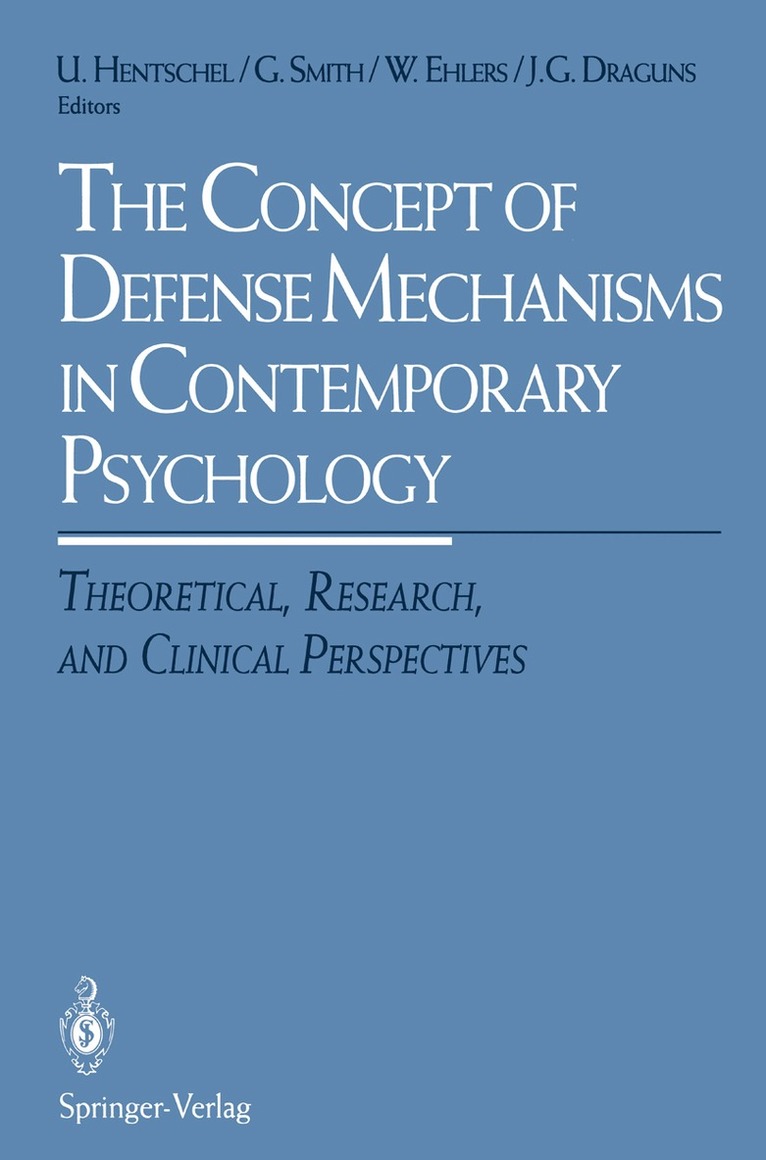
    Concept of Defense Mechanisms in Contemporary Psychology

    Theoretical, Research, and Clinical Perspectives

    AvUwe Hentschel,Gudmund J.W. Smith

    Häftad, Engelska, 2011

    1 236 kr

    Beställningsvara. Skickas inom 10-15 vardagar. Fri frakt över 249 kr.

    Beskrivning

    What is the scientific status and the "truth value" of the concept of defense mechanisms? Among contemporary psychologists, three types of answers to this question may be expected. Some would wholeheartedly endorse the theoretical, clinical, and research value of this notion; others would reject it outright. Between these two extremes, a large number of observers, perhaps the majority, would suspend their judgment. Their attitude, compounded of hope and doubt, would capitalize on defense as an interesting and promising concept. At the same time, these psy­ chologists would express skepticism and disappointment over its clinical limitations, theoretical ambiguity, and research failures. The present volume is primarily addressed to the audience of hopeful skeptics-those who have not given up on the notion of defense, yet have been frustrated by the difficulties of incorporating it into the modern, streamlined structure of psychology. To this end, we have brought together theoretical and empirical contributions germane to defense together with reports about their applications to clinical and personality assessment, especially in relation to psychopathology, psychosomatics, and psycho­ therapeutic intervention.

    Produktinformation

    • Utgivningsdatum:2011-11-24
    • Mått:155 x 235 x 26 mm
    • Vikt:709 g
    • Format:Häftad
    • Språk:Engelska
    • Antal sidor:439
    • Förlag:Springer-Verlag New York Inc.
    • ISBN:9781461383055

    Utforska kategorier

    • Psykiatri inom Medicin
    • Psykologi inom Psykologi och pedagogik

    Innehållsförteckning

    • I General Issues.- 1. A Critical Perspective on Defense Mechanisms.- 2. Defense Mechanisms in the Clinic and in the Laboratory: An Attempt at Bridging the Gap.- 3. What Is a Mechanism of Defense?.- 4. Percept-Genesis and the Study of Defensive Processes.- II Methodological Considerations.- 5. The Measurement of Defense Mechanisms by Self-Report Questionnaires.- 6. The Assessment of Primitive Defense Mechanisms by Projective Techniques.- 7. Percept-Genetic Methodology.- 8. The Study of Defenses in Psychotherapy Using the Defense Mechanism Rating Scales (DMRS).- III Personality and Applied Psychology.- 9. Causal Attributions of Disease as Related to Dynamic Personality Variables.- 10. Exploration of the Relationship Between Anxiety and Defense: Semantic Differential Ratings of Defense Mechanism Test Stimuli.- 11. The Cognitive Determinants of Defense Mechanisms.- 12. Development of the Repression-Sensitization Construct: With Special Reference to the Discrepancy Between Subjective and Physiological Stress Reactions.- 13. Augmenting/Reducing: A Link Between Perceptual and Emotional Aspects of Psychophysiological Individuality.- 14. A Psychodynamic Activation Study of Female Oedipal Fantasies Using Subliminal and Percept-Genetic Techniques.- 15. Aspects of the Construct Validity of the Defense Mechanism Test.- 16. Adaptation to Boredom and Stress: The Effects of Defense Mechanisms and Concept Formation on Attentional Performance in Situations with Inadequate Stimulation.- IV Clinical Assessment and Psychotherapeutic Interventions.- 17. The Structure and Process of Defense in Diagnosis of Personality and in Psychoanalytic Treatment.- 18. The Measurement of Ego Defenses in Clinical Research.- 19. Validation of the German Version of Bond’s Questionnaire of Defensive Styles.-20. Regulative Styles and Defenses: Some Relationships Between the Serial Color-Word Test and the Defense Mechanism Test.- 21. Change in Defense Mechanisms Following Intensive Treatment, As Related to Personality Organization and Gender.- 22. Defense Mechanisms in Interaction with Intellectual Performance in Depressive Inpatients.- 23. Defense Mechanisms and Hope as Protective Factors in Physical and Mental Disorders.- 24. Defense Mechanisms in Patients with Bone Marrow Transplantation: A Retrospective Study.- V Psychosomatics.- 25. Attitudes Toward Illness and Health and Defense Mechanisms in Psychosomatic Patients.- 26. Anorexics and Bulimics Compared Vis-à-Vis Defense, Proximity, and Separation.- 27. Defense Styles in Eating Disorders.- 28. Defense Mechanisms and Defense Organizations: Their Role in the Adaptation to the Acute Stage of Crohn’s Disease.