Häftad, Engelska, 2012
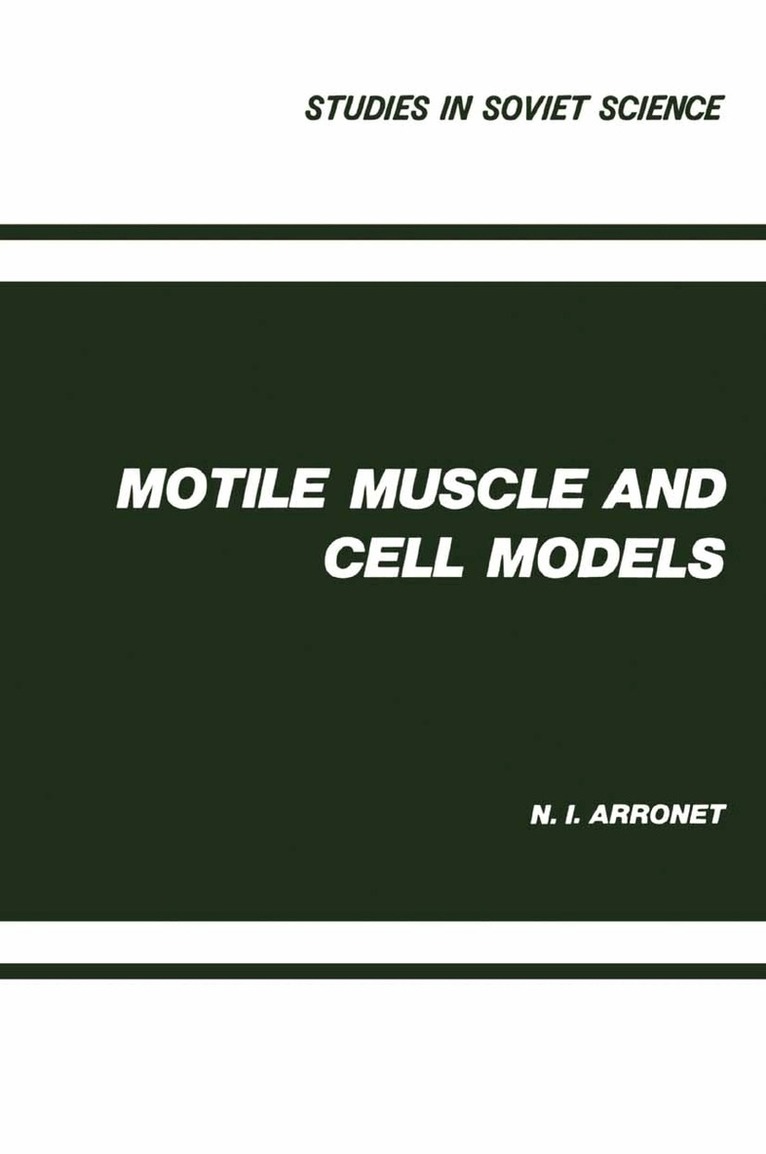
Motile Muscle and Cell Models
568 kr
Beställningsvara. Skickas inom 10-15 vardagar. Fri frakt över 249 kr.
Beskrivning
One of the early ways by which man learns about the sur rounding world is by taking to pieces an object which attracts his attention. This method, which is widely used by children, is re sorted to once again by the adult who wishes to study natural phe nomena. The method of dismantling a complete object into its parts so that it can be studied has found its widest and most suc cessful application in biology and, in particular, in the study of living cells. The cytologist studying a cell will usually have to examine its fragments, which may be dead or semiliving. In sec tions of killed cells, with the aid of the light or electron micro scope he tries to obtain some idea of the structure of the living cell. As he investigates fractions isolated from a tissue homog enate, or substances isolated from individual cells, he tries to discover the biochemical functions of the cell organoids and their components. In every case the study of degradation products of the cell (depending on the degree of degradation these may be iso lated nuclei, nucleoli, nucleolar ribosomes, ribosomal proteins and RNA, mitochondria, fragments of mitochondrial membranes, and so on) makes its own contribution to knowledge, and the infor mation obtained on different objects is mutually complementary. Among all the cell fragments obtaine,d experimentally which can make a great contribution to our knowledge of cell structure, an important place is occupied by contractile cell models.
Produktinformation
- Utgivningsdatum: 2012-11-26
- Mått: 152 x 229 x 17 mm
- Vikt: 312 g
- Format: Häftad
- Språk: Engelska
- Serie: Studies in Soviet Science
- Antal sidor: 192
- Förlag: Springer-Verlag New York Inc.
- ISBN: 9781468485226
Utforska kategorier
Betyg & recensioner
0 recensioner
Inga recensioner tillgängliga.