• Fri frakt över 249 kr
  • •
  • Snabba leveranser
  • •
  • Billiga böcker
Kundservice

Du är på sajten för privatpersoner.

Företag, bibliotek eller offentlig verksamhet?

Du handlar på classic.bokus.com, där alla dina funktioner finns intakta.
Till classic.bokus.com
Bokus logotyp. Gå till startsidan.
  • Erbjudanden
  • Nyheter
  • Student
  • Topplistor
  • Barn & ungdom
  • Bokus Play
  • E-böcker
  • Pocketböcker
  • Spel & pussel

10% rabatt på allt med kod: NYSTART10 →

Sidfot

Mina sidor

    Hjälp

    • Kundservice
    • Vanliga frågor och svar
    • Frakt och leverans
    • Retur vid ångerrätt
    • Reklamera vara
    • Betalning
    • Köpvillkor
    • Allmänna villkor
    • Information om webbplatsens tillgänglighet

    Om Bokus

    • Om oss
    • Pressrum
    • För studenter
    • För företag
    • För bibliotek och offentlig verksamhet
    • För leverantörer
    • Hållbarhet

    Populärt

    • Aktuella erbjudanden
    • Presentkort
    • Studentlitteratur
    • Nya böcker
    • Topplistor
    • Signerade böcker
    • Engelska böcker

    Inspiration

    • Boktips
    • BookTok
    • Populära bokserier
    • Barnbokskaraktärer
    • Populära författare
    Logotyp för Bokus
    Följ oss på Facebook (extern länk)Följ oss på Instagram (extern länk)Följ oss på YouTube (extern länk)Följ oss på TikTok (extern länk)
    bokus @ CookiesAnpassa cookiesIntegritetspolicyKöpvillkor
    Till Citymail hemsida (extern länk)Till Budbee hemsida (extern länk)Till Postnord hemsida (extern länk)Till Schenker hemsida (extern länk)Till Early Bird hemsida (extern länk)Till Walleys hemsida (extern länk)
    1. Skönlitteratur
    2. Litteraturvetenskap
    3. Litteraturvetenskap

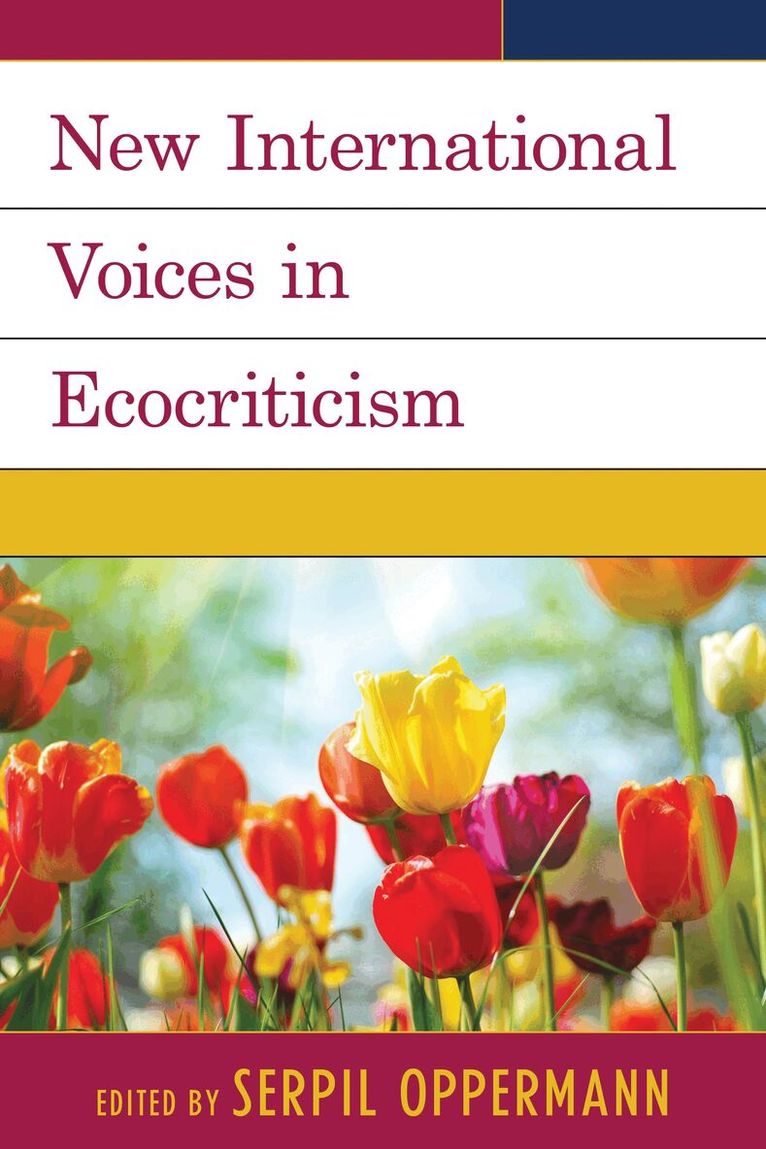
    New International Voices in Ecocriticism

    AvSerpil Oppermann

    Häftad, Engelska, 2016

    Del i serien Ecocritical Theory and Practice

    806 kr

    Beställningsvara. Skickas inom 10-15 vardagar. Fri frakt över 249 kr.

    Beskrivning

    With twelve original essays that characterize truly international ecocriticisms, New International Voices in Ecocriticism presents a compendium of ecocritical approaches, including ecocritical theory, ecopoetics, ecocritical analyses of literary, cultural, and musical texts (especially those not commonly studied in mainstream ecocriticism), and new critical vistas on human-nonhuman relations, postcolonial subjects, material selves, gender, and queer ecologies. It develops new perspectives on literature, culture, and the environment. The essays, written by contributors from the United States, Canada, Germany, Turkey, Spain, China, India, and South Africa, cover novels, drama, autobiography, music, and poetry, mixing traditional and popular forms. Popular culture and the production and circulation of cultural imaginaries feature prominently in this volume—how people view their world and the manner in which they share their perspectives, including the way these perspectives challenge each other globally and locally. In this sense the book also probes borders, border transgression, and border permeability. By offering diverse ecocritical approaches, the essays affirm the significance and necessity of international perspectives in environmental humanities, and thus offer unique responses to environmental problems and that, in some sense, affect many beginning and established scholars.

    Produktinformation

    • Utgivningsdatum:2016-08-29
    • Mått:152 x 227 x 16 mm
    • Vikt:340 g
    • Format:Häftad
    • Språk:Engelska
    • Serie:Ecocritical Theory and Practice
    • Antal sidor:228
    • Förlag:Bloomsbury Publishing Plc
    • ISBN:9781498501491

    Utforska kategorier

    • Litteraturvetenskap inom Skönlitteratur

    Mer om författaren

    Serpil Oppermann is professor of English at Hacettepe University.

    Recensioner i media

    With essays from 12 doctoral students, this volume showcases emergent voices and celebrates the current diversity of critical approaches in ecocriticism. Most of the essays examine environmental issues within traditional literary genres, but a few analyze forms of pop culture, such as television sitcoms and heavy metal music. In a useful introduction, Oppermann offers a survey of the global contexts of ecocriticism. The essays themselves appear in three sections. The first, 'New Ecocritical Trends,' proposes a set of theoretical approaches: deconstructive ecocriticism, 'postlocal ecocriticism,' 'affective ecocriticism,' and 'gothic ecocriticism.' The second section explores how ecocriticism has moved beyond a concern with nature: these essays discuss the relationships among environment, culture, identity, and power and examine concepts of the 'un-natural' and the marginalized, place, and displacement. The final section focuses on human and animal relations in contemporary literature. The volume features an impressively transnational group of young scholars . . . The collection offers an interesting set of provocations and offers a glimpse of how ecocriticism might evolve as an increasingly global field of study. Summing Up: Recommended. Graduate students, researchers, faculty.

    Innehållsförteckning

    • Table of ContentsForewordby Scott SlovicAcknowledgmentsIntroduction: New International Voices in EcocriticismSerpil OppermannPart I. New Ecocritical TrendsChapter 1. Selves at the Fringes: Expanding Material Ecocriticism Kyle BladowChapter 2. “Global Subcultural Bohemianism”: Postlocal Ecocriticism and Tim Winton’s BreathWilliam V. LombardiChapter 3. “What is it about you . . . that so irritates me?”: Northern Exposure’s Sustainable FeelingSylvan GoldbergChapter 4. Bang Your Head and Save the Planet: Gothic EcocriticismBasak Agin DönmezPart II. Nature and Human ExperienceChapter 5. Un-Natural Ecopoetics: Natural/Cultural Intersections in Poetic Language and FormSarah NolanChapter 6. “There’s No Place like ‘Home’”: Susanna Moodie, Shelter Writing, and Dwelling on the EarthElise MitchellChapter 7. Against Ecological Kitsch: Derek Jarman’s Prospect Cottage ProjectGuangchen ChenChapter 8. Neo-Aranyakas: An Enquiry into Mahasweta Devi’s Forest FictionsAnu T. AsokanChapter 9. Ecoerotic Imaginations in the Early Modernity and Cavendish’s The Convent of PleasureAbdulhamit ArvasPart III. Human-Nonhuman RelationsChapter 10. What Are We? The Human Animal in Eugene O’Neill’s The Hairy ApeChristina CaupertChapter 11. Familiar Animals: The question of human-animal relationships in Lauren Beukes’s Zoo CityElzette SteenkampChapter 12. Dismantling “Conceptual Straitjackets” in Peter Dickinson’s EvaDiana Villanueva RomeroAfterword by Greta GaardContributorsIndex