• Fri frakt över 249 kr
  • •
  • Snabba leveranser
  • •
  • Billiga böcker
Kundservice

Du är på sajten för privatpersoner.

Företag, bibliotek eller offentlig verksamhet?

Du handlar på classic.bokus.com, där alla dina funktioner finns intakta.
Till classic.bokus.com
Bokus logotyp. Gå till startsidan.
  • Erbjudanden
  • Nyheter
  • Student
  • Topplistor
  • Barn & ungdom
  • Bokus Play
  • E-böcker
  • Pocketböcker
  • Spel & pussel

Må bättre, för mindre! Upp till 50% rabatt på hälsoböcker

Sidfot

Mina sidor

    Hjälp

    • Kundservice
    • Vanliga frågor och svar
    • Frakt och leverans
    • Retur vid ångerrätt
    • Reklamera vara
    • Betalning
    • Köpvillkor
    • Allmänna villkor
    • Information om webbplatsens tillgänglighet

    Om Bokus

    • Om oss
    • Pressrum
    • För studenter
    • För företag
    • För bibliotek och offentlig verksamhet
    • För leverantörer
    • Hållbarhet

    Populärt

    • Aktuella erbjudanden
    • Presentkort
    • Studentlitteratur
    • Nya böcker
    • Topplistor
    • Signerade böcker
    • Engelska böcker

    Inspiration

    • Boktips
    • BookTok
    • Populära bokserier
    • Barnbokskaraktärer
    • Populära författare
    Logotyp för Bokus
    Följ oss på Facebook (extern länk)Följ oss på Instagram (extern länk)Följ oss på YouTube (extern länk)Följ oss på TikTok (extern länk)
    bokus @ CookiesAnpassa cookiesIntegritetspolicyKöpvillkor
    Till Citymail hemsida (extern länk)Till Budbee hemsida (extern länk)Till Postnord hemsida (extern länk)Till Schenker hemsida (extern länk)Till Early Bird hemsida (extern länk)Till Walleys hemsida (extern länk)
    1. Samhälle och politik
    2. Politik och statsskick
    3. Internationella relationer

    Changing Regional Alliances for China and the West

    AvDavid Lane,Guichang Zhu

    Inbunden, Engelska, 2017

    Del i serien Russian, Eurasian, and Eastern European Politics

    1 533 kr

    Beställningsvara. Skickas inom 10-15 vardagar. Fri frakt över 249 kr.

    Beskrivning

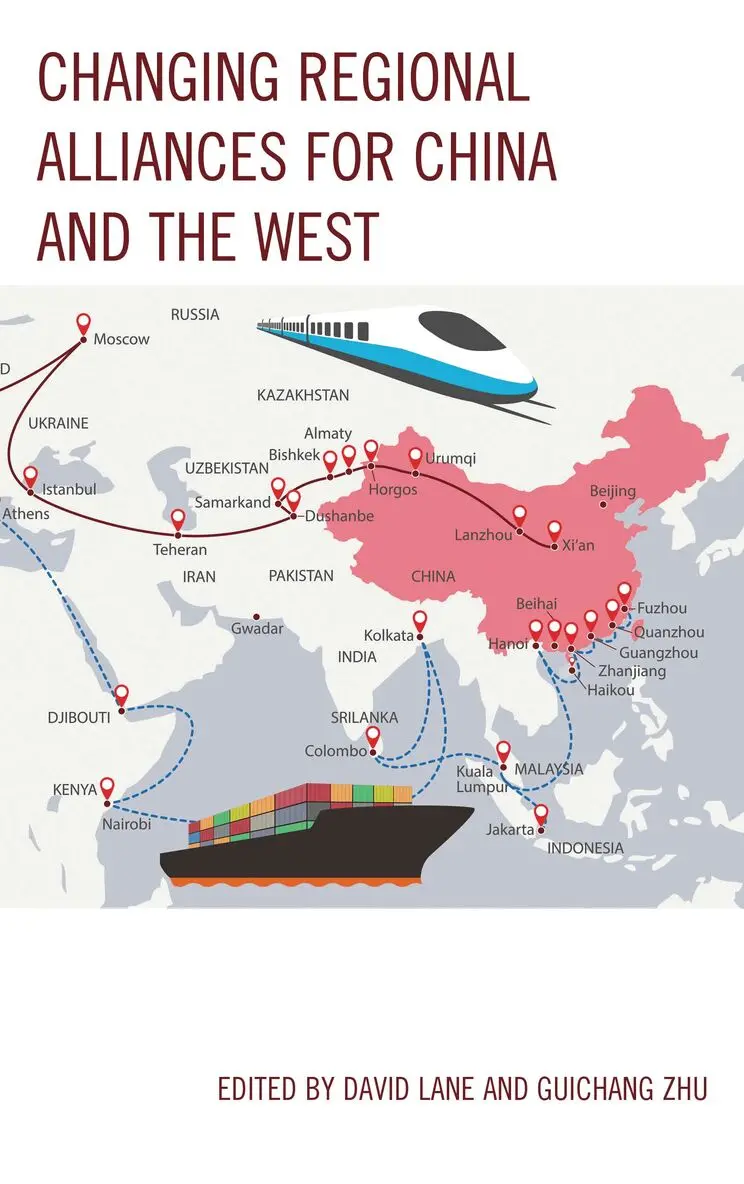
    Since the end of the World War II, nation states have formed regions to give them some protection from the processes of globalization and internationalization. Against this background, the contributors consider the position of China in the processes of regional competitive interdependency. This book offers analysis at three levels: internal, regional, and global. Chapters consider China’s position in regional post-socialist associations such as the BRICS, the Shanghai Cooperation Organization (SCO), the Eurasian Economic Union (EEU), the Silk Road Economic Belt and the ‘One Belt, One Road’ (OBOR). Contributors discuss how membership in these regional bodies is likely to enhance China’s economic power, strategic position, and political importance. A major theme addressed is whether these new powers will become complementary to the American-led economic core countries or evolve as countervailing powers. Contributors suggest that linkages favored by China’s regional associations are more ‘network’ based and informal in character. They are more in keeping with regionalization rather than regional blocs such as the European Union, which have ‘locked in’ members to market-driven institutions. Thus, these new developments move away from a neo-liberal market perspective and satisfy the needs of members to retain their economic and political sovereignty. This book considers whether these new regional blocs led by China will perform a ‘transformative’ process for the international order or become an alternative—supplementary to, but not replacing, the existing institutions of the North. An important topic is the relationship of Russia and China to the Central Asian countries of the former USSR and the interaction between the Russia-led Eurasian Economic Union and the Chinese initiative of the Silk Road Economic Belt. There is potential for the evolution of an alliance between China and Russia against the neo-liberal order led by the USA. Concurrently, they bring out possible the tensions between Russia’s and China’s conflicting interests over influence in Central Asia. Reactions to China’s rise include the Trump administration’s movement from a multilateral to a bi-lateral trade policy and the threat of discriminatory tariffs for China. The contributors seek to promote a better appreciation of China’s role in regional associations, and the implications of contemporary developments in economic, geo-political, and international political affairs in the 21st century.

    Produktinformation

    • Utgivningsdatum:2017-11-15
    • Mått:160 x 236 x 28 mm
    • Vikt:621 g
    • Format:Inbunden
    • Språk:Engelska
    • Serie:Russian, Eurasian, and Eastern European Politics
    • Antal sidor:348
    • Förlag:Bloomsbury Publishing Plc
    • ISBN:9781498562331

    Utforska kategorier

    • Internationella relationer inom Samhälle och politik

    Mer om författaren

    David Lane is emeritus fellow of social sciences at Emmanuel College.Guichang Zhu is professor of international studies and research fellow in the Center for European Studies at Shandong University.

    Recensioner i media

    This book is a great interdisciplinary study of power politics. Analyses of Russian, Chinese, and US policies in the region are combined with a number of interesting case studies on institutional aspects of BRICS Development Bank and Silk Road developmental effects written by scholars from the region. Absolute must read for anyone who wants to understand Eurasia.

    Innehållsförteckning

    • List of FiguresList of TablesPrefaceIntroduction: The Changing Pattern of World Trade and PoliticsChapter 1: Post-Soviet Regions: from Interdependence to Countervailing Powers? by David LaneChapter 2: The Changing Governance and Geography of World Trade, by Stefan SchmalzPart I: China’s Initiatives in AsiaChapter 3: ‘One Belt, One Road’ As a Development Strategy, by Richard Griffiths Chapter 4: Donald Trump’s Presidency and the Implementation of OBOR in Central Asia, Akram UmarovChapter 5: The Rationale Behind the China–Pakistan Economic Corridor (CPEC): The View From Beijing, by Harry RobertsChapter 6: India Looks East and China Looks South: Competition, Confrontation or Balance, by Xueyu Wang and Mohammad Razaul KarimPart II: China’s Regional InitiativesChapter 7: Russia–China Relations in Central Asia and the SCO, by Mikhail A. MolchanovChapter 8: Energy Infrastructure Policy and State Capacity In BRIC Countries: A Comparative Analysis, by Carlos SantanaChapter 9: The BRICs’ New Development Bank: Its Potential Implications to International Political Economy, by Shigehisa KasaharaChapter 10: Russia and China as the Yin-And-Yang of 21st Century Eurasia? by Kaneshko SangarPart III: China and World PoliticsChapter 11: Strong as Silk: China in the Liberal Order, by Michael O. SlobodchikoffChapter 12: Comparative Analysis of China’s Policies towards Integrated Organizations, by He ZhigaoChapter 13: The US Pivot to Asia: Implications for China and East Asia, by Jeanne L. WilsonChapter 14: Can China’s Rise Continue without Conflict? by Kees van der PijlAbout the Contributors