• Fri frakt över 249 kr
  • •
  • Snabba leveranser
  • •
  • Billiga böcker
Kundservice

Du är på sajten för privatpersoner.

Företag, bibliotek eller offentlig verksamhet?

Du handlar på classic.bokus.com, där alla dina funktioner finns intakta.
Till classic.bokus.com
Bokus logotyp. Gå till startsidan.
  • Erbjudanden
  • Nyheter
  • Student
  • Topplistor
  • Barn & ungdom
  • Bokus Play
  • E-böcker
  • Pocketböcker
  • Spel & pussel

10% rabatt på allt med kod NYSTART10 →

Sidfot

Mina sidor

    Hjälp

    • Kundservice
    • Vanliga frågor och svar
    • Frakt och leverans
    • Retur vid ångerrätt
    • Reklamera vara
    • Betalning
    • Köpvillkor
    • Allmänna villkor
    • Information om webbplatsens tillgänglighet

    Om Bokus

    • Om oss
    • Pressrum
    • För studenter
    • För företag
    • För bibliotek och offentlig verksamhet
    • För leverantörer
    • Hållbarhet

    Populärt

    • Aktuella erbjudanden
    • Presentkort
    • Studentlitteratur
    • Nya böcker
    • Topplistor
    • Signerade böcker
    • Engelska böcker

    Inspiration

    • Boktips
    • BookTok
    • Populära bokserier
    • Barnbokskaraktärer
    • Populära författare
    Logotyp för Bokus
    Följ oss på Facebook (extern länk)Följ oss på Instagram (extern länk)Följ oss på YouTube (extern länk)Följ oss på TikTok (extern länk)
    bokus @ CookiesAnpassa cookiesIntegritetspolicyKöpvillkor
    Till Citymail hemsida (extern länk)Till Budbee hemsida (extern länk)Till Postnord hemsida (extern länk)Till Schenker hemsida (extern länk)Till Early Bird hemsida (extern länk)Till Walleys hemsida (extern länk)
    1. Skönlitteratur
    2. Litteraturvetenskap
    3. Litteraturvetenskap

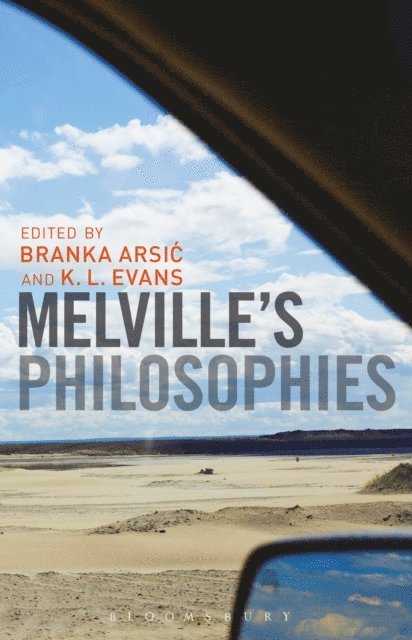
    Melville’s Philosophies

    AvBranka Arsic,K. L. Evans

    E-bok
    Engelska, 2017

    608 kr

    Läs direkt i Bokus Reader – eller ladda ned till din enhet

    Beskrivning

    Melville's Philosophies departs from a long tradition of critical assessments of Melville that dismissed his philosophical capacities as ingenious but muddled. Its contributors do not apply philosophy to Melville in order to detect just how much of it he knew or understood. To the contrary, they try to hear the philosophical arguments themselves-often very strange and quite radical-that Melville never stopped articulating and reformulating. What emerges is a Melville who is materialistically oriented in a radical way, a Melville who thinks about life forms not just in the context of contemporary sciences but also ontologically. Melville's Philosophies recovers a Melville who is a thinker of great caliber, which means obliquely but dramatically reversing the way the critical tradition has characterized his ideas. Finally, as a result of the readings collected here, Melville emerges as a very relevant thinker for contemporary philosophical concerns, such as the materialist turn, climate change, and post-humanism.

    Produktinformation

    • Utgivningsdatum:2017-05-18
    • Språk:Engelska
    • Antal sidor:336
    • Filformat:EPUB
    • Kopieringsskydd:LCP
    • ISBN:9781501321023
    • Förlag:Bloomsbury Publishing PLC (Digital)

    Utforska kategorier

    • Litteraturvetenskap inom Skönlitteratur

    Mer om författaren

    Branka Arsic is Charles and Lynn Zhang Professor of English and Comparative Literature at Columbia University, USA. She is the author of Bird Relics, Grief and Vitalism in Thoreau (Harvard, 2015), On Leaving, A Reading in Emerson (2010), Passive Constitutions or 71/2 Times Bartleby (2007). She is co-editor (with Cary Wolfe) of The Other Emerson: New Approaches, Divergent Paths (2010) and editor of The American Impersonal (Bloomsbury Academic, 2014).K. L. Evans is Visiting Scholar in the Department of English at Cornell University, USA. Previously she was Associate Professor of Literature and Philosophy at Yeshiva University in New York City. She is the author of Whale! (2003) and One Foot in the Finite: Melville's Realism Reclaimed (forthcoming 2017).

    Recensioner i media

    This collection does not stress Melville as philosopher or Melville's relation to philosophers (although Paul Downes does consider Melville and Hobbes); rather it looks at the philosophy latent in Melville's creative vision. Though the contributors range from veterans (Kenneth Dauber, Colin Dayan) to more recent voices (Elisa Tamarkin, Samuel Otter) to the well-known, consummately idiosyncratic Arsic, the essays share a common dimension: the synchronic. In so many cases in which development appeared possible, a wise reflectiveness reveals repetition. In his essay, Michael Jonik says The Confidence-Man should make one “remain ever wary of the advance of geniality.” James Lilley argues that Amasa Delano's dancing in Benito Cereno is “fragmented gestures” necessarily “fateful and failed.” Rhian Williams reads the late Holy Land epic Clarel as figuring “religiosity through repetition"; in their essays on Clarel, Arsic and Paul Hurh have different religious stances but agree that existence is naught but a “continuous, processional concept" (as Arsic writes). Overall the book gives a heartening sense of movement into a world where, as Evans puts it in the opening essay, one is “fully at home” but “never in control.” Summing Up: Recommended. Lower-division undergraduates through faculty.

    Innehållsförteckning

    • List of FiguresIntroduction: Reconstructing MelvilleBranka Arsic (Columbia University, USA) and K. L. Evans (Cornell University, USA)PART ONE: WORLD-MAKING1. Gospel CetologyK. L. Evans (Cornell University, USA)2. Billy Budd, Billy Budd Stuart Burrows (Brown University, USA)3. Science, Philosophy, and Aesthetics in “The Apple-Tree Table”Maurice S. Lee (Boston University, USA)4. Clarel, Doubt, DelayPaul Hurh (University of Arizona, USA)PART TWO: LOVE STORIES5. The Lawyer's Tale: Preference, Responsibility, and Personhood in Melville's "Story of Wall-street"Rachel Cole (Lewis & Clark College, USA)6. Pierre in LoveKenneth Dauber (SUNY-Buffalo, USA)7. Phenomenology Beyond the Phantom Limb: Melvillean Figuration & Chronic PainMichael Snediker (University of Houston, USA)8. "Learning, unlearning, word by word": Feeling Faith in Melville's ClarelRhian Williams (University of Glasgow, UK)PART THREE: ARTS9. Fateful Gestures: On Movement and the Maneuvers of Style in “Benito Cereno”James D. Lilley (SUNY-Albany, USA)10. Melville, Poetry, PrintsSamuel Otter (University of California, USA)11. A Final Appearance with Elihu Vedder: Melville's VisionsElisa Tamarkin (University of California, USA)12. La téméraire littéraire: Reckless Adaptation in Pierre and Pola XPaul Grimstad (New York University, USA)PART FOUR: COMMUNITIES12. Melville's LeviathanPaul Downes (University of Toronto, Canada)13. Bartleby's ScreenColin Dayan (Vanderbilt University, USA)14. Melville's MisanthropologyMichael Jonik (University of Sussex, UK)15. Desertscapes: Geological Politics in ClarelBranka Arsic (Columbia University, USA)ContributorsIndex