• Fri frakt över 249 kr
  • •
  • Snabba leveranser
  • •
  • Billiga böcker
Kundservice

Du är på sajten för privatpersoner.

Företag, bibliotek eller offentlig verksamhet?

Du handlar på classic.bokus.com, där alla dina funktioner finns intakta.
Till classic.bokus.com
Bokus logotyp. Gå till startsidan.
  • Erbjudanden
  • Nyheter
  • Student
  • Topplistor
  • Barn & ungdom
  • Bokus Play
  • E-böcker
  • Pocketböcker
  • Spel & pussel

Må bättre, för mindre! Upp till 50% rabatt på hälsoböcker

Sidfot

Mina sidor

    Hjälp

    • Kundservice
    • Vanliga frågor och svar
    • Frakt och leverans
    • Retur vid ångerrätt
    • Reklamera vara
    • Betalning
    • Köpvillkor
    • Allmänna villkor
    • Information om webbplatsens tillgänglighet

    Om Bokus

    • Om oss
    • Pressrum
    • För studenter
    • För företag
    • För bibliotek och offentlig verksamhet
    • För leverantörer
    • Hållbarhet

    Populärt

    • Aktuella erbjudanden
    • Presentkort
    • Studentlitteratur
    • Nya böcker
    • Topplistor
    • Signerade böcker
    • Engelska böcker

    Inspiration

    • Boktips
    • BookTok
    • Populära bokserier
    • Barnbokskaraktärer
    • Populära författare
    Logotyp för Bokus
    Följ oss på Facebook (extern länk)Följ oss på Instagram (extern länk)Följ oss på YouTube (extern länk)Följ oss på TikTok (extern länk)
    bokus @ CookiesAnpassa cookiesIntegritetspolicyKöpvillkor
    Till Citymail hemsida (extern länk)Till Budbee hemsida (extern länk)Till Postnord hemsida (extern länk)Till Schenker hemsida (extern länk)Till Early Bird hemsida (extern länk)Till Walleys hemsida (extern länk)
    1. Psykologi och pedagogik
    2. Pedagogik

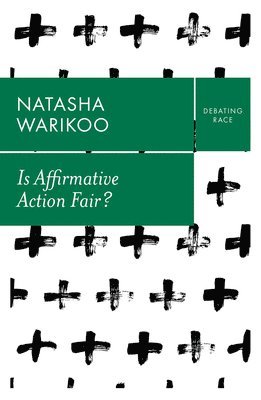
    Is Affirmative Action Fair?

    The Myth of Equity in College Admissions

    AvNatasha Warikoo

    Inbunden, Engelska, 2022

    Del i serien Debating Race

    539 kr

    Beställningsvara. Skickas inom 5-8 vardagar. Fri frakt över 249 kr.

    Fler format och utgåvor

    Häftad

    140 kr

    E-bok

    159 kr

    Beskrivning

    Affirmative action in college admissions – considering whether an applicant is part of an underrepresented group when making selection decisions – has long been a topic of heated public debate. Some argue that it undermines racial equity. Others advocate for its ability to promote equal opportunity in a racially unequal society. Who is right?Natasha Warikoo dives into the arguments for and against a policy that has made it to the US Supreme Court many times. She digs into the purposes of higher education and the selection process itself to argue that it is a mistake to equate college admissions with personal merit and reward. College admissions should be based on furthering the mission of higher education: contributing to our shared democracy and to the human condition. Ultimately, Warikoo concludes that a focus on individual fairness conceals much more important questions about justice. No matter what their perspective, readers will find themselves thinking anew and asking the deeper questions that underlie this emotive debate.​

    Produktinformation

    • Utgivningsdatum:2022-10-07
    • Mått:130 x 193 x 18 mm
    • Vikt:227 g
    • Format:Inbunden
    • Språk:Engelska
    • Serie:Debating Race
    • Antal sidor:144
    • Förlag:Polity Press
    • ISBN:9781509549368

    Utforska kategorier

    • Pedagogik inom Psykologi och pedagogik

    Mer om författaren

    Natasha Warikoo is Professor of Sociology at Tufts University.

    Recensioner i media

    “If you want to understand the history, context, and nuances of affirmative action, this is an important read. Warikoo challenges us to reframe the questions we ask regarding this critical issue that divides Americans yet has serious implications for the future of our society.”Angel B. Pérez, Chief Executive Officer, National Association for College Admission Counseling“A great primer on affirmative action for a general reader, this book serves an important need: a contemporary text that covers the subject matter in a short and succinct matter.”Amaka Okechukwu, George Mason University“Smart and concise, this book provides the crash course you need on one of the most consequential policies of our times. Unlike the polemics and legalese that overwhelm popular discussions, Is Affirmative Action Fair? stands out for its grounding in social science expertise and highly readable prose. Highly recommended for anyone seeking a rigorous explanation of the stakes of using, and losing, an essential tool in a long struggle for racial justice.”Ellen Berrey, University of Toronto“This book engages the longstanding debate over affirmative action with admirable clarity and purpose. It identifies, documents, and judiciously assesses the thorny controversies, providing facts and argument that compel readers to think beyond the simplistic assumptions that often mar thoughtful debate.”Stephen Steinberg, CUNY Graduate Center“Warikoo is both convincing and comprehensive in her review of the state of social science on affirmative action. The way that social science research is expressed in this petit livre is masterful.”Social Forces“Is Affirmative Action Fair? serves as a useful debunking of arguments against affirmative action and as a primer for readers unfamiliar with the complex and ongoing discussion about affirmative action.”Journal of Race & Policy“There’s not just one way of looking at fairness. Nor is there a single, fixed, objective definition of merit, excellence, awesomeness, or ‘the best.’ Natasha K. Warikoo reminds us of those truths in her […] concise, conversational riff on race-conscious admissions.” The Chronicle of Higher Education“Is affirmative action fair? That is the wrong question to ask. […] Natasha Warikoo aims to shift the way we look at college admissions, and by extension affirmative action. […] Excellent.”Contemporary Sociology

    Innehållsförteckning

    • IntroductionChapter 1: The Purposes of Higher Education and the History of Affirmative ActionChapter 2: The Case For and Against Affirmative ActionChapter 3: Asian Americans, Achievement, and Affirmative ActionConclusion: From Fairness to Justice