• Fri frakt över 249 kr
  • •
  • Snabba leveranser
  • •
  • Billiga böcker
Kundservice

Du är på sajten för privatpersoner.

Företag, bibliotek eller offentlig verksamhet?

Du handlar på classic.bokus.com, där alla dina funktioner finns intakta.
Till classic.bokus.com
Bokus logotyp. Gå till startsidan.
  • Erbjudanden
  • Nyheter
  • Student
  • Topplistor
  • Barn & ungdom
  • Bokus Play
  • E-böcker
  • Pocketböcker
  • Spel & pussel

10% rabatt på allt med kod: NYSTART10 →

Sidfot

Mina sidor

    Hjälp

    • Kundservice
    • Vanliga frågor och svar
    • Frakt och leverans
    • Retur vid ångerrätt
    • Reklamera vara
    • Betalning
    • Köpvillkor
    • Allmänna villkor
    • Information om webbplatsens tillgänglighet

    Om Bokus

    • Om oss
    • Pressrum
    • För studenter
    • För företag
    • För bibliotek och offentlig verksamhet
    • För leverantörer
    • Hållbarhet

    Populärt

    • Aktuella erbjudanden
    • Presentkort
    • Studentlitteratur
    • Nya böcker
    • Topplistor
    • Signerade böcker
    • Engelska böcker

    Inspiration

    • Boktips
    • BookTok
    • Populära bokserier
    • Barnbokskaraktärer
    • Populära författare
    Logotyp för Bokus
    Följ oss på Facebook (extern länk)Följ oss på Instagram (extern länk)Följ oss på YouTube (extern länk)Följ oss på TikTok (extern länk)
    bokus @ CookiesAnpassa cookiesIntegritetspolicyKöpvillkor
    Till Citymail hemsida (extern länk)Till Budbee hemsida (extern länk)Till Postnord hemsida (extern länk)Till Schenker hemsida (extern länk)Till Early Bird hemsida (extern länk)Till Walleys hemsida (extern länk)
    1. Skönlitteratur
    2. Litteraturvetenskap
    3. Litteraturvetenskap

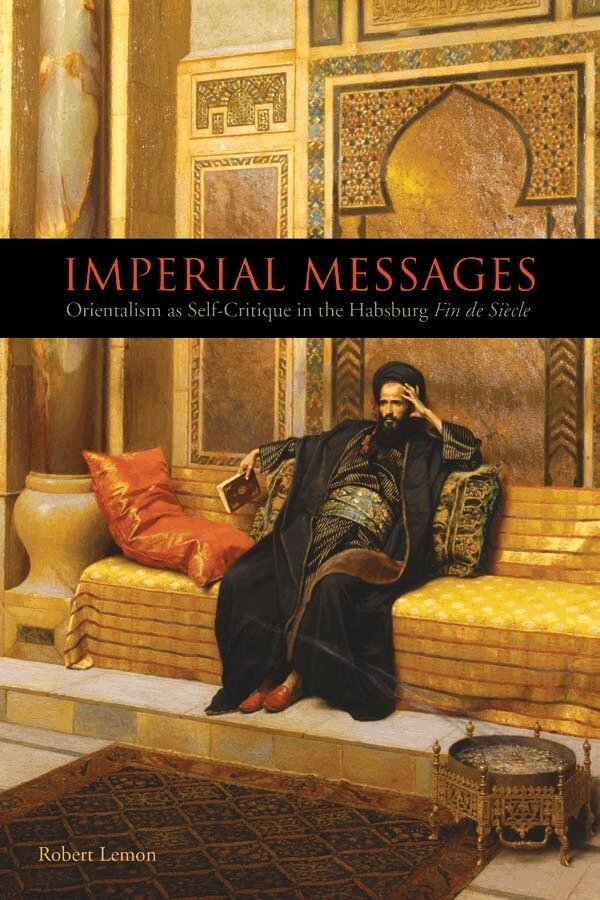
    Imperial Messages

    Orientalism as Self-Critique in the Habsburg Fin de Siècle

    AvRobert Lemon

    Inbunden, Engelska, 2011

    Del 101 i serien Studies in German Literature Linguistics and Culture

    983 kr

    Tillfälligt slut

    Beskrivning

    Orientalism as self-critique rather than hegemonic discourse in works by Hofmannsthal, Musil, and Kafka.In recent years a debate has arisen on the applicability of postcolonial theory to the Austro-Hungarian Empire. Some have argued that Austria-Hungary's lack of overseas territories renders the concepts of colonialism and postcolonialism irrelevant, while others have cited the quasi-colonial attitudes of the Viennese elite towards the various "subject peoples" of the empire as a point of comparison. Imperial Messages applies postcolonial theory to works of orientalist fiction by Hugo von Hofmannsthal, Robert Musil, and Franz Kafka, all subjects of the empire, challenging Edward Said's notion that orientalism invariably acts in the ideological service of European colonialism.It argues that these Habsburg authors employ oriental motifs not to promulgate Western hegemony, but to engage in self-reflection and self-critique, including critique of the foundational concepts of orientalist discourse itself.By providing detailed textual analyses of canonical works of Austrian Modernism, including Hofmannsthal's "Tale of the 672nd Night," Musil's Young Törless, and Kafka's "In the Penal Colony," the book not only offers new postcolonial readings of these Austrian works, but also shows how they question the conventional postcolonial and post-Saidian view of orientalism as a purely hegemonic discourse. Robert Lemon is Associate Professor of German at the University of Oklahoma.

    Produktinformation

    • Utgivningsdatum:2011-06-01
    • Mått:152 x 229 x 20 mm
    • Vikt:404 g
    • Format:Inbunden
    • Språk:Engelska
    • Serie:Studies in German Literature Linguistics and Culture
    • Antal sidor:184
    • Förlag:Boydell & Brewer Ltd
    • ISBN:9781571135001

    Utforska kategorier

    • Litteraturvetenskap inom Skönlitteratur

    Recensioner i media

    With his book Robert Lemon delivers a valuable contribution to the topic of orientalism in German-language literature of the late nineteenth and early twentieth centuries. Lemon's work fills a gap in current scholarship, which for the most part has been lacking any focused treatment of orientalism in the context of Austro-Hungarian literature.

    Innehållsförteckning

    • IntroductionEmpiricist Empires: Hofmannsthal's Domestic OrientalismEmpirical Mysticism and Imperial Mystique: Orientalism inMusil's Die Verwirrungen des Zöglings TörlessThe Sovereign Subject under Siege: Ethnology andEthnocentrism in Kafka's "Description of a Struggle,"Jackals und Arabs," and "In the Penal Colony"The Contingent Continent: Kafka's China in "Beim Bauder chinesischen Mauer" and "Ein altes Blatt"ConclusionWorks Cited