• Fri frakt över 249 kr
  • •
  • Snabba leveranser
  • •
  • Billiga böcker
Kundservice

Du är på sajten för privatpersoner.

Företag, bibliotek eller offentlig verksamhet?

Du handlar på classic.bokus.com, där alla dina funktioner finns intakta.
Till classic.bokus.com
Bokus logotyp. Gå till startsidan.
  • Erbjudanden
  • Nyheter
  • Student
  • Topplistor
  • Barn & ungdom
  • Bokus Play
  • E-böcker
  • Pocketböcker
  • Spel & pussel

10% rabatt på allt med kod: NYSTART10 →

Sidfot

Mina sidor

    Hjälp

    • Kundservice
    • Vanliga frågor och svar
    • Frakt och leverans
    • Retur vid ångerrätt
    • Reklamera vara
    • Betalning
    • Köpvillkor
    • Allmänna villkor
    • Information om webbplatsens tillgänglighet

    Om Bokus

    • Om oss
    • Pressrum
    • För studenter
    • För företag
    • För bibliotek och offentlig verksamhet
    • För leverantörer
    • Hållbarhet

    Populärt

    • Aktuella erbjudanden
    • Presentkort
    • Studentlitteratur
    • Nya böcker
    • Topplistor
    • Signerade böcker
    • Engelska böcker

    Inspiration

    • Boktips
    • BookTok
    • Populära bokserier
    • Barnbokskaraktärer
    • Populära författare
    Logotyp för Bokus
    Följ oss på Facebook (extern länk)Följ oss på Instagram (extern länk)Följ oss på YouTube (extern länk)Följ oss på TikTok (extern länk)
    bokus @ CookiesAnpassa cookiesIntegritetspolicyKöpvillkor
    Till Citymail hemsida (extern länk)Till Budbee hemsida (extern länk)Till Postnord hemsida (extern länk)Till Schenker hemsida (extern länk)Till Early Bird hemsida (extern länk)Till Walleys hemsida (extern länk)
    1. Skönlitteratur
    2. Litteraturvetenskap
    3. Litteraturvetenskap

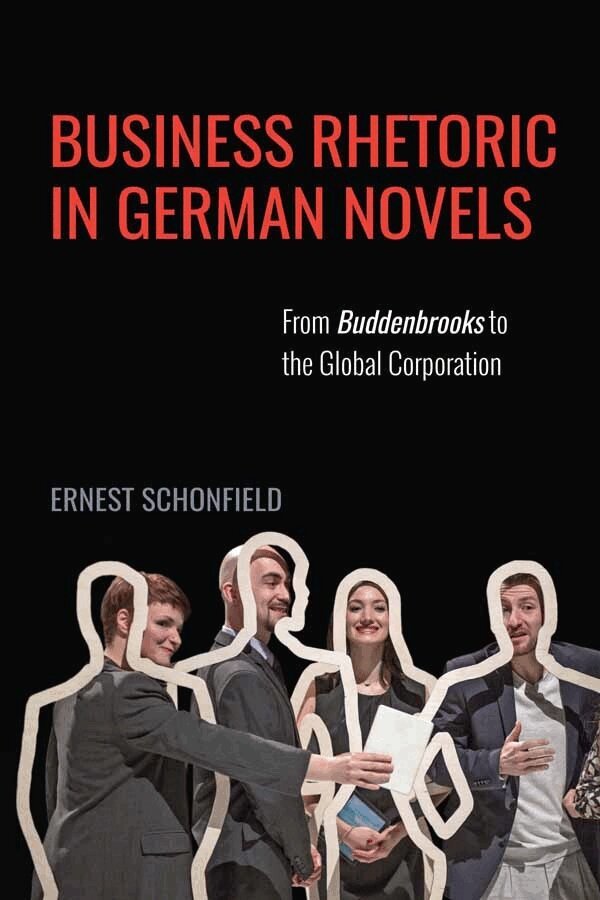
    Business Rhetoric in German Novels

    From Buddenbrooks to the Global Corporation

    AvErnest Schonfield

    Inbunden, Engelska, 2018

    Del 191 i serien Studies in German Literature Linguistics and Culture

    1 407 kr

    Beställningsvara. Skickas inom 10-15 vardagar. Fri frakt över 249 kr.

    Beskrivning

    Argues on the evidence of nine major German novels that literature and business have in common a reliance on language, understood in a creative, performative, and rhetorical sense.Throughout the twentieth century and well into the twenty-first, Germany has maintained its position as one of the world's largest economies. In the literature of this period, business is often depicted as a performance that requires great linguistic skill. This book is a study of the representation of business practices in nine German-language novels - published during the period from 1901 to 2013 - that explore how language is used rhetorically in pursuit of economic and political agendas. Taken up as case studies, in chronological order, the novels are by Thomas Mann, Heinrich Mann, Gabriele Tergit, Bertolt Brecht, Ingeborg Bachmann, Hermann Kant, Friedrich Christian Delius, Kathrin Röggla, and Philipp Schönthaler, all of whom articulate cultural imaginaries and political ideologies at key moments in recent German history. In doing so, they challenge readers to refine their own interpretive skills. By considering business rhetoric in the novels, Ernest Schonfield shows how the formulation of language remains inseparable from the exercise of economic and political power. The central message of this book is that literature and business have something essential in common: they both rely on the persuasive use of language.Ernest Schonfield is Lecturer in German at the University of Glasgow.

    Produktinformation

    • Utgivningsdatum:2018-06-29
    • Mått:152 x 229 x 21 mm
    • Vikt:632 g
    • Format:Inbunden
    • Språk:Engelska
    • Serie:Studies in German Literature Linguistics and Culture
    • Antal sidor:306
    • Förlag:Boydell & Brewer Ltd
    • ISBN:9781571139832

    Utforska kategorier

    • Litteraturvetenskap inom Skönlitteratur

    Innehållsförteckning

    • IntroductionManaging Appearances in Thomas Mann's Buddenbrooks, 1901Oratory and Publicity in Heinrich Mann's Der Untertan, 1914/18Organizing Speech in Gabriele Tergit's Käsebier erobert den Kurfürstendamm, 1931Seeing through the Rhetoric in Bertolt Brecht's Dreigroschenroman, 1934Giving an Account of the Self in Ingeborg Bachmann's Malina, 1971Managing Bureaucracy in Hermann Kant's Das Impressum, 1972Corporate Discourse in Friedrich Christian Delius's Unsere Siemens-Welt, 1972Producing Ethos in Kathrin Röggla's wir schlafen nicht, 2004Communicative Contests in Philipp Schönthaler's Das Schiff das singend zieht auf seiner Bahn, 2013ConclusionNotesBibliographyIndex