• Fri frakt över 249 kr
  • •
  • Snabba leveranser
  • •
  • Billiga böcker
Kundservice

Du är på sajten för privatpersoner.

Företag, bibliotek eller offentlig verksamhet?

Du handlar på classic.bokus.com, där alla dina funktioner finns intakta.
Till classic.bokus.com
Bokus logotyp. Gå till startsidan.
  • Erbjudanden
  • Nyheter
  • Student
  • Topplistor
  • Barn & ungdom
  • Bokus Play
  • E-böcker
  • Pocketböcker
  • Spel & pussel

10% rabatt på allt med kod: NYSTART10 →

Sidfot

Mina sidor

    Hjälp

    • Kundservice
    • Vanliga frågor och svar
    • Frakt och leverans
    • Retur vid ångerrätt
    • Reklamera vara
    • Betalning
    • Köpvillkor
    • Allmänna villkor
    • Information om webbplatsens tillgänglighet

    Om Bokus

    • Om oss
    • Pressrum
    • För studenter
    • För företag
    • För bibliotek och offentlig verksamhet
    • För leverantörer
    • Hållbarhet

    Populärt

    • Aktuella erbjudanden
    • Presentkort
    • Studentlitteratur
    • Nya böcker
    • Topplistor
    • Signerade böcker
    • Engelska böcker

    Inspiration

    • Boktips
    • BookTok
    • Populära bokserier
    • Barnbokskaraktärer
    • Populära författare
    Logotyp för Bokus
    Följ oss på Facebook (extern länk)Följ oss på Instagram (extern länk)Följ oss på YouTube (extern länk)Följ oss på TikTok (extern länk)
    bokus @ CookiesAnpassa cookiesIntegritetspolicyKöpvillkor
    Till Citymail hemsida (extern länk)Till Budbee hemsida (extern länk)Till Postnord hemsida (extern länk)Till Schenker hemsida (extern länk)Till Early Bird hemsida (extern länk)Till Walleys hemsida (extern länk)
    1. Samhälle och politik
    2. Politik och statsskick

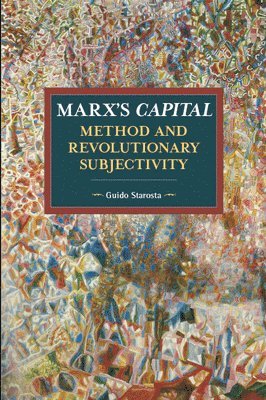
    Marx's Capital, Method And Revolutionary Subjectivity

    AvGuido Starosta

    Häftad, Engelska, 2017

    Del i serien Historical Materialism

    353 kr

    Beställningsvara. Skickas inom 5-8 vardagar. Fri frakt över 249 kr.

    Beskrivning

    Through a methodologically-minded reconstruction of the Marxian critique of political economy, this study shows that the outcome of the historical movement of the objectified form of social mediation, which has turned into the very alienated subject of social life (i.e. capital), is to develop, as its own immanent determination, the constitution of the (self-abolishing) working class as a revolutionary subject.

    Produktinformation

    • Utgivningsdatum:2017-10-10
    • Mått:152 x 230 x 24 mm
    • Vikt:502 g
    • Format:Häftad
    • Språk:Engelska
    • Serie:Historical Materialism
    • Antal sidor:350
    • Förlag:Haymarket Books
    • ISBN:9781608467020

    Utforska kategorier

    • Politik och statsskick inom Samhälle och politik

    Mer om författaren

    Guido Starosta is Professor of the History of Economic Thought at the National University of Quilmes, Argentina and Adjunct Investigator at the Council for Scientific and Technical Research. He has published many articles on value-theory, method and subjectivity in the Marxian critique of political economy.

    Innehållsförteckning

    • AcknowledgementsIntroduction: On the Current State of Revolutionary TheoryPart I. Marx’s Early Critique of Political Economy: The Discovery of the Revolutionary Subject and the Development of Science as Practical Criticism1. The Dialectic of Alienated Labour and the Determinations of Revolutionary Subjectivity in the Paris Manuscripts2. The Overcoming of Philosophy and the Development of a Materialist Science3. Marx on Proudhon: The Critique of Dialectical Logic and the Political Determination of Science as Practical CriticismPart II. Dialectical Knowledge in Motion: Revolutionary Subjectivity in Marx’s Mature Critique of Political Economy4. The Commodity Form and the Dialectical Method5. The Role and Place of Commodity Fetishism in Marx’s Dialectical Exposition in Capital6. The Commodity Form, Subjectivity and the Practical Nature of Defetishising Critique7. Capital Accumulation and Class Struggle: On the Content and Form of Social Reproduction in Its Alienated Form8. Real Subsumption and the Genesis of the Revolutionary Subject9. By Way of a Conclusion: Further Explorations into the Determinations of Revolutionary SubjectivityBibliographyIndex