• Fri frakt över 249 kr
  • •
  • Snabba leveranser
  • •
  • Billiga böcker
Kundservice

Du är på sajten för privatpersoner.

Företag, bibliotek eller offentlig verksamhet?

Du handlar på classic.bokus.com, där alla dina funktioner finns intakta.
Till classic.bokus.com
Bokus logotyp. Gå till startsidan.
  • Erbjudanden
  • Nyheter
  • Student
  • Topplistor
  • Barn & ungdom
  • Bokus Play
  • E-böcker
  • Pocketböcker
  • Spel & pussel

10% rabatt på allt med kod NYSTART10 →

Sidfot

Mina sidor

    Hjälp

    • Kundservice
    • Vanliga frågor och svar
    • Frakt och leverans
    • Retur vid ångerrätt
    • Reklamera vara
    • Betalning
    • Köpvillkor
    • Allmänna villkor
    • Information om webbplatsens tillgänglighet

    Om Bokus

    • Om oss
    • Pressrum
    • För studenter
    • För företag
    • För bibliotek och offentlig verksamhet
    • För leverantörer
    • Hållbarhet

    Populärt

    • Aktuella erbjudanden
    • Presentkort
    • Studentlitteratur
    • Nya böcker
    • Topplistor
    • Signerade böcker
    • Engelska böcker

    Inspiration

    • Boktips
    • BookTok
    • Populära bokserier
    • Barnbokskaraktärer
    • Populära författare
    Logotyp för Bokus
    Följ oss på Facebook (extern länk)Följ oss på Instagram (extern länk)Följ oss på YouTube (extern länk)Följ oss på TikTok (extern länk)
    bokus @ CookiesAnpassa cookiesIntegritetspolicyKöpvillkor
    Till Citymail hemsida (extern länk)Till Budbee hemsida (extern länk)Till Postnord hemsida (extern länk)Till Schenker hemsida (extern länk)Till Early Bird hemsida (extern länk)Till Walleys hemsida (extern länk)
    1. Medicin
    2. Klinisk medicin och internmedicin

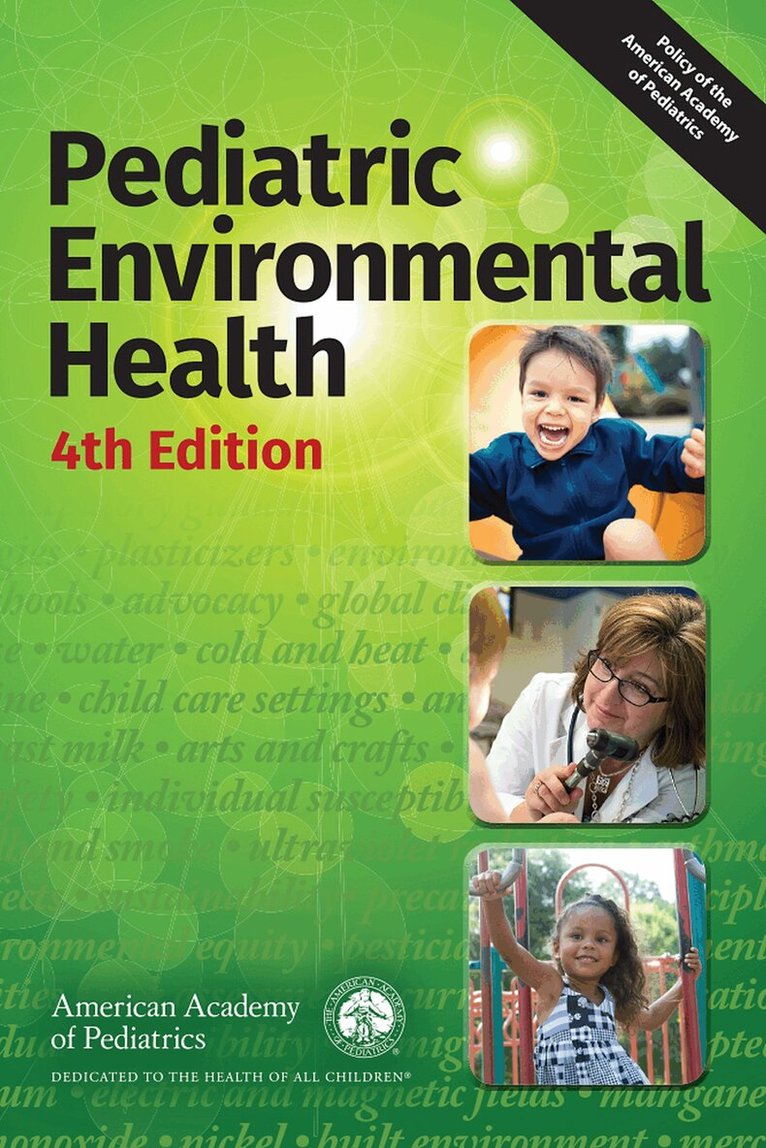
    Pediatric Environmental Health

    AvAmerican Academy of Pediatrics Council on Environmental Health,Ruth A. Etzel

    Häftad, Engelska, 2018

    1 037 kr

    Beställningsvara. Skickas inom 5-8 vardagar. Fri frakt över 249 kr.

    Beskrivning

    Significantly revised and updated, the fourth edition of this popular AAP policy manual helps you identify, prevent, and treat pediatric environmental health problems. This comprehensive guide puts critical children's health information and answers to parents' questions at your fingertips. From asbestos to radiation, ultraviolet rays, pesticides, asthma, lead, tobacco, and child care and school environments—current information on an exhaustive range of environmental health issues is included. Most chapters on chemical and physical hazards are organized in sections that describe the pollutant, routes of exposure, systems affected, clinical effects, diagnostic methods, treatment, and prevention of exposure and include suggested responses to questions that parents may ask. Topics includeAddressing Environmental Health in Primary CareFood and WaterChemical and Physical ExposuresPublic Health Aspects of Environmental HealthEmerging TechnologiesAnd more

    Produktinformation

    • Utgivningsdatum:2018-12-30
    • Mått:152 x 226 x 55 mm
    • Vikt:1 620 g
    • Format:Häftad
    • Språk:Engelska
    • Antal sidor:1 233
    • Upplaga:4
    • Förlag:American Academy of Pediatrics
    • ISBN:9781610022187

    Utforska kategorier

    • Klinisk medicin och internmedicin inom Medicin
    • Allmänmedicin inom Medicin
    • Miljömedicin inom Medicin

    Mer om författaren

    Ruth A. Etzel, MD, PhD, FAAP is an internationally recognized pediatrician, environmental epidemiologist, and preventive medicine specialist. She performed the first study to document that children with secondhand exposure to tobacco smoke had measurable exposure to nicotine. Her pioneering work led to nationwide efforts to reduce indoor exposure to tobacco, including the ban on smoking in US airliners. She also produced the first research to show that exposure to toxigenic molds in the home could be dangerous to infants' health. She served on the AAP Committee on Environmental Health from 1986 to 1995 and chaired it from 1995 to 1999. From 2009-2012 she led the World Health Organization's activities to protect children from environmental hazards. She is the co-editor of the Textbook of Children's Environmental Health.Sophie J. Balk, MD, FAAP is a general pediatrician at the Children's Hospital at Montefiore and Professor of Pediatrics at the Albert Einstein College of Medicine in Bronx, NY. Her academic work focuses on educating clinicians about pediatric environmental health. She is a past member and chairperson of the AAP Council on Environmental Health, and a past member of the AAP Section on Tobacco Control Executive Committee. She has served as Associate Editor of the 4 editions of Pediatric Environmental Health. Dr. Balk has published and lectured on skin cancer prevention, tobacco issues, and other environmental health issues relevant to pediatric practice.

    Recensioner i media

    A 2023 Doody’s Core Title®

    Innehållsförteckning

    • I. Background: Addressing Environmental Health in Primary Care01 Introduction 02 History and Growth of Pediatric Environmental Health 03 Children's Unique Vulnerabilities to Environmental Hazards 04 Individual Susceptibility to Environmental Toxicants 05 Taking an Environmental History and Giving Anticipatory Guidance 06 Laboratory Testing of Body Fluids and Tissues 07 Environmental Measurements 08 Toxic or Environmental Preconceptional and Prenatal Exposures II. Environments09 Built Environment 10 Child Care Settings 11 Schools 12 Work Places 13 Waste Sites 14 Environmental Health Considerations for Children from Low- and Middle-Income Countries III. Food and Water15 Human Milk 16 Environmental Concerns and Contaminants of Infant Formula 17 Water 18 Food Safety 19 Herbs, Dietary Supplements, and Other Remedies IV. Chemical and Physical Exposures20 Air Pollutants, Indoor 21 Air Pollutants, Outdoor 22 Alternative Nicotine Delivery SystemsX23 Arsenic 24 Asbestos 25 Cadmium, Chromium, Manganese, and Nickel 26 Carbon Monoxide 27 Cold and Heat 28 Electric and Magnetic Fields 29 Endocrine Disrupting Chemicals 30 Gasoline and Its Additives 31 Ionizing Radiation (Excluding Radon) 32 Lead 33 Mercury 34 Nitrates and Nitrites in Water 35 Noise 36 Perfluoroalkyl and Polyfluoroalkyl Substances (PFAS)X37 Persistent Organic Pollutants - DDT, PCBs, PCDFs, and Dioxins 38 Persistent Toxic Substances 39 Personal Care ProductsX40 Pesticides 41 Plasticizers 42 Radon 43 Tobacco Use and Tobacco Smoke Exposure 44 Ultraviolet Radiation V. Special Topics45 Antimicrobial Use and Resistance in Animal Agriculture 46 Arts and Crafts 47 Asthma 48 Birth Defects and Other Adverse Developmental Outcomes 49 Cancer 50 Chelation (Non-Approved Use of for ""Environmental Toxicants"") 51 Chemical-Biological Terrorism 52 Developmental Disabilities 53 Drug (Methamphetamine) Laboratories 54 Emerging Technologies and Materials 55 Environmental Disasters 56 Environmental Equity 57 Ethical Issues in Environmental Health Research 58 Global Climate Change 59 Green Offices and Practice SustainabilityX60 Idiopathic Environmental Intolerance 61 ObesityX62 Unconventional Gas Extraction (Fracking)XVI. Public Health Aspects of Environmental Health63 Environmental Health Advocacy 64 Precautionary Principle 65 Risk Assessment, Risk Management, and Risk Communication 66 Toxic Substances Control Act (TSCA)XVII. ResourcesA Pediatric Environmental Health Specialty Unit (PEHSU) ProgramXB Resources for Pediatric Environmental Health C Curricula for Environmental Education and Environmental Health Science Education in Primary and Secondary Schools D AAP Policy Statements - COEH E Common Abbreviations F Chairs of the COEH