• Fri frakt över 249 kr
  • •
  • Snabba leveranser
  • •
  • Billiga böcker
Kundservice

Du är på sajten för privatpersoner.

Företag, bibliotek eller offentlig verksamhet?

Du handlar på classic.bokus.com, där alla dina funktioner finns intakta.
Till classic.bokus.com
Bokus logotyp. Gå till startsidan.
  • Erbjudanden
  • Nyheter
  • Student
  • Topplistor
  • Barn & ungdom
  • Bokus Play
  • E-böcker
  • Pocketböcker
  • Spel & pussel

10% rabatt på allt med kod: NYSTART10 →

Sidfot

Mina sidor

    Hjälp

    • Kundservice
    • Vanliga frågor och svar
    • Frakt och leverans
    • Retur vid ångerrätt
    • Reklamera vara
    • Betalning
    • Köpvillkor
    • Allmänna villkor
    • Information om webbplatsens tillgänglighet

    Om Bokus

    • Om oss
    • Pressrum
    • För studenter
    • För företag
    • För bibliotek och offentlig verksamhet
    • För leverantörer
    • Hållbarhet

    Populärt

    • Aktuella erbjudanden
    • Presentkort
    • Studentlitteratur
    • Nya böcker
    • Topplistor
    • Signerade böcker
    • Engelska böcker

    Inspiration

    • Boktips
    • BookTok
    • Populära bokserier
    • Barnbokskaraktärer
    • Populära författare
    Logotyp för Bokus
    Följ oss på Facebook (extern länk)Följ oss på Instagram (extern länk)Följ oss på YouTube (extern länk)Följ oss på TikTok (extern länk)
    bokus @ CookiesAnpassa cookiesIntegritetspolicyKöpvillkor
    Till Citymail hemsida (extern länk)Till Budbee hemsida (extern länk)Till Postnord hemsida (extern länk)Till Schenker hemsida (extern länk)Till Early Bird hemsida (extern länk)Till Walleys hemsida (extern länk)
    1. Ande, kropp och själ
    2. Ande, kropp och själ
    3. Självhjälp och inspiration

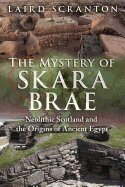
    Mystery of Skara Brae

    Neolithic Scotland and the Origins of Ancient Egypt

    AvLaird Scranton

    Häftad, Engelska, 2017

    Del i serien Inner Traditions

    161 kr

    Skickas . Fri frakt över 249 kr.

    Fler format och utgåvor

    E-bok

    142 kr

    Beskrivning

    In 3200 BC, Orkney Island off the coast of Northern Scotland was home to a small farming village called Skara Brae. For reasons unknown, after nearly six centuries of continuous habitation, the village was abandoned around 2600 BC and its stone structures covered over--perhaps deliberately, like the structures at Gobekli Tepe. Although now well-excavated, very little is known about the peaceful people who lived at Skara Brae or their origins. Who were they and where did they go?Drawing on his in-depth knowledge of the connections between the cosmology and linguistics of Egyptian, Dogon, Chinese, and Vedic traditions, Laird Scranton reveals the striking similarities between Skara Brae and the Dogon of Mali, who still practice the same cosmology and traditions they once shared with pre-dynastic Egypt. He shows how the earliest Skara Brae houses match the typical Dogon stone house as well as Schwaller de Lubicz’s intrepretation of the Egyptian Temple of Man at Luxor. He explains how megalithic stone sites near Skara Brae conform to Dogon cosmology, each representing sequential stages of creation as described by Dogon priests, and he details how the houses at Skara Brae also represent a concept of creation. Citing a linguistic phenomenon known as “ultraconserved words,” the author compares words of the Faroese language at Skara Brae, a language with no known origin, with important cosmological words from Dogon and ancient Egyptian traditions, finding obvious connections and similarities.

    Produktinformation

    • Utgivningsdatum:2017-01-12
    • Mått:150 x 226 x 13 mm
    • Vikt:340 g
    • Format:Häftad
    • Språk:Engelska
    • Serie:Inner Traditions
    • Antal sidor:208
    • Förlag:Inner Traditions Bear and Company
    • ISBN:9781620555736

    Utforska kategorier

    • Självhjälp och inspiration inom Ande, kropp och själ
    • Forntidens historia inom Historia och arkeologi

    Mer om författaren

    Laird Scranton is the author of a series of books on ancient cosmology and language, including The Science of the Dogon, Point of Origin, and China’s Cosmological Prehistory. He has presented at conferences throughout the United States and is a frequent guest on Red Ice Radio and Coast to Coast AM. He lives in Albany, New York.

    Recensioner i media

    “Antiquarian scholar Laird Scranton has done it again. In his latest book, The Mystery of Skara Brae, he takes the reader to one of the most remote locations in the British Isles, then proceeds to lay out the heretofore unknown story of a well-organized yet mysterious culture that flourished off the western coast of Scotland, only to decamp forever around 2600 BCE. Who were the inhabitants of Skara Brae, and what connection did they have with the peoples who went on to create ancient Egypt? What knowledge did they share with the ancient African tribe the Dogon? Where did they come from, and to where did they disappear? Scranton guides us through time and tradition in an account that both novices and scholars will embrace. . . . marvelous and highly educational. I would recommend it unhesitatingly to anyone interested in ancient mysteries.”

    Innehållsförteckning

    • Introduction Some Thoughts on Comparative Cosmology 1 A Brief History of Skara Brae 2 Footholds to a Theory of Origin for Skara Brae 3 Reexamining Skara Brae in Overview 4 Comparing Skara Brae and Dogon Structures 5 Dogon, Egyptian, and Faroese Words of Cosmology 6 Cosmological Sites of the Orkney Region 7 The Dogon Field of Arou 8 The Field of Arou and the Elysian Fields 9 Further Correlations to Faroese Words 10 Argat: An Ancient Name for Orkney Island 11 Orkney Island as an Archaic Sanctuary 12 The Overthrown Boat 13 Reconsidering Possible Roles for Orkney Island 14 The Emergence of Dynastic Egypt 15 The Advent of the Egyptian Hieroglyphs 16 Correlating Regional Kingships at 3000 BCE 17 Seshat and the Egyptian House of Life 18 Views on the Papae and the Peti 19 Words of the Scottish-Gaelic Language 20 The Druids and Other Pieces of the Puzzle 21 The Hindu Parable of the Seven Houses 22 The Egyptian Tale of the “Seven Houses in the Other World” 23 Conclusions and Observations Notes Bibliography Index