• Fri frakt över 249 kr
  • •
  • Snabba leveranser
  • •
  • Billiga böcker
Kundservice

Du är på sajten för privatpersoner.

Företag, bibliotek eller offentlig verksamhet?

Du handlar på classic.bokus.com, där alla dina funktioner finns intakta.
Till classic.bokus.com
Bokus logotyp. Gå till startsidan.
  • Erbjudanden
  • Nyheter
  • Student
  • Topplistor
  • Barn & ungdom
  • Bokus Play
  • E-böcker
  • Pocketböcker
  • Spel & pussel

10% rabatt på allt med kod NYSTART10 →

Sidfot

Mina sidor

    Hjälp

    • Kundservice
    • Vanliga frågor och svar
    • Frakt och leverans
    • Retur vid ångerrätt
    • Reklamera vara
    • Betalning
    • Köpvillkor
    • Allmänna villkor
    • Information om webbplatsens tillgänglighet

    Om Bokus

    • Om oss
    • Pressrum
    • För studenter
    • För företag
    • För bibliotek och offentlig verksamhet
    • För leverantörer
    • Hållbarhet

    Populärt

    • Aktuella erbjudanden
    • Presentkort
    • Studentlitteratur
    • Nya böcker
    • Topplistor
    • Signerade böcker
    • Engelska böcker

    Inspiration

    • Boktips
    • BookTok
    • Populära bokserier
    • Barnbokskaraktärer
    • Populära författare
    Logotyp för Bokus
    Följ oss på Facebook (extern länk)Följ oss på Instagram (extern länk)Följ oss på YouTube (extern länk)Följ oss på TikTok (extern länk)
    bokus @ CookiesAnpassa cookiesIntegritetspolicyKöpvillkor
    Till Citymail hemsida (extern länk)Till Budbee hemsida (extern länk)Till Postnord hemsida (extern länk)Till Schenker hemsida (extern länk)Till Early Bird hemsida (extern länk)Till Walleys hemsida (extern länk)
    1. Språk och ordböcker
    2. Språkvetenskap och lingvistik

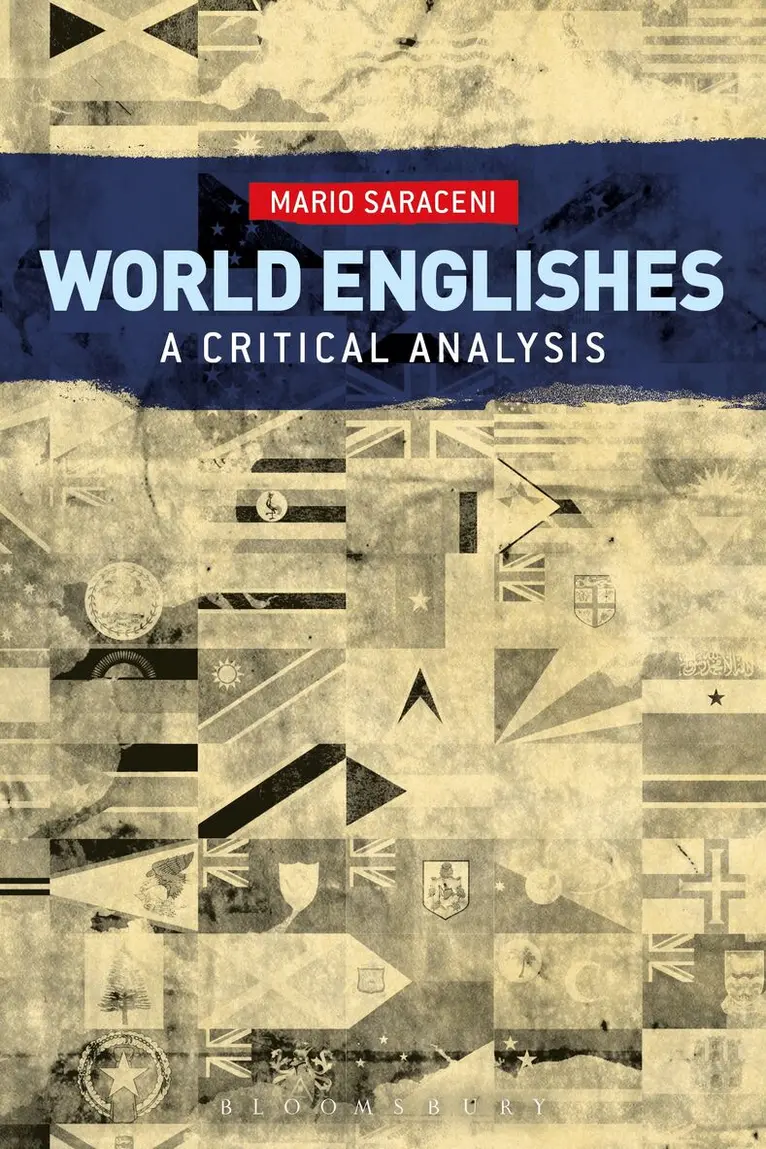
    World Englishes: A Critical Analysis

    AvMario Saraceni

    Häftad, Engelska, 2015

    551 kr

    Beställningsvara. Skickas inom 10-15 vardagar. Fri frakt över 249 kr.

    Fler format och utgåvor

    Inbunden

    2 439 kr

    E-bok

    591 kr

    E-bok

    591 kr

    Beskrivning

    Winner of the BAAL Book Prize 2016The field of "World Englishes" takes on ever more importance in the modern era. Mario Saraceni's World Englishes: A Critical Analysis looks at the developments in the field from a critical perspective. It examines the historical, linguistic, ideological and pedagogical aspects in the study of the ever-evolving forms, roles and statuses of English around the world. The principal aim is to offer a critical overview of the field in order both to inform readers about the main issues at stake and to challenge established positions and descriptive/analytical paradigms. The book has four sections, each of which reviews established accounts and offers alternative perspectives on those. “History” considers representations of the evolution of ‘old English’ and ‘new Englishes’ and begins to unveil the strong link between conventional accounts and ideological motivations. “Language” critically examines the traditional notion of ‘difference’ in the description of varieties of English, and discusses more recent orientations which aim to describe English as a lingua franca and the phenomenon of language hybridity. “Ideology” examines ideological debates around the presence and status of English in the world, such as linguistic imperialism, language ownership and language ecology. The final section, “Pedagogy” discusses pedagogical implications, such as the choice of appropriate ‘models’ of English and considers the possibility of teaching English as a fully de-anglicised language.

    Produktinformation

    • Utgivningsdatum:2015-02-26
    • Mått:154 x 232 x 16 mm
    • Vikt:340 g
    • Format:Häftad
    • Språk:Engelska
    • Antal sidor:224
    • Förlag:Bloomsbury Publishing Plc
    • ISBN:9781623562632
    • Utmärkelser:Winner of BAAL Book Prize 2016 (UK)

    Utforska kategorier

    • Språkvetenskap och lingvistik inom Språk och ordböcker

    Mer om författaren

    Mario Saraceni is a Lecturer in the School of Languages and Area Studies, at the University of Portsmouth, UK.

    Recensioner i media

    This book provides an accessible yet comprehensive critical perspective on the English language(s), power, and inequality. The progression of the arguments is clear and cohesive, effectively guiding the reader to arriving at a critical questioning of basic assumptions about the English language and its use around the world – and thereby providing thought-provoking pathways for advancing and re-revolutionising the WE paradigm. Through this original and challenging volume, the author adeptly achieves his aim of bringing subversion back to the heart of WE research.

    Innehållsförteckning

    • Preface1. Introduction 1.1 What this book is (and isn’t) about 1.2 Why another “World Englishes” book? 1.2.1 Expanding the scope of World Englishes 1.2.2 A slight impasse 1.2.3 New challenges 1.2.4 Old challenges1.3 Understanding language 1.3.1 language as system 1.3.2 Language as social practice Part I: History2. Old Englishes2.1 Introduction 2.2 Mainstream narrative 2.2.1 Metaphorical representations of language 2.2.2 The arrival of English in 449 AD 2.2.3 From closely related to one language 2.2.4 The story of ‘Old English’ . 2.3 Ideological motivations in the history of English 2.3.1 language and nationhood 2.4 Untidying History 2.4.1 The ‘birth’ of the English language? 2.4.2 The ‘Anglo-Saxons’? 2.4.3 Anglo-Saxon England? 2.4.4 A purely Germanic language? 2.5 Varieties of ‘Old English’? 2.6 Conclusion 3. New Englishes 3.1 Introduction .3.2 The story of the ‘spread’ of English 3.2.1 English everywhere 3.2.2 Two types of colonization 3.2.3 The ‘Three Circles of English’ 3.2.4 Criticism of the Three Circles model 3.2.5 Schneider’s Dynamic Model 3.2.6 Melchers and Shaw’s classification 3.3 Beyond the ‘spread’ metaphor 3.4 The ‘prehistory’ of World Englishes 3.4.1 American English sets the scene 3.4.2 Seeds of World Englishes in postcolonial writing 3.5 Conclusion: language and politics Part II: Languages4. Understanding World Englishes 4.1 Introduction 4.2 The egalitarian matrix of World Englishes 4.3 Limitations in the paradigm 4.3.1 Equality in diversity? 4.3.2 How different are Englishes allowed to be? 4.3.3 What about the Expanding Circle? 4.4 The ‘spot the difference’ approach4.4.1 ‘Errors’ or ‘features’? 4.4.2 British and American English as yardsticks4.4.3 ‘In full communion with its ancestral home’ 4.4.4 The norms of English .4.4.5 The power of codification 4.4.6 Varieties of language and varieties of race 4.4.7 The linguist gaze and dominant discourses 4.5 Spotting differences in English as a lingua franca 4.5.1 ELF vs. ENL4.6 Conclusion 5 Untidying Englishes 5.1 Introduction 5.2 Cutting the umbilical cord with the ancestral home 5.3 Dealing with English and other languages 5.3.1 Borrowing words? 5.3.2 Language across borders 5.3.3 English and non-English 5.3.4 Switching languages? 5.4 Delving deeper into language hybridity 5.4.1 World Englishes and super-diversity 5.4.2 Geography or language? 5.4.3 ELF across borders 5.5 Conclusion: from World Englishes to Language Worlds Part III: Ideology6. Linguistic imperialism and resistance 6.1 Introduction 6.2 An unequal world6.2.1 Where do the numbers come from? 6.3 Language and empire 6.3.1 American imperialism6.4 Linguistic imperialism 6.4.1 Macaulay’s ‘minute’6.5 Responses to linguistic imperialism 6.5.1 The ‘agency’ response 6.5.2 The ‘linguistic determinism’ response 6.5.3 The ‘appropriation’ response 6.6 Conclusion Part IV: Pedagogy7. Teaching World Englishes7.1 Introduction 7.2 Which English? 7.3 (Non-)native speakers? 7.3.1 Separate categories? 7.3.2 Myths and discrimination7.4 The paradigm struggles to shift 7.4.1 Acronyms and the (super-)diversity of language education7.5 Conclusion: teaching world Englishes? References Index