E-bok, Engelska, 2025
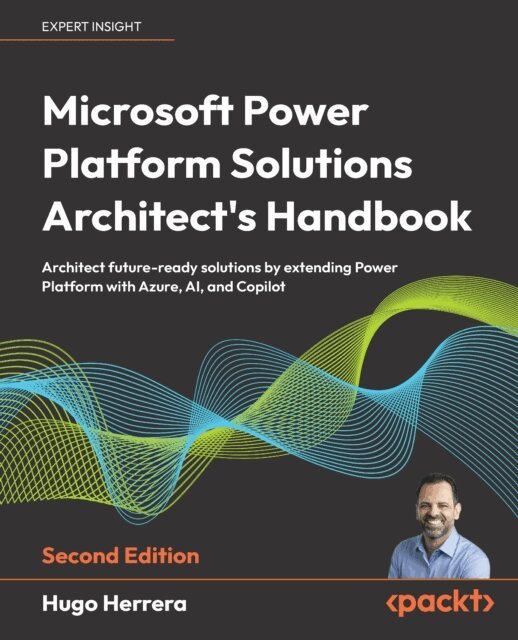
Microsoft Power Platform Solutions Architect's Handbook
Av Hugo Herrera
500 kr
Läs direkt i Bokus Reader – eller ladda ned till din enhet
Beskrivning
Master modern solution architecture with this expert guide that integrates Dataverse with cutting-edge AI solutions while covering DevOps, data modeling, and PL-600 certification preparationFree with your book: DRM-free PDF version + access to Packt''s next-gen Reader*
Key Features
- Leverage Azure, Open AI, Copilot, and modern architecture patterns to build intelligent, high-impact business solutions
- Apply enterprise-grade architecture with the latest ALM, DevOps, and Center of Excellence practices
- Fast-track your success in the PL-600 certification exam with revised questions and expert insights
Book Description
Struggling to architect secure, scalable Power Platform solutions that keep up with AI and enterprise demands? Microsoft Power Platform Solutions Architect''s Handbook is your expert guide to building intelligent, future-ready applications with Microsoft''s low-code platform. This updated second edition brings you the latest on Copilot, Azure OpenAI, AI Builder, and Power Platform AI patterns.Through a hands-on enterprise case study, you''ll work through every stage of solution architecture, from requirements analysis and envisioning to secure data modeling, integration, governance, and DevOps implementation. You''ll tackle real-world challenges such as licensing constraints, ALM pipeline design, multi-cloud integration, and establishing a Center of Excellence. A refreshed PL-600 certification prep chapter with current questions and exam tips will help you gear up for the exam.By the end of this book, you''ll have the mindset, tools, and strategies to design scalable, AI-enhanced Power Platform solutions while using the latest in LLM and GPT technologies. Whether modernizing legacy systems or architecting cloud-native applications, this book equips you to lead digital transformation initiatives with enterprise-grade excellence.*Email sign-up and proof of purchase requiredWhat you will learn
- Design scalable Power Platform solutions with AI and Copilot
- Architect secure, scalable, and supportable enterprise-grade applications
- Master requirements capture, fit gap analysis, and solution-envisioning methodologies
- Design robust integrations using Azure and third-party APIs
- Leverage Azure OpenAI and AI Builder for intelligent automation
- Build reusable Dataverse data models using best practices
- Deploy solutions using Power Platform pipelines and Azure DevOps
- Establish and scale a Center of Excellence for long-term platform success
Who this book is for
This book is for solution architects, enterprise architects, technical consultants, and business and system analysts who implement, optimize, and architect Power Platform and Dataverse solutions. It’s also useful for anyone leading digital transformation projects that leverage Power Platform apps and the Microsoft business apps ecosystem.A strong understanding of Power Platform configuration and administration, Power Automate processes, Power Apps Portals, Canvas Apps, Dataverse Plugins, and Workflow Capabilities is expected.
Produktinformation
- Utgivningsdatum: 2025-10-24
- Språk: Engelska
- Filformat: EPUB
- Kopieringsskydd: LCP
- ISBN: 9781835088012
- Förlag: Packt Publishing
Betyg & recensioner
0 recensioner
Inga recensioner tillgängliga.