• Fri frakt över 249 kr
  • •
  • Snabba leveranser
  • •
  • Billiga böcker
Kundservice

Du är på sajten för privatpersoner.

Företag, bibliotek eller offentlig verksamhet?

Du handlar på classic.bokus.com, där alla dina funktioner finns intakta.
Till classic.bokus.com
Bokus logotyp. Gå till startsidan.
  • Erbjudanden
  • Nyheter
  • Student
  • Topplistor
  • Barn & ungdom
  • Bokus Play
  • E-böcker
  • Pocketböcker
  • Spel & pussel

Må bättre, för mindre! Upp till 50% rabatt på hälsoböcker

Sidfot

Mina sidor

    Hjälp

    • Kundservice
    • Vanliga frågor och svar
    • Frakt och leverans
    • Retur vid ångerrätt
    • Reklamera vara
    • Betalning
    • Köpvillkor
    • Allmänna villkor
    • Information om webbplatsens tillgänglighet

    Om Bokus

    • Om oss
    • Pressrum
    • För studenter
    • För företag
    • För bibliotek och offentlig verksamhet
    • För leverantörer
    • Hållbarhet

    Populärt

    • Aktuella erbjudanden
    • Presentkort
    • Studentlitteratur
    • Nya böcker
    • Topplistor
    • Signerade böcker
    • Engelska böcker

    Inspiration

    • Boktips
    • BookTok
    • Populära bokserier
    • Barnbokskaraktärer
    • Populära författare
    Logotyp för Bokus
    Följ oss på Facebook (extern länk)Följ oss på Instagram (extern länk)Följ oss på YouTube (extern länk)Följ oss på TikTok (extern länk)
    bokus @ CookiesAnpassa cookiesIntegritetspolicyKöpvillkor
    Till Citymail hemsida (extern länk)Till Budbee hemsida (extern länk)Till Postnord hemsida (extern länk)Till Schenker hemsida (extern länk)Till Early Bird hemsida (extern länk)Till Walleys hemsida (extern länk)
    1. Ekonomi och Ledarskap
    2. Nationalekonomi

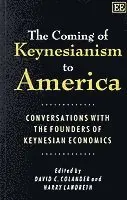
    COMING OF KEYNESIANISM TO AMERICA

    Conversations with the Founders of Keynesian Economics

    AvDavid C. Colander,Harry Landreth

    Häftad, Engelska, 1997

    538 kr

    Beställningsvara. Skickas inom 5-8 vardagar. Fri frakt över 249 kr.

    Beskrivning

    The Keynesian revolution in the United States was a remarkable event in intellectual and economic history entailing a major shift in economists' thinking and the creation of a new field in economics - macroeconomics. From the first roots in the 1930s to Keynesianism's predominance in the early 1950s, The Coming of Keynesianism to America explains what the revolution was, as well as why and how it occurred.This book is based around a set of interviews with, what might be called, the Keynesian revolutionaries - the individuals most responsible for introducing Keynesian economics to the United States. It includes formal interviews with Richard Musgrave, Abba Lerner, Paul Samuelson, Tibor Scitovsky, Evsey Domar, Robert Bryce, Lorie Tarshis, John Kenneth Galbraith, Paul Sweezy, Walter Salant and Leon Keyserling. These interviews give the reader a sense of what the Keynesian revolution was and how it spread, as well as the hostility these earlier revolutionaries faced, and the similarities and differences in their views. The interviews are introduced by an essay which presents the Keynesian revolution in three parts as theoretical, political and pedagogical, concerned with the development of tools and models to teach macroeconomics. This essay sets the stage for the interviews and relates them to modern macroeconomic debates.The Keynesianization of America is interesting not just to historians of economic thought but also to other economists who want to know about the development of their discipline and to interested lay people and historians who follow the spread of ideas.

    Produktinformation

    • Utgivningsdatum:1997-01-01
    • Mått:138 x 216 x undefined mm
    • Format:Häftad
    • Språk:Engelska
    • Förlag:Edward Elgar Publishing Ltd
    • ISBN:9781858986029

    Utforska kategorier

    • Nationalekonomi inom Ekonomi och Ledarskap
    • Makroekonomi inom Ekonomi och Ledarskap

    Mer om författaren

    Edited by David C. Colander, Distinguished College Professor, Middlebury College and the late Harry Landreth, former Boles Professor of Economics, Centre College, US

    Recensioner i media

    '. . . the most important merit of this book is simply that it is a good read which conveys the excitement of being a Keynesian at the end of the 1930s.'