• Fri frakt över 249 kr
  • •
  • Snabba leveranser
  • •
  • Billiga böcker
Kundservice

Du är på sajten för privatpersoner.

Företag, bibliotek eller offentlig verksamhet?

Du handlar på classic.bokus.com, där alla dina funktioner finns intakta.
Till classic.bokus.com
Bokus logotyp. Gå till startsidan.
  • Erbjudanden
  • Nyheter
  • Student
  • Topplistor
  • Barn & ungdom
  • Bokus Play
  • E-böcker
  • Pocketböcker
  • Spel & pussel

10% studentrabatt med kod TERM26

Sidfot

Mina sidor

    Hjälp

    • Kundservice
    • Vanliga frågor och svar
    • Frakt och leverans
    • Retur vid ångerrätt
    • Reklamera vara
    • Betalning
    • Köpvillkor
    • Allmänna villkor
    • Information om webbplatsens tillgänglighet

    Om Bokus

    • Om oss
    • Pressrum
    • För studenter
    • För företag
    • För bibliotek och offentlig verksamhet
    • För leverantörer
    • Hållbarhet

    Populärt

    • Aktuella erbjudanden
    • Presentkort
    • Studentlitteratur
    • Nya böcker
    • Topplistor
    • Signerade böcker
    • Engelska böcker

    Inspiration

    • Boktips
    • BookTok
    • Populära bokserier
    • Barnbokskaraktärer
    • Populära författare
    Logotyp för Bokus
    Följ oss på Facebook (extern länk)Följ oss på Instagram (extern länk)Följ oss på YouTube (extern länk)Följ oss på TikTok (extern länk)
    bokus @ CookiesAnpassa cookiesIntegritetspolicyKöpvillkor
    Till Citymail hemsida (extern länk)Till Budbee hemsida (extern länk)Till Postnord hemsida (extern länk)Till Schenker hemsida (extern länk)Till Early Bird hemsida (extern länk)Till Walleys hemsida (extern länk)
    1. Ekonomi och Ledarskap
    2. Nationalekonomi

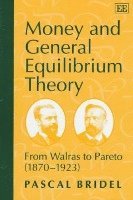
    Money and General Equilibrium Theory

    From Walras to Pareto (1870–1923)

    AvPascal Bridel

    Inbunden, Engelska, 1997

    1 933 kr

    Beställningsvara. Skickas inom 5-8 vardagar. Fri frakt över 249 kr.

    Beskrivning

    This important book offers a detailed and analytical reconstruction of the pioneering attempts of Walras and Pareto to coordinate money and general equilibrium theory. It argues that the very logic of the original static general equilibrium model excludes the integration of monetary and value theory.The book presents for the first time the entire Lausanne tradition from Walras to Pareto. Its detailed coverage of the main literature between 1870 and 1923 contributes to the understanding of a central issue in modern general equilibrium theory, that is, the impossibility of coordinating money and price theory with the logic of Walras's model based on the theory of exchange. It shows how money is prevented from playing its essential role as a social institution in allowing monetary exchanges between individuals. In particular, the discussion focuses on the static nature of Walras's pure economics and the simultaneous lack of a proper means of exchange. In conclusion it calls for some radical re-thinking on this theoretical construction on which much modern economic theory is based.Money and General Equilibrium Theory will be welcomed by historians of economic thought, microeconomists and general equilibrium and money theorists.

    Produktinformation

    • Utgivningsdatum:1997-10-02
    • Mått:156 x 234 x undefined mm
    • Format:Inbunden
    • Språk:Engelska
    • Förlag:Edward Elgar Publishing Ltd
    • ISBN:9781858986234

    Utforska kategorier

    • Nationalekonomi inom Ekonomi och Ledarskap
    • Makroekonomi inom Ekonomi och Ledarskap

    Mer om författaren

    Pascal Bridel, Professor of Economics, University of Lausanne, Switzerland

    Recensioner i media

    '. . . the book gives a very good idea of what Leon Walras did in the field of pure and applied monetary theory throughout his whole career. In particular, it gives the reader an impression of Walras's tenacity in trying to find how the economic variables depend on each other and on a number of parameters.'

    Innehållsförteckning

    • Contents: Introduction 1. The First Lausanne Decade: General Equilibrium and the Equation of Exchange (1871–1880) 2. Periodical Market, Equation of Exchange and ‘Forced Saving’: Walras’s Applied Theory of Money 3. From the Théorie de la Monnaie to the Etudes d’Économie Politique Appliquée: More Variations on the Same Themes (1886–1898) 4. The Last Monetary Model (1899–1900), or the Ultimate Triumph of Internal Consistency 5. The Fate of a Still-born Tradition: Pareto and After Index