Du är på sajten för privatpersoner.
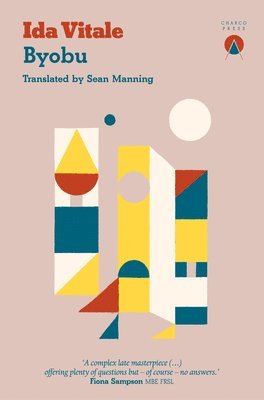
Ida Vitale (Uruguay, 1923) is a poet, translator, essayist, and literary critic. In 2018, she was just the fifth woman to receive the prestigious Miguel de Cervantes Prize, the highest recognition for literature in Spanish. In addition to the Cervantes Prize, she has also received the FIL Literature Prize (2018), Max Jacob Prize (2017), Federico García Lorca Poetry Prize (2016), Reina Sofía Poetry Prize (2015), Alfonso Reyes Prize (2014), and Octavio Paz Prize (2009), as well as many other honours, including being named by the BBC as one of the 100 most influential women of 2019.Sean Manning is a translator from Spanish and French. He has translated numerous works by such authors as Carlos Pereda, Eduardo Lalo, Édouard Glissant, Gabriela Polit Dueñas, Azahara Palomeque, and Ricardo Piglia. His translation of Ida Vitale’s Byobu (Charco Press, 2021) was shortlisted for the 2022 Queen Sofía Spanish Institute Prize. His work has also appeared in Asymptote , Exchanges , AzonaL , The Common , and Review . He has a PhD in Spanish and Latin American literature from the University of Texas at Austin, where he is currently a Lecturer teaching courses on language, literature, and writing.
"the best book of 2021 just arrived. Search no further. All the other contenders tapped out while this masterpiece was being completed." —ABC Arts"Vitale’s prose is drop dead gorgeous and Byobu an enchanting mix of the wise, the ruminative, and the poetic." —Jeremy Garber, Powell's Bookshop"A fascinating glimpse into the poet’s intricate world." —Morning Star"Extraordinary... giving due attention to Vitale’s prose will bring you reassurance and optimism." —Lunate************Praise for Ida VitaleWinner of the Miguel de Cervantes Prize (2018).Named by BBC as one of the 100 most influential women of 2019.Winner of Reina Sofía Prize for Latin American Poetry (2015).‘In Byobu , the veteran Uruguayan poet Ida Vitale gives us a holy fool for the twenty-first century. The responses of her childish everyman to the contemporary life she’s constructed for him are puzzled yet direct, wry yet fresh. A series of exquisitely rendered vignettes see him struggle, existentially alone, to make sense of park life, insomnia, or a conference roundtable. But behind the humour and pathos rumbles the entire western philosophical tradition. This complex late masterpiece, published when Vitale was 95, offers plenty of questions but – of course – no answers.’Fiona Sampson MBE FRSL‘An alchemical abecedary in which the ever-insubordinate imagination of Ida Vitale fashions delicate miniatures, origami animals, to a rebellious horology set by tourbillon. The eye as instrument coalesces words into a double play: classical forms and experimentation, contradictio in adiecto , the paradox of language paints the colored screen, biombo , byobú, between ourselves and the mystery. Odilon Redon, Queneau and Calvino meet Voltaire in the hands of master watchmaker Vitale who whispers: linear time is but an illusion.’Valerie Miles‘Byobu offers a journey both mysterious and epiphanic. Signposted by exquisite vocabulary and writing that is not simple, where each word possesses its own weight and music’Babelia‘Ida Vitale is a woman of almost legendary courage. Due to her long and intense life, she has become an exceptional witness of Latin America and its literature.’Salient Women‘Ida Vitale’s writing succeeds like few others in encountering that harmonious figure (…) hidden and woven between the hurtful protrusions of reality, among the amorphous noise of chaos.’El País"A vibrant and playful memoir-in-dictionary-form…a joyous celebration of a life well lived, with entries that range from the simple to the titanic." —Literary Hub"Vitale’s prose is drop dead gorgeous." —Jeremy Garber, Powell's Bookshop"Extraordinary... giving due attention to Vitale’s prose will bring you reassurance and optimism." —Lunate"This book wants you to pick it up and open it at any random page to find illumination." —el roommate"In Lexicon of Affinities, the celebrated Uruguayan poet and essayist embraces the form of a personal dictionary, using language itself to bring shape to a life marked by exile, friendships, and moments of strange beauty." —World Literature Today"Indispensable... [Vitale's] language… has a precision that reminds us that memory exists: that today precision is an act of distinction and recognition." —Letras Libres**********
A.S. Byatt, Philippa Gregory, Jackie Kay, Madeleine Thien, Ida Vitale, Emma Woolf, Ann Sandham, Cheryl Robson
Häftad, 2020
211 kr
A.S. Byatt, Philippa Gregory, Jackie Kay, Madeleine Thien, Ida Vitale, Emma Woolf, Ann Sandham, Cheryl Robson
Häftad, 2020
211 kr
Du är på sajten för privatpersoner.
Ida Vitale (Uruguay, 1923) is a poet, translator, essayist, and literary critic. In 2018, she was just the fifth woman to receive the prestigious Miguel de Cervantes Prize, the highest recognition for literature in Spanish. In addition to the Cervantes Prize, she has also received the FIL Literature Prize (2018), Max Jacob Prize (2017), Federico García Lorca Poetry Prize (2016), Reina Sofía Poetry Prize (2015), Alfonso Reyes Prize (2014), and Octavio Paz Prize (2009), as well as many other honours, including being named by the BBC as one of the 100 most influential women of 2019.Sean Manning is a translator from Spanish and French. He has translated numerous works by such authors as Carlos Pereda, Eduardo Lalo, Édouard Glissant, Gabriela Polit Dueñas, Azahara Palomeque, and Ricardo Piglia. His translation of Ida Vitale’s Byobu (Charco Press, 2021) was shortlisted for the 2022 Queen Sofía Spanish Institute Prize. His work has also appeared in Asymptote , Exchanges , AzonaL , The Common , and Review . He has a PhD in Spanish and Latin American literature from the University of Texas at Austin, where he is currently a Lecturer teaching courses on language, literature, and writing.
"the best book of 2021 just arrived. Search no further. All the other contenders tapped out while this masterpiece was being completed." —ABC Arts"Vitale’s prose is drop dead gorgeous and Byobu an enchanting mix of the wise, the ruminative, and the poetic." —Jeremy Garber, Powell's Bookshop"A fascinating glimpse into the poet’s intricate world." —Morning Star"Extraordinary... giving due attention to Vitale’s prose will bring you reassurance and optimism." —Lunate************Praise for Ida VitaleWinner of the Miguel de Cervantes Prize (2018).Named by BBC as one of the 100 most influential women of 2019.Winner of Reina Sofía Prize for Latin American Poetry (2015).‘In Byobu , the veteran Uruguayan poet Ida Vitale gives us a holy fool for the twenty-first century. The responses of her childish everyman to the contemporary life she’s constructed for him are puzzled yet direct, wry yet fresh. A series of exquisitely rendered vignettes see him struggle, existentially alone, to make sense of park life, insomnia, or a conference roundtable. But behind the humour and pathos rumbles the entire western philosophical tradition. This complex late masterpiece, published when Vitale was 95, offers plenty of questions but – of course – no answers.’Fiona Sampson MBE FRSL‘An alchemical abecedary in which the ever-insubordinate imagination of Ida Vitale fashions delicate miniatures, origami animals, to a rebellious horology set by tourbillon. The eye as instrument coalesces words into a double play: classical forms and experimentation, contradictio in adiecto , the paradox of language paints the colored screen, biombo , byobú, between ourselves and the mystery. Odilon Redon, Queneau and Calvino meet Voltaire in the hands of master watchmaker Vitale who whispers: linear time is but an illusion.’Valerie Miles‘Byobu offers a journey both mysterious and epiphanic. Signposted by exquisite vocabulary and writing that is not simple, where each word possesses its own weight and music’Babelia‘Ida Vitale is a woman of almost legendary courage. Due to her long and intense life, she has become an exceptional witness of Latin America and its literature.’Salient Women‘Ida Vitale’s writing succeeds like few others in encountering that harmonious figure (…) hidden and woven between the hurtful protrusions of reality, among the amorphous noise of chaos.’El País"A vibrant and playful memoir-in-dictionary-form…a joyous celebration of a life well lived, with entries that range from the simple to the titanic." —Literary Hub"Vitale’s prose is drop dead gorgeous." —Jeremy Garber, Powell's Bookshop"Extraordinary... giving due attention to Vitale’s prose will bring you reassurance and optimism." —Lunate"This book wants you to pick it up and open it at any random page to find illumination." —el roommate"In Lexicon of Affinities, the celebrated Uruguayan poet and essayist embraces the form of a personal dictionary, using language itself to bring shape to a life marked by exile, friendships, and moments of strange beauty." —World Literature Today"Indispensable... [Vitale's] language… has a precision that reminds us that memory exists: that today precision is an act of distinction and recognition." —Letras Libres**********
A.S. Byatt, Philippa Gregory, Jackie Kay, Madeleine Thien, Ida Vitale, Emma Woolf, Ann Sandham, Cheryl Robson
Häftad, 2020
211 kr
A.S. Byatt, Philippa Gregory, Jackie Kay, Madeleine Thien, Ida Vitale, Emma Woolf, Ann Sandham, Cheryl Robson
Häftad, 2020
211 kr
Du är på sajten för privatpersoner.
Ida Vitale (Uruguay, 1923) is a poet, translator, essayist, and literary critic. In 2018, she was just the fifth woman to receive the prestigious Miguel de Cervantes Prize, the highest recognition for literature in Spanish. In addition to the Cervantes Prize, she has also received the FIL Literature Prize (2018), Max Jacob Prize (2017), Federico García Lorca Poetry Prize (2016), Reina Sofía Poetry Prize (2015), Alfonso Reyes Prize (2014), and Octavio Paz Prize (2009), as well as many other honours, including being named by the BBC as one of the 100 most influential women of 2019.Sean Manning is a translator from Spanish and French. He has translated numerous works by such authors as Carlos Pereda, Eduardo Lalo, Édouard Glissant, Gabriela Polit Dueñas, Azahara Palomeque, and Ricardo Piglia. His translation of Ida Vitale’s Byobu (Charco Press, 2021) was shortlisted for the 2022 Queen Sofía Spanish Institute Prize. His work has also appeared in Asymptote , Exchanges , AzonaL , The Common , and Review . He has a PhD in Spanish and Latin American literature from the University of Texas at Austin, where he is currently a Lecturer teaching courses on language, literature, and writing.
"the best book of 2021 just arrived. Search no further. All the other contenders tapped out while this masterpiece was being completed." —ABC Arts"Vitale’s prose is drop dead gorgeous and Byobu an enchanting mix of the wise, the ruminative, and the poetic." —Jeremy Garber, Powell's Bookshop"A fascinating glimpse into the poet’s intricate world." —Morning Star"Extraordinary... giving due attention to Vitale’s prose will bring you reassurance and optimism." —Lunate************Praise for Ida VitaleWinner of the Miguel de Cervantes Prize (2018).Named by BBC as one of the 100 most influential women of 2019.Winner of Reina Sofía Prize for Latin American Poetry (2015).‘In Byobu , the veteran Uruguayan poet Ida Vitale gives us a holy fool for the twenty-first century. The responses of her childish everyman to the contemporary life she’s constructed for him are puzzled yet direct, wry yet fresh. A series of exquisitely rendered vignettes see him struggle, existentially alone, to make sense of park life, insomnia, or a conference roundtable. But behind the humour and pathos rumbles the entire western philosophical tradition. This complex late masterpiece, published when Vitale was 95, offers plenty of questions but – of course – no answers.’Fiona Sampson MBE FRSL‘An alchemical abecedary in which the ever-insubordinate imagination of Ida Vitale fashions delicate miniatures, origami animals, to a rebellious horology set by tourbillon. The eye as instrument coalesces words into a double play: classical forms and experimentation, contradictio in adiecto , the paradox of language paints the colored screen, biombo , byobú, between ourselves and the mystery. Odilon Redon, Queneau and Calvino meet Voltaire in the hands of master watchmaker Vitale who whispers: linear time is but an illusion.’Valerie Miles‘Byobu offers a journey both mysterious and epiphanic. Signposted by exquisite vocabulary and writing that is not simple, where each word possesses its own weight and music’Babelia‘Ida Vitale is a woman of almost legendary courage. Due to her long and intense life, she has become an exceptional witness of Latin America and its literature.’Salient Women‘Ida Vitale’s writing succeeds like few others in encountering that harmonious figure (…) hidden and woven between the hurtful protrusions of reality, among the amorphous noise of chaos.’El País"A vibrant and playful memoir-in-dictionary-form…a joyous celebration of a life well lived, with entries that range from the simple to the titanic." —Literary Hub"Vitale’s prose is drop dead gorgeous." —Jeremy Garber, Powell's Bookshop"Extraordinary... giving due attention to Vitale’s prose will bring you reassurance and optimism." —Lunate"This book wants you to pick it up and open it at any random page to find illumination." —el roommate"In Lexicon of Affinities, the celebrated Uruguayan poet and essayist embraces the form of a personal dictionary, using language itself to bring shape to a life marked by exile, friendships, and moments of strange beauty." —World Literature Today"Indispensable... [Vitale's] language… has a precision that reminds us that memory exists: that today precision is an act of distinction and recognition." —Letras Libres**********
A.S. Byatt, Philippa Gregory, Jackie Kay, Madeleine Thien, Ida Vitale, Emma Woolf, Ann Sandham, Cheryl Robson
Häftad, 2020
211 kr
A.S. Byatt, Philippa Gregory, Jackie Kay, Madeleine Thien, Ida Vitale, Emma Woolf, Ann Sandham, Cheryl Robson
Häftad, 2020
211 kr