• Fri frakt över 249 kr
  • •
  • Snabba leveranser
  • •
  • Billiga böcker
Kundservice

Du är på sajten för privatpersoner.

Företag, bibliotek eller offentlig verksamhet?

Du handlar på classic.bokus.com, där alla dina funktioner finns intakta.
Till classic.bokus.com
Bokus logotyp. Gå till startsidan.
  • Erbjudanden
  • Student
  • Topplistor
  • Barn & ungdom
  • Bokus Play
  • E-böcker
  • Ljudböcker
  • Pocketböcker
  • Spel och pussel

Pocketfynda! Hundratals böcker för 49 kr/st →

Sidfot

Mina sidor

    Hjälp

    • Kundservice
    • Vanliga frågor och svar
    • Frakt och leverans
    • Retur vid ångerrätt
    • Reklamera vara
    • Betalning
    • Köpvillkor
    • Allmänna villkor
    • Information om webbplatsens tillgänglighet

    Om Bokus

    • Om oss
    • Pressrum
    • För studenter
    • För företag
    • För bibliotek och offentlig verksamhet
    • För leverantörer
    • Hållbarhet

    Populärt

    • Aktuella erbjudanden
    • Presentkort
    • Studentlitteratur
    • Nya böcker
    • Topplistor
    • Signerade böcker
    • Engelska böcker

    Inspiration

    • Boktips
    • BookTok
    • Barnbokskaraktärer
    • Populära författare
    Logotyp för Bokus
    Följ oss på Facebook (extern länk)Följ oss på Instagram (extern länk)Följ oss på YouTube (extern länk)Följ oss på TikTok (extern länk)
    bokus @ CookiesAnpassa cookiesIntegritetspolicyKöpvillkor
    Till Citymail hemsida (extern länk)Till Budbee hemsida (extern länk)Till Postnord hemsida (extern länk)Till Schenker hemsida (extern länk)Till Early Bird hemsida (extern länk)Till Walleys hemsida (extern länk)
    1. Medicin
    2. Medicin: allmänt
    3. Hälso- och sjukvård
    4. Allmänmedicin

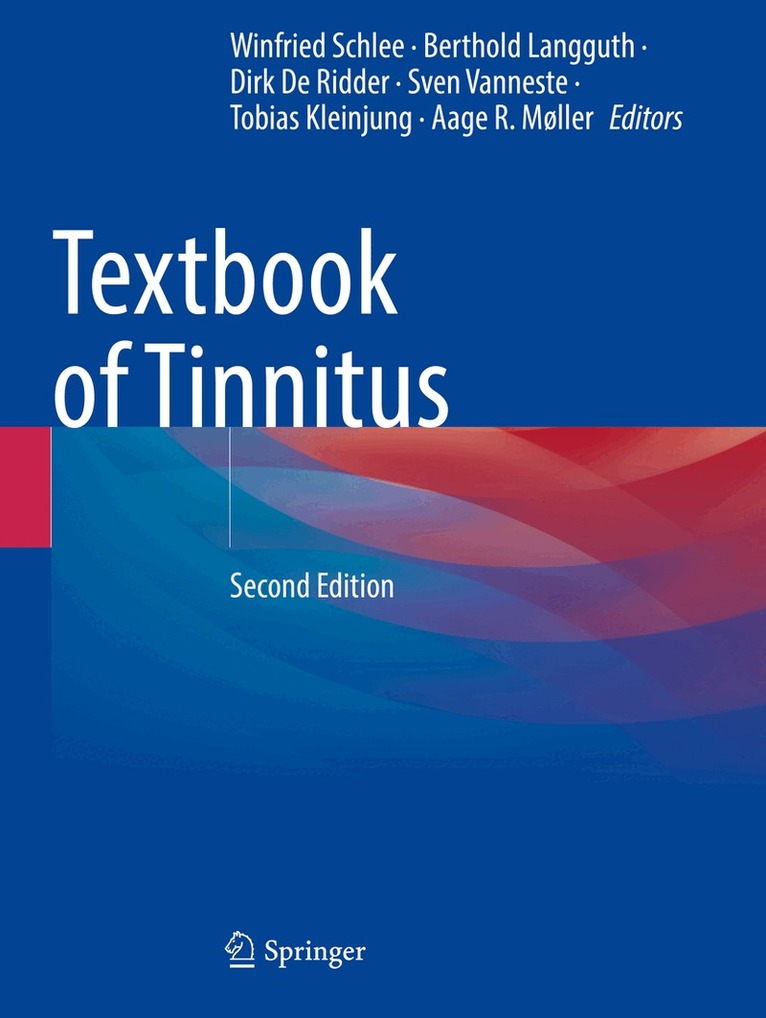
    Textbook of Tinnitus

    AvWinfried Schlee,Berthold Langguth

    Häftad, Engelska, 2025

    1 331 kr

    Beställningsvara. Skickas inom 10-15 vardagar. Fri frakt över 249 kr.

    Beskrivning

    This book describes the theoretical background of the different forms of tinnitus (ringing in the ears) and detailed knowledge of state-of-the-art treatments of tinnitus. Tinnitus has many forms, and the severity ranges widely from being non-problematic to severely affecting a person’s daily life. How loud the tinnitus is perceived does not directly relate to how much it distresses the patient. Thus, even tinnitus very close to the hearing threshold can be a disabling symptom. It can reduce the quality of life by generating anxiety and concentration problems, impairing the ability to do intellectual work, making it difficult to sleep, causing depression and sometimes even leading to suicide.Textbook of Tinnitus has filled a void by providing a comprehensive overview about the different forms of tinnitus, their pathophysiology and their treatment. However, since the publication of the first edition of the Textbook of Tinnitus in 2011, tinnitus research has dramaticallyevolved. In view of the substantial increase in knowledge, most chapters in this second edition are newly written and a few original chapters have had major updates. This edition has nine sections, covering the basics of tinnitus, the neurobiology of tinnitus, pathophysiological models, animal research, diagnosis and assessment, various forms of management and treatment, and finally, a look at the future of tinnitus and tinnitus research.The book will be of great interest to otolaryngologists, neurologists, psychiatrists, neurosurgeons, primary care clinicians, audiologists and psychologists, and students. Because of its organization and its extensive subject index, Textbook of Tinnitus, Second Edition can also serve as a reference for clinicians who do not treat tinnitus patients routinely.

    Produktinformation

    • Utgivningsdatum:2025-03-23
    • Mått:210 x 279 x 44 mm
    • Vikt:1 967 g
    • Format:Häftad
    • Språk:Engelska
    • Antal sidor:800
    • Upplaga:2
    • Förlag:Springer International Publishing AG
    • ISBN:9783031356490

    Utforska kategorier

    • Allmänmedicin inom Medicin
    • Otorinolaryngologi inom Medicin
    • Neurologi och klinisk neurofysiologi inom Medicin

    Mer om författaren

    The editors come from different countries and different clinical and neuroscientific backgrounds, including ENT, Neurology, Neurosurgery, Psychiatry, Psychology, auditory Neuroscience, Neuroscience and have been working together in the tinnitus field for many years. All of them are active members of the Tinnitus Research Initiative and share the belief that a neuroscientific approach will lead to a better understanding of tinnitus and to better treatment options for the millions of people currently suffering from tinnitus.

    Innehållsförteckning

    • Part 1. Basics about Tinnitus.- 1. History of tinnitus.- 2. Tinnitus, Tinnitus disorder and other phantom perceptions.- 3. Hypersensitivity to sounds.- 4. Epidemiology of Tinnitus: frequency of the condition.- 5. Genetic contribution to tinnitus and tinnitus disorder.- 6.- Environmental and occupational risk factors for tinnitus.- 7. Tinnitus heterogeneity, different types of tinnitus, and gender aspects.- 8. Similarities Between Tinnitus and Pain.- Part 2. Neurobiology of tinnitus.- 9. Anatomy and Physiology of the Auditory System.- 10. Cochlear Changes after Noise Trauma.- 11. Molecular Biology of the Central Auditory System and Tinnitus.- 12. Tinnitus and the somatosensory system.- 13. The Role of Auditory Deprivation.- 14. Neuroplasticity of the auditory system.- 15. Structural and functional MRI based neuroimaging in tinnitus.- 16. The electrophysiological explorations in tinnitus over the decades using EEG and MEG.- Part 3. Pathophysiological Models.- 17. The Bayesian brain and tinnitus.- 18. Central gain model for tinnitus: A review on noise-induced plasticity or When less at the periphery is more in the center.- 19. The Frontostriatal Gating Model of Tinnitus.- 20. The Neurophysiological Model of Tinnitus and Decreased Sound Tolerance.- 21. Psychological models of tinnitus.- 22. Neuroinflammation Model of Tinnitus.- Part 4.  Animal research for tinnitus.- 23. Animal Models of Hyperacusis: Neural Hyperactivity in Auditory, Emotional, Arousal, Memory and Motor Networks.- 24. Translating animal findings to humans in tinnitus research.- Part 5. Diagnosis and Assessment. 25. Diagnosis and Flowchart.- 26. Tinnitus History Taking. 27. Tinnitus Questionnaires.- 28. Clinical otorhinolaryngological assessment.- 29. Audiological Assessment for Tinnitus.- 30. Clinical neuroimaging in the evaluation of tinnitus.- 31. Clinical Assessment of the Somatosensory System.- Part 6. Management of specific forms of tinnitus. 32. Conductive and sensorineural hearing loss.-33. Meniere’s Disease, a set of rare disorders with tinnitus.- 34. Tinnitus and vestibular schwannoma.- 35. Microvascular compression of the vestibulocochlear nerve.- 36. Tinnitus and Cerebrovascular Diseases.- 37. Cervical and masticatory somatosensory system.- 38. Trauma-associated tinnitus.- 39. Tinnitus in children and adolescents.- 40. Pulsatile tinnitus.- 41. Hyperacusis and tinnitus.- 42. Tinnitus and psychiatric co-morbidity. PART VII. Tinnitus management.- 43. Tinnitus Counselling and Psychoeducation.- 44. CBT for tinnitus.- 45. Mindfulness and Tinnitus.- 46.- Auditory treatments of tinnitus.- 47. Tinnitus Retraining Therapy.- 48. Tinnitus Pharmacotherapy.- 49. Tinnitus Activities Treatment.- Part 7. Additional approaches of tinnitus treatments. 50. Neural Therapy, Botulinum Toxin.- 51. Neurofeedback.- 52. Non-invasive brain stimulation.- 53. Invasive brain stimulation. 54. Bimodal stimulation for the treatment of tinnitus.- 55. Complementary and alternative therapies.- 56. Public and patient involvement in tinnitus research.- 57. Mobile Health Solutions for Tinnitus.- 59. Tinnitus treatment: evidence and guidelines.- PART IX. Future directions.- 60. The Future of tinnitus research: “In Science we trust, in Crazy we believe”.