Häftad, Engelska, 2023
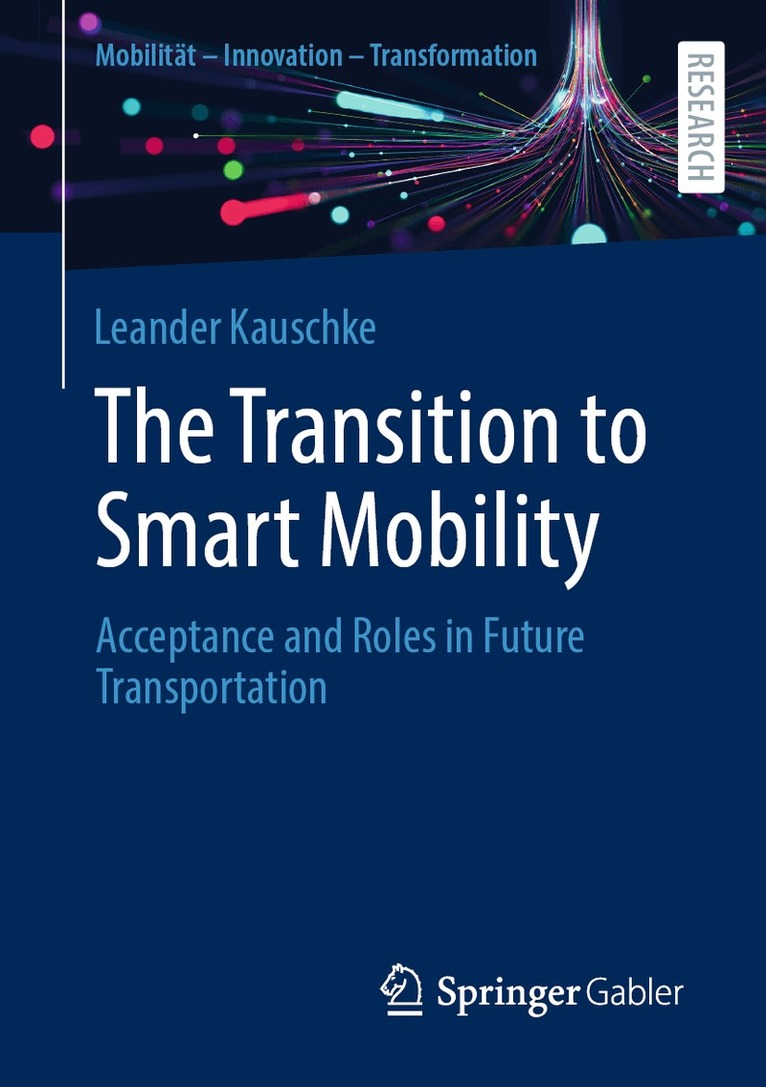
Transition to Smart Mobility
1103 kr
Skickas inom 10-15 vardagar
Beskrivning
Most contemporary notions of the fairly recent concept ‘smart mobility’ portray an imminent transition of similar socio-economic consequences as the shift from horses to automobiles did 100 years ago. Present book thus offers an in-depth look at the variables involved in the equation of smart mobility acceptance (1) and envisaged institutional change (2).Both views are embedded in the Multi-Level Perspective. Study 1 develops a structural equation model in SmartPLS. Use cases cover eBikes (N=537), mobility-as-a-service (N=531), and fully automated vehicles (N=558). Based on the results, acceptance relies on five factors: performance expectancy, facilitating conditions, social influence, habit, and hedonic motivation.Study 2 applies the Institutional Role Model (IRM) to better understand system dynamics. Thus, the smart mobility ecosystem is mapped in a structured manner. It identifies nine institutions, as well as four technical and four economic roles. Results of interviews with experts (N=8) support the IRM’s significance as a vision provider for a new mobility regime.In the end, these two perspectives amalgamate. This opens a sophisticated space for public debate about the commencing transition to smart mobility.
Produktinformation
- Utgivningsdatum: 2023-10-20
- Mått: 148 x 210 x 18 mm
- Vikt: 411 g
- Format: Häftad
- Språk: Engelska
- Antal sidor: 294
- Förlag: Springer Fachmedien Wiesbaden
- Serie: Mobilität – Innovation – Transformation
- ISBN: 9783658430009
Utforska kategorier
Betyg & recensioner
0 recensioner
Inga recensioner tillgängliga.