• Fri frakt över 249 kr
  • •
  • Snabba leveranser
  • •
  • Billiga böcker
Kundservice

Du är på sajten för privatpersoner.

Företag, bibliotek eller offentlig verksamhet?

Du handlar på classic.bokus.com, där alla dina funktioner finns intakta.
Till classic.bokus.com
Bokus logotyp. Gå till startsidan.
  • Erbjudanden
  • Student
  • Topplistor
  • Barn & ungdom
  • Bokus Play
  • E-böcker
  • Ljudböcker
  • Pocketböcker
  • Spel och pussel

5% studentrabatt – använd koden KURSBOK27 →

Sidfot

Mina sidor

    Hjälp

    • Kundservice
    • Vanliga frågor och svar
    • Frakt och leverans
    • Retur vid ångerrätt
    • Reklamera vara
    • Betalning
    • Köpvillkor
    • Allmänna villkor
    • Information om webbplatsens tillgänglighet

    Om Bokus

    • Om oss
    • Pressrum
    • För studenter
    • För företag
    • För bibliotek och offentlig verksamhet
    • För leverantörer
    • Hållbarhet

    Populärt

    • Aktuella erbjudanden
    • Presentkort
    • Studentlitteratur
    • Nya böcker
    • Topplistor
    • Signerade böcker
    • Engelska böcker

    Inspiration

    • Boktips
    • BookTok
    • Barnbokskaraktärer
    • Populära författare
    Logotyp för Bokus
    Följ oss på Facebook (extern länk)Följ oss på Instagram (extern länk)Följ oss på YouTube (extern länk)Följ oss på TikTok (extern länk)
    bokus @ CookiesAnpassa cookiesIntegritetspolicyKöpvillkor
    Till Citymail hemsida (extern länk)Till Budbee hemsida (extern länk)Till Postnord hemsida (extern länk)Till Schenker hemsida (extern länk)Till Early Bird hemsida (extern länk)Till Walleys hemsida (extern länk)
    1. Skönlitteratur
    2. Litteraturvetenskap
    3. Litteraturvetenskap

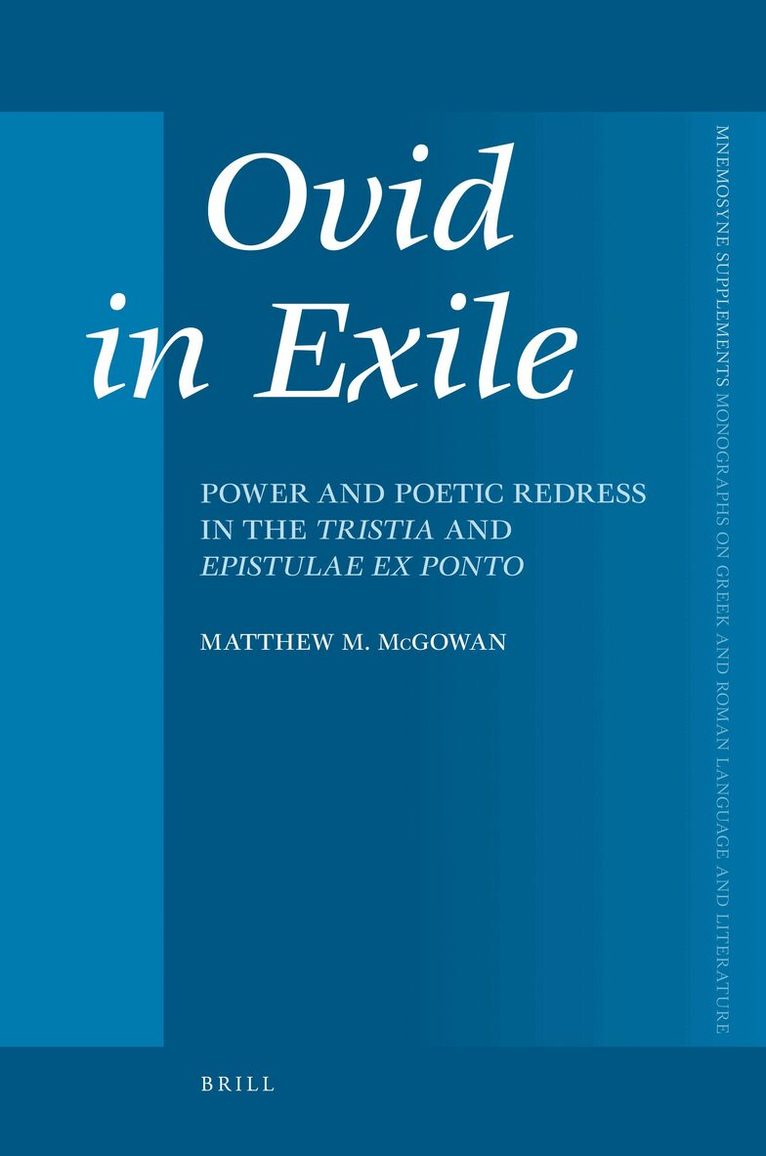
    Ovid in Exile

    Power and Poetic Redress in the Tristia and Epistulae ex Ponto

    AvMatthew McGowan

    Inbunden, Engelska, 2009

    Del 309 i serien Mnemosyne, Supplements

    2 698 kr

    Beställningsvara. Skickas inom 5-8 vardagar. Fri frakt över 249 kr.

    Beskrivning

    In response to being exiled to the Black Sea by the Roman emperor Augustus in 8 AD, Ovid began to compose the Tristia and Epistulae ex Ponto and to create for himself a place of intellectual refuge. From there he was able to reflect out loud on how and why his own art had been legally banned and left for dead on the margins of the empire. As the last of the Augustan poets, Ovid was in a unique position to take stock of his own standing and of the place of poetry itself in a culture deeply restructured during the lengthy rule of Rome's first emperor. This study considers exile in the Tristia and Epistulae ex Ponto as a place of genuine suffering and a metaphor for poetry's marginalization from the imperial city. It analyzes, in particular, Ovid's representation of himself and the emperor Augustus against the background of Roman religion, law, and poetry.

    Produktinformation

    • Utgivningsdatum:2009-04-24
    • Mått:160 x 240 x 16 mm
    • Vikt:612 g
    • Format:Inbunden
    • Språk:Engelska
    • Serie:Mnemosyne, Supplements
    • Antal sidor:262
    • Förlag:Brill
    • ISBN:9789004170766

    Utforska kategorier

    • Litteraturvetenskap inom Skönlitteratur
    • Forntidens historia inom Historia och arkeologi

    Mer om författaren

    Matthew M. McGowan, Ph.D. (2002) in Classics, New York University, is Assistant Professor of Classics at Fordham University in New York City. His research focuses on Latin poetry, ancient religion, and the classical tradition.

    Recensioner i media

    "McGowan demonstrates throughout the book that he is a careful and close reader, and repeatedly points out the multiplicity of interpretations available to readers in each of these poems. [...] McGowan’s most valuable contribution in this book is his analysis of the often avoided, and notoriously challenging, figure of Augustus which Ovid creates in these texts. Thus, McGowan’s work will be of use not only to scholars who study Ovid, but also to those who study imperial ideology; for these texts remain one of the few primary sources written about the emperor during this period." Sanjaya Thakur in BMCR, 22-8-2011