• Fri frakt över 249 kr
  • •
  • Snabba leveranser
  • •
  • Billiga böcker
Kundservice

Du är på sajten för privatpersoner.

Företag, bibliotek eller offentlig verksamhet?

Du handlar på classic.bokus.com, där alla dina funktioner finns intakta.
Till classic.bokus.com
Bokus logotyp. Gå till startsidan.
  • Erbjudanden
  • Nyheter
  • Student
  • Topplistor
  • Barn & ungdom
  • Bokus Play
  • E-böcker
  • Pocketböcker
  • Spel & pussel

10% rabatt på allt med kod: NYSTART10 →

Sidfot

Mina sidor

    Hjälp

    • Kundservice
    • Vanliga frågor och svar
    • Frakt och leverans
    • Retur vid ångerrätt
    • Reklamera vara
    • Betalning
    • Köpvillkor
    • Allmänna villkor
    • Information om webbplatsens tillgänglighet

    Om Bokus

    • Om oss
    • Pressrum
    • För studenter
    • För företag
    • För bibliotek och offentlig verksamhet
    • För leverantörer
    • Hållbarhet

    Populärt

    • Aktuella erbjudanden
    • Presentkort
    • Studentlitteratur
    • Nya böcker
    • Topplistor
    • Signerade böcker
    • Engelska böcker

    Inspiration

    • Boktips
    • BookTok
    • Populära bokserier
    • Barnbokskaraktärer
    • Populära författare
    Logotyp för Bokus
    Följ oss på Facebook (extern länk)Följ oss på Instagram (extern länk)Följ oss på YouTube (extern länk)Följ oss på TikTok (extern länk)
    bokus @ CookiesAnpassa cookiesIntegritetspolicyKöpvillkor
    Till Citymail hemsida (extern länk)Till Budbee hemsida (extern länk)Till Postnord hemsida (extern länk)Till Schenker hemsida (extern länk)Till Early Bird hemsida (extern länk)Till Walleys hemsida (extern länk)
    1. Historia och arkeologi
    2. Historia
    3. Forntidens historia

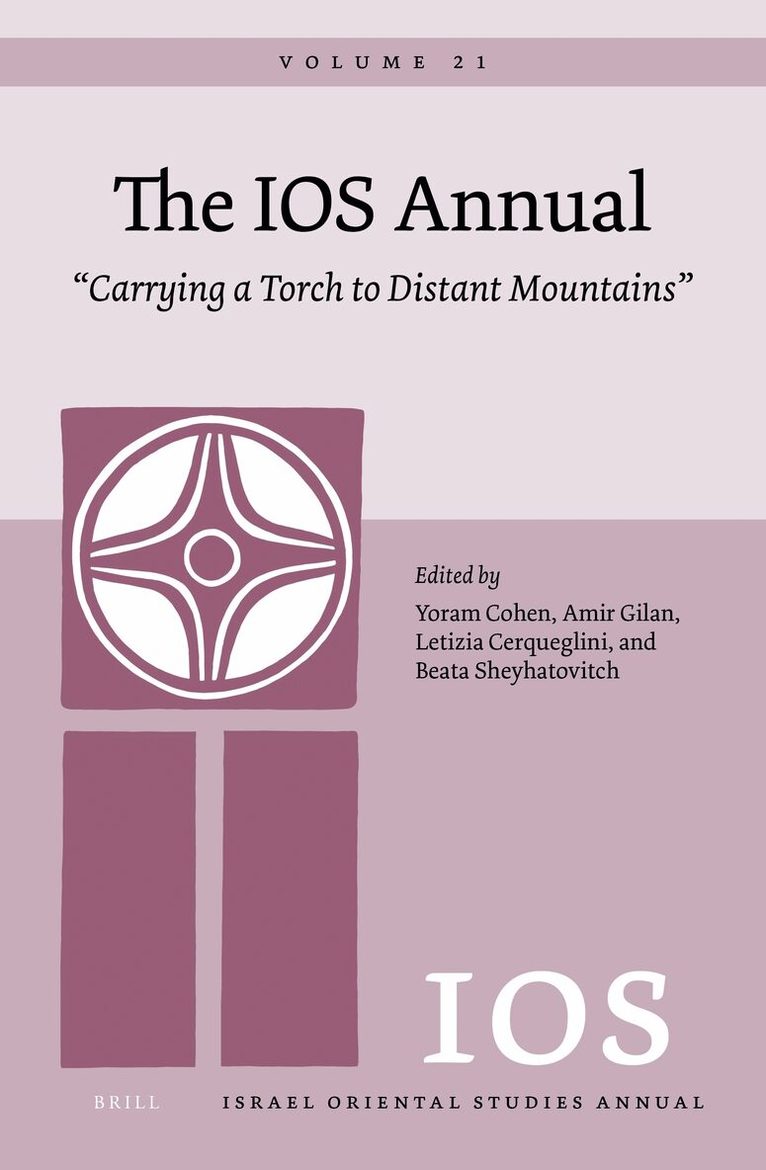
    IOS Annual Volume 21. “Carrying a Torch to Distant Mountains”

    AvYoram Cohen,Amir Gilan

    Inbunden, Engelska, 2021

    Del 21 i serien IOS Annual

    2 589 kr

    Beställningsvara. Skickas inom 5-8 vardagar. Fri frakt över 249 kr.

    Beskrivning

    The IOS Annual Volume 21: “Carrying a Torch to Distant Mountains”, brings forth cutting-edge studies devoted to a wide array of fields and disciplines of the Middle East. The three sections—the Ancient Near East, Semitic Languages and Linguistics, and Arabic Language and Literature—include sixteen articles. In the Ancient Near East section are studies devoted to Babylonian literature (Gabbay and Wasserman; Ayali-Darshan), history (Cohen and Torrecilla), and language (Zadok). The Semitic Languages and Linguistics section contains discussions about comparative Semitics—Egyptian and Modern South Arabic (Borg; Cerqueglini), Aramaic dialects (Khan; Stadel), Palestinian Arabic (Arnold; Procházka), and Tigre and Ethiosemitic languages (Voigt). The final section of Arabic Language and Literature is devoted to ʿArabiyya and its grammarians (Dror, Versteegh, Sheyhatovitch, Kasher, and Sadan).

    Produktinformation

    • Utgivningsdatum:2021-12-02
    • Mått:155 x 235 x 36 mm
    • Vikt:913 g
    • Format:Inbunden
    • Språk:Engelska
    • Serie:IOS Annual
    • Antal sidor:466
    • Förlag:Brill
    • ISBN:9789004499133

    Utforska kategorier

    • Forntidens historia inom Historia och arkeologi

    Mer om författaren

    Yoram Cohen, Ph.D. (2003), Harvard University, is Professor of Assyriology and Ancient Near Eastern Cultures at Tel Aviv University. He has published four monographs on Hittite society, scribal schools at Emar, wisdom literature, and omen literature, in addition to multiple studies on Bronze Age Syria. Amir Gilan, Ph.D. (2009), Leipzig University, is Professor of Hittite and Anatolian Studies at Tel Aviv University. He has written extensively on Hittite history, literature, and religion, including Formen und Inhalte althethitischer historischer Literatur (Texte der Hethiter 29, Universitätsverlag Winter, Heidelberg 2015). Letizia Cerqueglini, Ph.D. (2014), University of Pisa and Ben-Gurion University of the Negev Beer-Sheva, is Lecturer of Semitic Linguistics at Tel Aviv University. She has published monographs and articles on Semitic languages, cognition, and culture, including Object-based Selection of Spatial Frames of Reference in aṣ-Ṣāniʕ Arabic (Pisa University Press, 2015). Beata Sheyhatovitch, Ph.D. (2016), Tel Aviv University, is Lecturer at the Department of Arabic and Islamic Studies at Tel Aviv University. She has published a monograph on the distinctive terminology in Šarḥ al-Kāfiya by Raḍī l-Dīn al-ʾAstarābāḏī and articles on the medieval Arabic linguistic tradition.

    Innehållsförteckning

    • EditorialPart 1 The Ancient Near East1 “I Am Carrying a Torch to the Faraway Mountains”: An Old Babylonian Bilingual Personal Prayer and Its Textual TransmissionUri Gabbay and Nathan Wasserman2 The Campaign against the Suteans and the Project in The Land of Mukiš: A Consideration of Letters RSO 23 28–36, and 39 from the House of Urtenu in UgaritYoram Cohen and Eduardo Torrecilla3 The Editorial Technique of Resumptive Repetition: The Cosmogony and the Anthropogony in Enūma ElišNoga Ayali-Darshan4 On Aramaic Loanwords in Neo- and Late-babylonian Texts: Introduction and Semantic-Topical Taxonomy (Part One)Ran ZadokPart 2 Semitic Languages and Linguistics5 Phonological Peculiarities of Palestinian FolksongsWerner Arnold6 Is Old Egyptian dp.t, ‘Ship’, a Bronze Age Afroasiatic Isogloss? An Etymological and Archaeological VignetteAlexander Borg7 Ancient Egyptian Words in Modern South Arabian LanguagesLetizia Cerqueglini8 Remarks on the Christian Neo-aramaic Dialect of ShaqlawaGeoffrey Khan9 The Arabic Dialects of the Jezreel Plain and the Hula Valley (Galilee): Grammatical Notes, Remarks on Linguistic Contact, and TextsStephan Procházka10 The Loss of the Infinitive and Its Replacement by the Imperfect in Christian Palestinian AramaicChristian Stadel11 Some Remarks about Laryngeal Rules in TigreRainer M. VoigtPart 3 Arabic Language and Literature12 Cognitive Verbs as a Strategy for Expressing Subjectivity and Intersubjectivity in the QurʾānYehudit Dror13 Redundance and Suppression According to Sībawayhi and al-FarrāʾKees Versteegh14 The Term fāʾida in Pragmatic and Rhetorical Discussions by Arab GrammariansBeata Sheyhatovitch15 How (Not) to Read Pedagogical Grammars of Arabic: The Case of the Subjunctive MoodAlmog Kasher16 Syntactic and Semantic Constraints on the Structure of the Adverbial Accusative of Cause and Purpose (al-mafʿūl lahu) According to Arabic GrammariansArik SadanIndex