• Fri frakt över 249 kr
  • •
  • Snabba leveranser
  • •
  • Billiga böcker
Kundservice

Du är på sajten för privatpersoner.

Företag, bibliotek eller offentlig verksamhet?

Du handlar på classic.bokus.com, där alla dina funktioner finns intakta.
Till classic.bokus.com
Bokus logotyp. Gå till startsidan.
  • Erbjudanden
  • Nyheter
  • Student
  • Topplistor
  • Barn & ungdom
  • Bokus Play
  • E-böcker
  • Pocketböcker
  • Spel & pussel

10% rabatt på allt med kod: NYSTART10 →

Sidfot

Mina sidor

    Hjälp

    • Kundservice
    • Vanliga frågor och svar
    • Frakt och leverans
    • Retur vid ångerrätt
    • Reklamera vara
    • Betalning
    • Köpvillkor
    • Allmänna villkor
    • Information om webbplatsens tillgänglighet

    Om Bokus

    • Om oss
    • Pressrum
    • För studenter
    • För företag
    • För bibliotek och offentlig verksamhet
    • För leverantörer
    • Hållbarhet

    Populärt

    • Aktuella erbjudanden
    • Presentkort
    • Studentlitteratur
    • Nya böcker
    • Topplistor
    • Signerade böcker
    • Engelska böcker

    Inspiration

    • Boktips
    • BookTok
    • Populära bokserier
    • Barnbokskaraktärer
    • Populära författare
    Logotyp för Bokus
    Följ oss på Facebook (extern länk)Följ oss på Instagram (extern länk)Följ oss på YouTube (extern länk)Följ oss på TikTok (extern länk)
    bokus @ CookiesAnpassa cookiesIntegritetspolicyKöpvillkor
    Till Citymail hemsida (extern länk)Till Budbee hemsida (extern länk)Till Postnord hemsida (extern länk)Till Schenker hemsida (extern länk)Till Early Bird hemsida (extern länk)Till Walleys hemsida (extern länk)
    1. Medicin
    2. Klinisk medicin och internmedicin
    3. Hjärt- och kärlsjukdomar

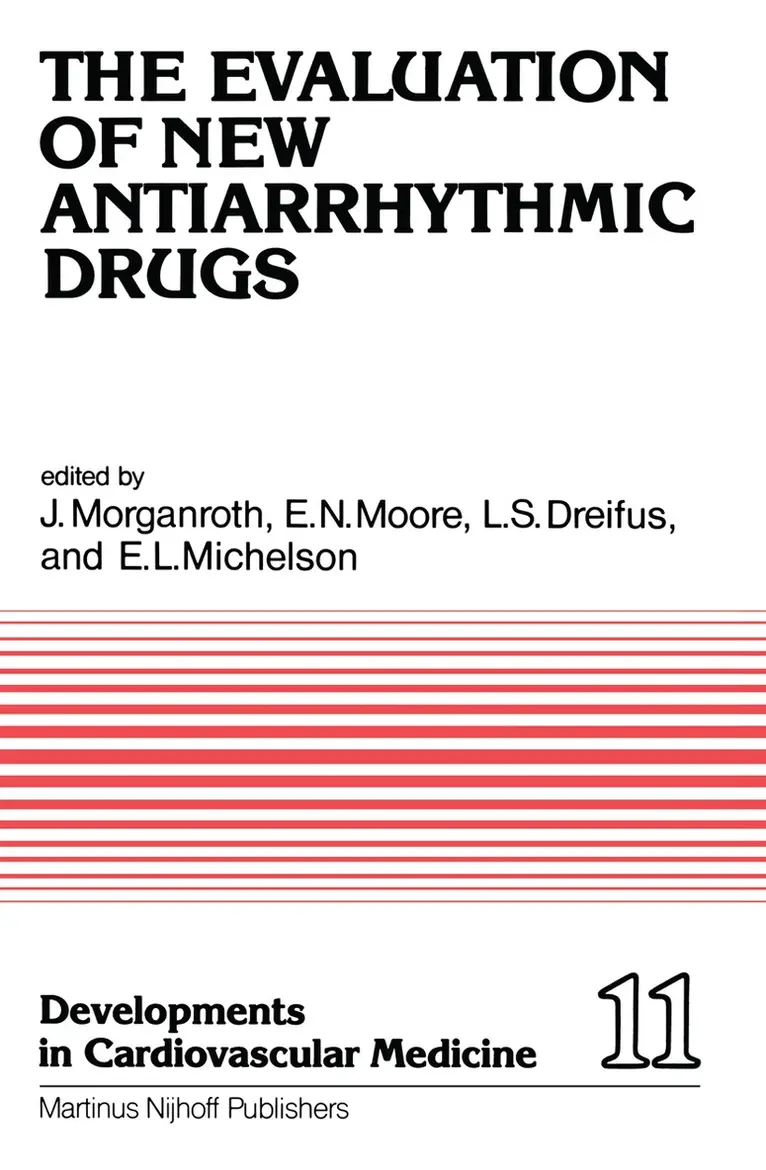
    Evaluation of New Antiarrhythmic Drugs

    Proceedings of the Symposium on How to Evaluate a New Antiarrhythmic Drug: The Evaluation of New Antiarrhythmic Agents for the Treatment of Ventricular Arrhythmias, held at Philadelphia, Pennsylvania, October 8–9, 1980

    AvJ. Morganroth,E. Neil Moore

    Häftad, Engelska, 2011

    Del i serien Developments in Cardiovascular Medicine

    563 kr

    Beställningsvara. Skickas inom 10-15 vardagar. Fri frakt över 249 kr.

    Beskrivning

    Thus, there are now several chronic canine myocardial infarction­ ventricular tachyarrhythmia models which are available for the evaluation of new antiarrhythmic drugs (Table I). The available models fulfill many, but not all of the requirements for an ideal chronic arrhythmia model (Table 11). The sustained arrhythmias initiated in these models using programmed pacing presumably have the same localized reentrant mechanism that characterizes chronic human myocardial infarction and chronic coronary 26 artery disease. However, these models are not suitable for determining whether a new drug will abolish spontaneous ly-occurring PVCs. In addition, these models are of unproven value in the study of acute spontaneously­ occurring sudden death; although recently initiated, provocative work may shed further light on this subject. Most importantly, the available models do seem well-suited to the evaluation of new drugs intended for use in chronic coronary artery disease patients at risk for sustained reentrant ventricular tachycardia or VF. Notably, the results of preliminary electropharmacologic studies in these canine models parallel closely those findings reported in human patients with sustained life-threatening ventricu­ lar tachyarrhythmias (Table Ill). Therefore, increased use of these chronic models for new antiarrhythmic drug testing is strongly recommended. TABLE II Ideal vs Available Chronic Canine - Arrhythmia Models Ideal Available 1. (a) Arrhythmia mechanism comparable to Yes patients with chronic CAD: Reentry (b) Pathophysiology similar (e. g. , atherogenic CAD) No 2. Susceptible to: (a) spontaneous PVCs No l No (b) spontaneous VT/VF (c) inducible VT/VF Yes 3.

    Produktinformation

    • Utgivningsdatum:2011-11-22
    • Mått:155 x 235 x 19 mm
    • Vikt:517 g
    • Format:Häftad
    • Språk:Engelska
    • Serie:Developments in Cardiovascular Medicine
    • Antal sidor:340
    • Förlag:Springer
    • ISBN:9789400982727

    Utforska kategorier

    • Hjärt- och kärlsjukdomar inom Medicin

    Innehållsförteckning

    • How to evaluate a new antiarrhythmic drug: The challenge of sudden cardiac death.- How to evaluate a new antiarrhythmic drug: The challenge of sudden cardiac death.- Pre-Clinical Evaluation of a New Antiarrhythmic Agent.- Relationships between effects on cardiac electrophysiology and antiarrhythmic efficacy.- What animal models should be used to define antiarrhythmic efficacy: acute dog models?.- Description of chronic canine myocardial infaction models suitable for the electropharmacologic evaluation of new antiarrhythmic drugs.- Non-canine animal models for evaluating antiarrhythmic efficacy General Group Discussion: Animal Models.- Defining the pharmacodynamics and pharmacokinetics of new antiarrhythmic drugs General Group Discussion: Pharmacology.- Chronic Studies in Patients with Non-Hemodynamically Significant Ventricular Arrhythmics.- How should Holter monitoring analysis be performed?.- Long-term ambulatory electrocardiographic recording in the determination of efficacy of new antiarrhythmic agents.- Evaluation of antiarrhythmic drugs. Should the Lown classification be used as a measure of efficacy?.- General Group Discussion: Holter Monitoring.- Study Designs: Chronic Patients.- New means of evaluating antiarrhythmic drugs.- Parallel or crossover designs in evaluation of antiarrhythmic therapy.- General Group Discussion: Study Designs: Chronic Patients.- Acute Studies in Patients with Hemodynamically Significant Significant Ventricular Arrhythmias.- Acute drug testing as a part of a systematic approach to antiarrhythmic drug therapy.- What is the role of electrophysiology in drug testing? General Group Discussion: Electrophysiology.- What should the study design be to test new antiarrhythmic drugs in patients with acute myocardial infarction, digitalis toxicityand other acute problems General Group Discussion: Study Designs in Acute Patients.- Special Considerations.- What baseline electrophysiologic data should be obtained (plus discussion).- Assessment of the hemodynamic and inotropic effects of antiarrhythmic drugs (plus discussion).- Evaluation of drug treatment in supraventricular arrhythmias (plus discussion).- How should long-term safety of a new antiarrhythmic drug be defined (plus discussion).- How should one manage emergency drug requests and their data (puls discussion).- How does one evaluate and use outside U.S.A. data in the new drug application (plus discussion).