• Fri frakt över 249 kr
  • •
  • Snabba leveranser
  • •
  • Billiga böcker
Kundservice

Du är på sajten för privatpersoner.

Företag, bibliotek eller offentlig verksamhet?

Du handlar på classic.bokus.com, där alla dina funktioner finns intakta.
Till classic.bokus.com
Bokus logotyp. Gå till startsidan.
  • Erbjudanden
  • Nyheter
  • Student
  • Topplistor
  • Barn & ungdom
  • Bokus Play
  • E-böcker
  • Pocketböcker
  • Spel & pussel

10% studentrabatt med kod TERM26

Sidfot

Mina sidor

    Hjälp

    • Kundservice
    • Vanliga frågor och svar
    • Frakt och leverans
    • Retur vid ångerrätt
    • Reklamera vara
    • Betalning
    • Köpvillkor
    • Allmänna villkor
    • Information om webbplatsens tillgänglighet

    Om Bokus

    • Om oss
    • Pressrum
    • För studenter
    • För företag
    • För bibliotek och offentlig verksamhet
    • För leverantörer
    • Hållbarhet

    Populärt

    • Aktuella erbjudanden
    • Presentkort
    • Studentlitteratur
    • Nya böcker
    • Topplistor
    • Signerade böcker
    • Engelska böcker

    Inspiration

    • Boktips
    • BookTok
    • Populära bokserier
    • Barnbokskaraktärer
    • Populära författare
    Logotyp för Bokus
    Följ oss på Facebook (extern länk)Följ oss på Instagram (extern länk)Följ oss på YouTube (extern länk)Följ oss på TikTok (extern länk)
    bokus @ CookiesAnpassa cookiesIntegritetspolicyKöpvillkor
    Till Citymail hemsida (extern länk)Till Budbee hemsida (extern länk)Till Postnord hemsida (extern länk)Till Schenker hemsida (extern länk)Till Early Bird hemsida (extern länk)Till Walleys hemsida (extern länk)
    1. Djur och Natur
    2. Djurböcker
    3. Vilda djur
    4. Fjärilar, insekter, spindlar

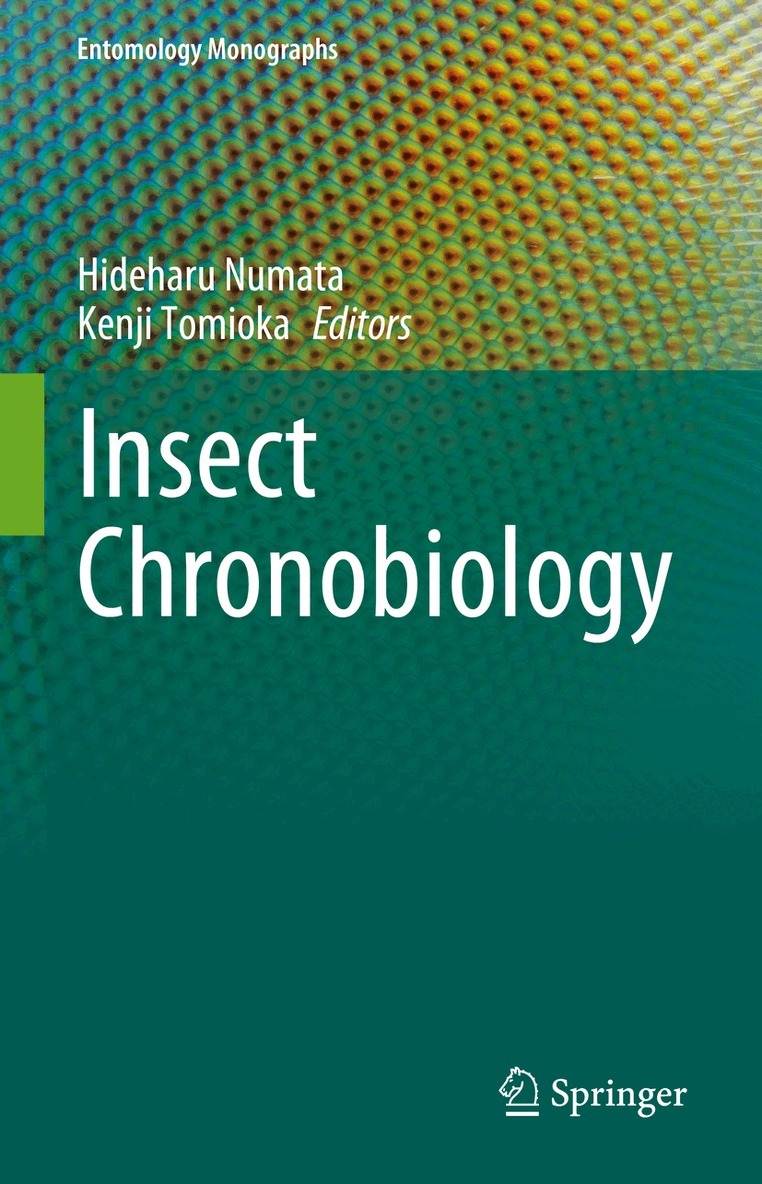
    Insect Chronobiology

    AvHideharu Numata,Kenji Tomioka

    Inbunden, Engelska, 2023

    Del i serien Entomology Monographs

    1 949 kr

    Beställningsvara. Skickas inom 10-15 vardagar. Fri frakt över 249 kr.

    Beskrivning

    This book reviews the physiological mechanisms of diverse insect clocks, including circadian clock, lunar clock, tidal clock, photoperiodism, circannual rhythms and others. It explains the commonality and diversity of insect clocks, focusing on the recent advances in their molecular and neural mechanisms.  In the history of chronobiology, insects provided important examples of diverse clocks. The first report of animal photoperiodism was in an aphid, and the time-compensated celestial navigation was first shown in the honeybee. The circadian clock was first localized in the brain of a cockroach. These diverse insect clocks also have some common features which deserve to be reviewed in a single book. The central molecular mechanism of the circadian clock, i.e., the negative feedback loop of clock genes, was proposed in Drosophila melanogaster in the 1990s and later became the subject of the Nobel Prize in Physiology or Medicine in 2017. Thereafter, researches on the molecular and neural mechanisms in diverse insect clocks other than the Drosophila circadian clock also advanced appreciably. Various new methods including RNAi, NGS, and genome editing with CRISPR-Cas9 have become applicable in these researches.  This book comprehensively reviews the physiological mechanisms in diverse insect clocks in the last two decades, which have received less attention than the Drosophila circadian clock. The book is intended for researchers, graduate students, and highly motivated undergraduate students in biological sciences, especially in entomology and chronobiology.

    Produktinformation

    • Utgivningsdatum:2023-04-18
    • Mått:155 x 235 x 25 mm
    • Vikt:790 g
    • Format:Inbunden
    • Språk:Engelska
    • Serie:Entomology Monographs
    • Antal sidor:357
    • Upplaga:2023
    • Förlag:Springer Verlag, Singapore
    • ISBN:9789819907250

    Utforska kategorier

    • Fjärilar, insekter, spindlar inom Djur och Natur
    • Cellbiologi inom Naturvetenskap och teknik
    • Insekter inom Naturvetenskap och teknik

    Mer om författaren

    Hideharu Numata is an Emeritus Professor and a Program-Specific Professor at Kyoto University, Japan. He was a Professor at the Graduate School of Science, Osaka City University, Japan, in 1998-2009, and the Graduate School of Science, Kyoto University, in 2009-2021. His research interests include physiological mechanisms for seasonal adaptations in insects, e.g., photoperiodism and circannual rhythm. He was the President of the Entomological Society of Japan in 2013-2014, and a Councilor of International Congress of Entomology in 2008-2016. He was the Editor-in-Chief of Entomological Science in 2010-2011 and Zoological Science in 2020-2021.  Kenji Tomioka is an Emeritus Professor and a Program-Specific Professor of Okayama University, Japan. He was a Professor at Department of Biology, Faculty of Science, Yamaguchi University, Japan in 1995-2003, and the Graduate School of Natural Science and Technology, Okayama University, in 2003-2021. His research interests include molecular and neural basis of insect circadian rhythms and photoperiodism. He has been a member of the editorial board of Journal of Insect Physiology since 1992, Zoological Science since 2003, Zoological Letters since 2014, and Physiological Entomology since 2015.

    Innehållsförteckning

    • ​Chapter 1. Historical survey of chronobiology with reference to studies in insects.- Part I. Circadian rhythms.- Chapter 2. General features of circadian rhythms.- Chapter 3. Photic entrainment of circadian rhythms.- Chapter 4. Molecular mechanism of the circadian clock.- Chapter 5. Neural mechanism of the circadian clock.- Chapter 6. Peripheral circadian clock.- Chapter 7. Circa-bidian rhythm.- Chapter 8. Circadian rhythms in social insects.- Chapter 9. Environmental adaptation and evolution of circadian rhythms.- Part II. Other types of insect rhythms and photoperiodism.- Chapter 10. Lunar and tidal rhythms.- Chapter 11. Circannual rhythms.- Chapter 12. General features of photoperiodism.- Chapter 13. Molecular mechanism of photoperiodism.- Chapter 14. Neural mechanism of photoperiodism.- Chapter 15. Seasonal timer in aphids.- Chapter 16. Time-compensated celestial navigation.