E-bok, Engelska, 2026
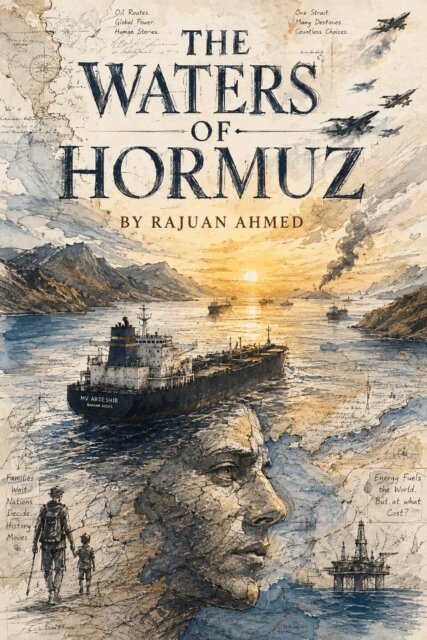
Waters of Hormuz
Av Rajuan Ahmed
43 kr
Läs direkt i Bokus Reader – eller ladda ned till din enhet
Beskrivning
The Waters of Hormuz by Rajuan Ahmed opens on a morning when the sea itself seems to hold its breath.In August 2026, a naval mine detonates in the Strait of Hormuz, severing one of the world's most vital arteries of energy. Nearly twenty million barrels of oil pass through these waters each day. Now the route is silent. Crude prices race toward $200 a barrel, markets convulse, and the tremors of a distant conflict begin to reach ordinary homes.Aboard the Iranian tanker MV Ardeshir, Captain Reza Karimi watches the Gulf change from a familiar sea into a landscape of suspicion and fear. At his side is Younus, an elderly sailor whose long life at sea has taught him that every war begins with certainty and ends with questions.In Washington, US National Security Advisor Catherine Woodward stands inside the Situation Room as military pressure builds. Intelligence reports arrive with frightening regularity. Every decision seems capable of closing the door to peace.On Kish Island, Iranian General Saeed Bahrami faces an impossible choice. Ordered to prepare for retaliation, he refuses to launch missiles without conclusive evidence. He knows that one command could transform a maritime crisis into a regional war.In Dhaka, the consequences arrive without warning. Rickshaw puller Nuru Mia and his wife, Shefali, struggle to find treatment for their sick child, Rim. As fuel prices climb, so do the costs of transport, medicine, food, and survival. The Strait may be thousands of miles away, but its crisis has entered their home.Then comes Amrita Menon, an Indian journalist determined to discover who truly lit the fuse. Her investigation leads from Jazirat al-Ghubbah to Oman's Khasab port, where she encounters Iranian peace dissidents and obtains encrypted files bearing the name Operation Sandstorm.The evidence reveals a conspiracy of terrifying ambition. A rogue intelligence cell staged the mine attacks to implicate Iran and push the United States toward open war.With Amrita's evidence, Catherine opens a secret channel to Tehran and persuades President Henry Clayton to halt imminent Israeli airstrikes. Through Swiss intermediaries, diplomacy succeeds where weapons nearly failed. A fragile ceasefire is reached. The Strait reopens. Oil begins to flow. Markets slowly recover.But the sea remembers. So do the people who stood at the edge of catastrophe.The Waters of Hormuz closes not with the triumph of a nation, but with a question about humanity itself. Power can command armies, shape markets, and threaten destruction. Yet when the guns fall silent, truth, compassion, restraint, and moral courage are what remain.
Produktinformation
- Utgivningsdatum: 2026-08-09
- Språk: Engelska
- Filformat: EPUB
- Kopieringsskydd: LCP
- ISBN: 9798235550414
- Förlag: Distributed via Draft2Digital
Utforska kategorier
Betyg & recensioner
0 recensioner
Inga recensioner tillgängliga.