Arjan Wardekker – författare
Visar alla böcker från författaren Arjan Wardekker. Handla med fri frakt och snabb leverans.
4 produkter
4 produkter
Häftad, Engelska, 2022
545 kr
Skickas inom 10-15 vardagar
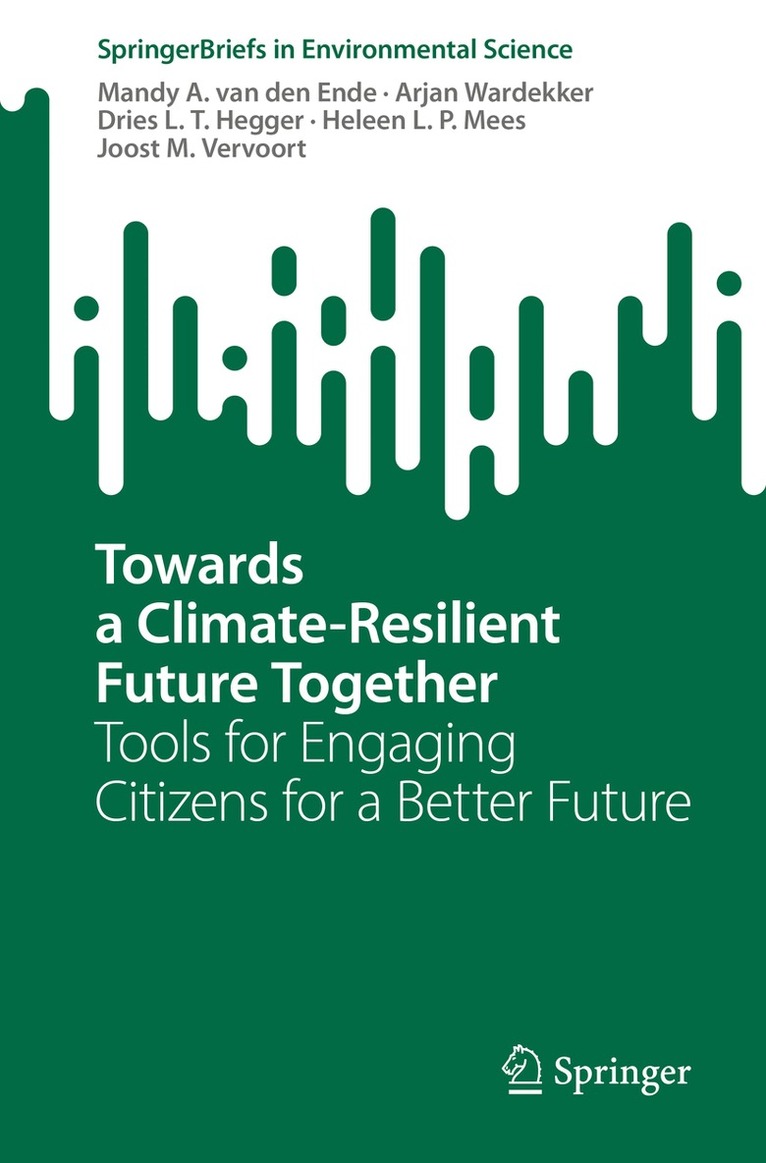
Although many local authorities underline the important role of citizens in climate adaptation, many experience difficulties with organizing citizen participation in a way that is meaningful to both citizens and policymakers. Climate change is for many simply not a top priority. Besides, the future is often rather abstract to people, citizens in particular. We argue that practical tools are needed to help citizens structure the process of thinking about and designing the future of their living environment under the impacts of climate change. The toolbox Towards a climate-resilient future together offers practical foresight methods and tools for organizing citizen participation in the process of building climate-resilient futures. It provides an overview of the state the art of and hands-on guidance for executing participatory foresight methods and showcases some of the lessons learned from several international research programs on citizen engagement. In doing so, the toolbox can assist practitioners, students and academics concerned with the question of how local communities in urban and rural areas could adapt to climate change impacts and become more resilient in the future. It is suitable for readers without any experience in citizen participation and/or foresight, while more experienced readers will find innovative combinations of methods and tools that are unique within the field of citizen participation and foresight..
E-bok
Engelska, 2022687 kr
Läs direkt efter köp
Although many local authorities underline the important role of citizens in climate adaptation, many experience difficulties with organizing citizen participation in a way that is meaningful to both citizens and policymakers. Climate change is for many simply not a top priority. Besides, the future is often rather abstract to people, citizens in particular. We argue that practical tools are needed to help citizens structure the process of thinking about and designing the future of their living environment under the impacts of climate change. The toolbox Towards a climate-resilient future together offers practical foresight methods and tools for organizing citizen participation in the process of building climate-resilient futures. It provides an overview of the state the art of and hands-on guidance for executing participatory foresight methods and showcases some of the lessons learned from several international research programs on citizen engagement. In doing so, the toolbox can assist practitioners, students and academics concerned with the question of how local communities in urban and rural areas could adapt to climate change impacts and become more resilient in the future. It is suitable for readers without any experience in citizen participation and/or foresight, while more experienced readers will find innovative combinations of methods and tools that are unique within the field of citizen participation and foresight..
Inbunden, Engelska, 2024
1 170 kr
Skickas inom 5-8 vardagar
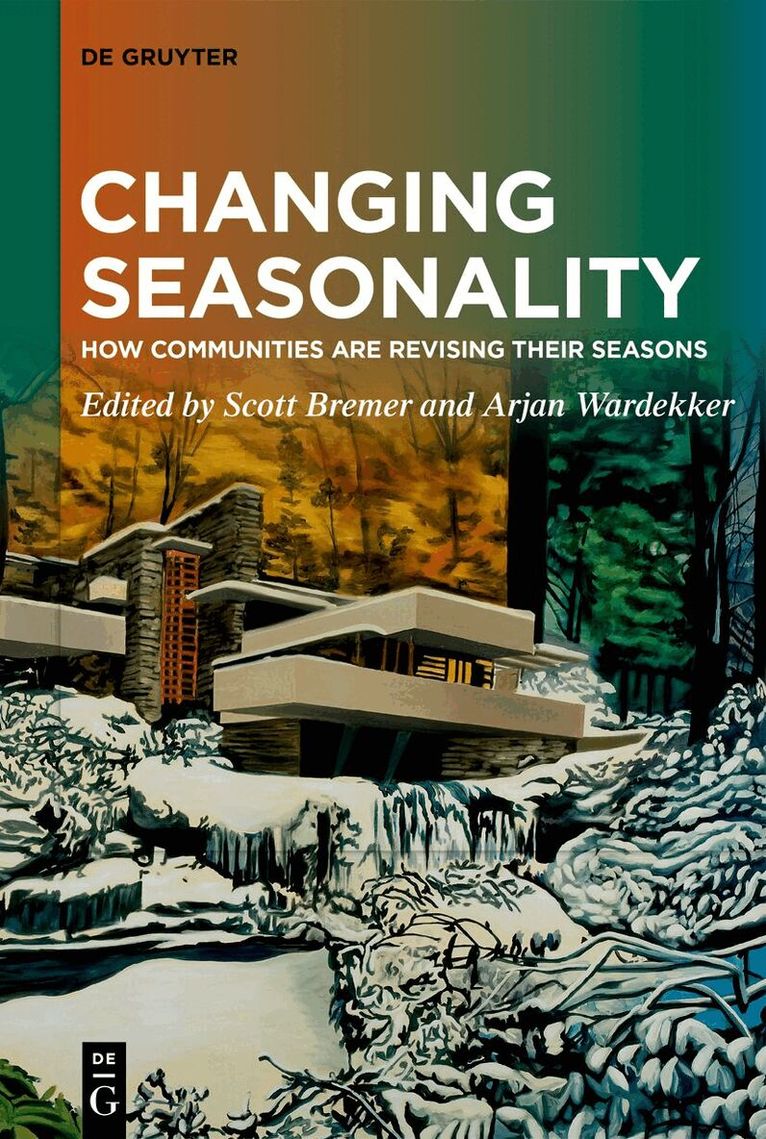
Communities worldwide are critically re-examining their seasonal cultures and calendars. As cultural frameworks, seasons have long patterned community life and provided repertoires for living by annual rhythms. In a chaotic world, the seasons – winter, the monsoon and so on – can feel like stable cultural landmarks for reckoning time and orienting our communities. Seasons are rooted in our pasts and reproduced in our present. They act as schemes for synchronising community activities and professional practices, and as symbol systems for interpreting what happens in the world. But on closer inspection, seasons can be unstable and unreliable. Their meanings can change over time. Seasonal cultures evolve with environments and communities’ worldviews, values, technologies and practices, affecting how people perceive seasonal patterns and behave accordingly. Calendars are contested, especially now. Communities today find themselves in a moment of accelerated and intersecting changes – from climate to social, political, and technological – that are destabilizing seasonal cultures. How they reorient themselves to shifting patterns may affect whether seasonal rhythms serve as resources, or lead people down maladaptive pathways. A focus on seasonal cultures builds on multi-disciplinary work. The social sciences, from anthropology to sociology, have long studied how seasons order people’s sense of time, social life, relationship to the environment, and politics. In the humanities, seasons play an important role in literature, art, archaeology and history. This book advances scholarship in these fields, and enriches it with extrascientific insights from practice, to open up exiting new directions in climate adaptation.
Häftad, Engelska, 2025
302 kr
Skickas inom 3-6 vardagar
Communities worldwide are critically re-examining their seasonal cultures and calendars. As cultural frameworks, seasons have long patterned community life and provided repertoires for living by annual rhythms. In a chaotic world, the seasons – winter, the monsoon and so on – can feel like stable cultural landmarks for reckoning time and orienting our communities. Seasons are rooted in our pasts and reproduced in our present. They act as schemes for synchronising community activities and professional practices, and as symbol systems for interpreting what happens in the world. But on closer inspection, seasons can be unstable and unreliable. Their meanings can change over time. Seasonal cultures evolve with environments and communities’ worldviews, values, technologies and practices, affecting how people perceive seasonal patterns and behave accordingly. Calendars are contested, especially now. Communities today find themselves in a moment of accelerated and intersecting changes – from climate to social, political, and technological – that are destabilizing seasonal cultures. How they reorient themselves to shifting patterns may affect whether seasonal rhythms serve as resources, or lead people down maladaptive pathways. A focus on seasonal cultures builds on multi-disciplinary work. The social sciences, from anthropology to sociology, have long studied how seasons order people’s sense of time, social life, relationship to the environment, and politics. In the humanities, seasons play an important role in literature, art, archaeology and history. This book advances scholarship in these fields, and enriches it with extrascientific insights from practice, to open up exiting new directions in climate adaptation.