David C. Lane – författare
Visar alla böcker från författaren David C. Lane. Handla med fri frakt och snabb leverans.
5 produkter
5 produkter
231 kr
Skickas inom 7-10 vardagar
The Global Agenda for Social Justice provides accessible insights into some of the world’s most pressing social problems and proposes practicable international public policy responses to those problems. Written by a highly respected team of authors brought together by the Society for the Study of Social Problems (SSSP), chapters examine topics such as education, violence, discrimination, substance abuse, public health, and environment. The volume provides recommendations for action by governing officials, policy makers, and the public around key issues of social justice. The book will be of interest to scholars, practitioners, advocates, journalists, and students interested in public sociology, the study of social problems, and the pursuit of social justice.
205 kr
Skickas inom 7-10 vardagar
The Agenda for Social Justice 3: Solutions for 2024 provides accessible insights into some of the most pressing social problems and proposes public policy responses to those problems.Written by a highly respected team of authors brought together by the Society for the Study of Social Problems (SSSP), the book offers recommendations for action by elected officials, policymakers and the public regarding key issues for social justice. Chapters include discussion of social problems related to criminal justice, the economy, food insecurity, education, healthcare, housing and immigration. The book will be of interest to scholars, practitioners, advocates and students interested in public sociology, the study of social problems and the pursuit of social justice.
196 kr
Kommande
The Global Agenda for Social Justice 3 provides accessible insights into some of the most pressing social problems and proposes public policy responses to those problems.Written by a highly respected team of authors brought together by the Society for the Study of Social Problems (SSSP), the book offers recommendations for action by elected officials, policy makers, and the public regarding key issues for social justice. Chapters include discussion of social problems related to period poverty, climate justice, algorithmic bias, labor rights, and global inequality.The book will be of interest to scholars, practitioners, advocates, and students interested in public sociology, the study of social problems, and the pursuit of social justice.
387 kr
Skickas inom 7-10 vardagar
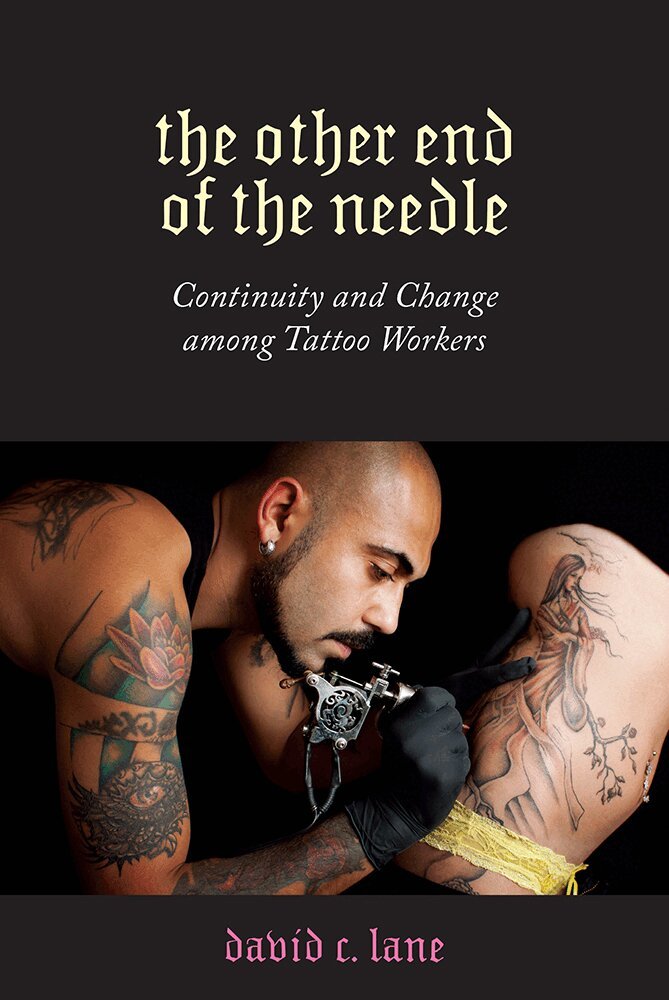
The Other End of the Needle demonstrates that tattooing is more complex than simply the tattoos that people wear. Using qualitative data and an accessible writing style, sociologist Dave Lane explains the complexity of tattoo work as a type of social activity. His central argument is that tattooing is a social world, where people must be socialized, manage a system of stratification, create spaces conducive for labor, develop sets of beliefs and values, struggle to retain control over their tools, and contend with changes that in turn affect their labor. Earlier research has examined tattoos and their meanings. Yet, Lane notes, prior research has focused almost exclusively on the tattoos—the outcome of an intricate social process—and have ignored the significance of tattoo workers themselves. "Tattooists," as Lane dubs them, make decisions, but they work within a social world that constrains and shapes the outcome of their labor—the tattoo. The goal of this book is to help readers understand the world of tattoo work as an intricate and nuanced form of work. Lane ultimately asks new questions about the social processes occurring prior to the tattoo's existence.
1 636 kr
Skickas inom 7-10 vardagar
The Other End of the Needle demonstrates that tattooing is more complex than simply the tattoos that people wear. Using qualitative data and an accessible writing style, sociologist Dave Lane explains the complexity of tattoo work as a type of social activity. His central argument is that tattooing is a social world, where people must be socialized, manage a system of stratification, create spaces conducive for labor, develop sets of beliefs and values, struggle to retain control over their tools, and contend with changes that in turn affect their labor. Earlier research has examined tattoos and their meanings. Yet, Lane notes, prior research has focused almost exclusively on the tattoos—the outcome of an intricate social process—and have ignored the significance of tattoo workers themselves. "Tattooists," as Lane dubs them, make decisions, but they work within a social world that constrains and shapes the outcome of their labor—the tattoo. The goal of this book is to help readers understand the world of tattoo work as an intricate and nuanced form of work. Lane ultimately asks new questions about the social processes occurring prior to the tattoo's existence.