Geoffrey Poitras – författare
1 730 kr
Läs direkt efter köp
2 247 kr
Skickas inom 10-15 vardagar
1 106 kr
Skickas inom 10-15 vardagar
759 kr
Läs direkt efter köp
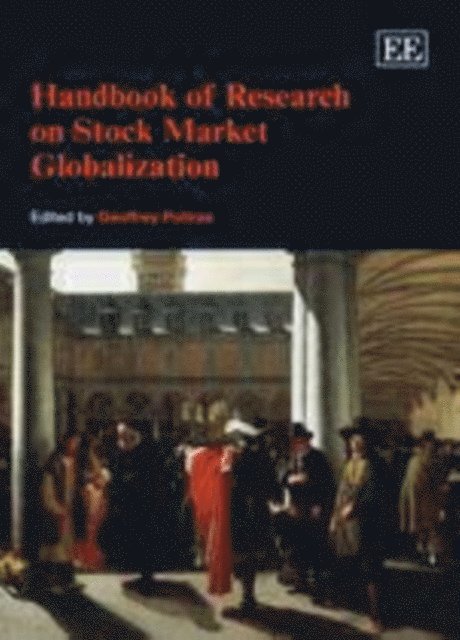
The chapters in the first section examine previous globalization periods through the lens of the corporate economy, valuing equities and managed funds. Further chapters address current issues such as the social closure of the exchange, demutualization and mergers and acquisitions as well as cross-listing and liquidity. The final chapters consider the regulatory challenges posed by stock market globalization. These include the pressures on regulators from rent-seeking stock market participants, the demise of exchange trading floors and Latin America''s stock market.
Timely, multi-disciplinary and practical, this informative Handbook will be an essential reference for students and scholars of economics, finance and accounting, finance professionals and security market regulators.
Contributors include: Y. Cassis, A. de la Torre, M. Geranio, I. Hasan, D.J. Harty, E. Hutson, J. Markham, R. Michie, G. Poitras, A. Preda, J. Rutterford, S. Schmukler, H. Schmiedel, L. Song, G. Zanotti
1 270 kr
Läs direkt efter köp
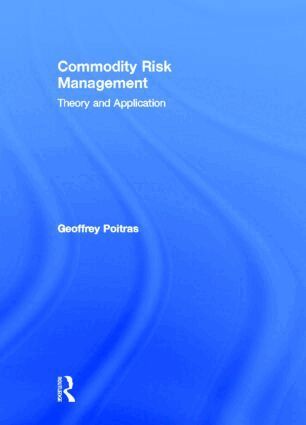
Commodity Risk Management goes beyond just an introductory treatment of derivative securities, dealing with more advanced topics and approaching the subject matter from a unique perspective. At its core lies the concept that commodity risk management decisions require an in-depth understanding of speculative strategies, and vice versa. The book offers readers a unified treatment of important concepts and techniques that are useful in applying derivative securities in the management of risk in commodity markets. While some of these techniques are well known and fairly common, Poitras offers applications to specific situations and links to speculative trading strategies - extensions of the material that not only are hard to come by, but helpful to both the academic and the practitioner.
The book is divided into three parts. The first part deals with the general framework for commodity risk management, the second part focuses on the use of derivative security contracts in commodity risk management, and the third part deals with applications to three specific situations.
As a textbook, this book is designed to appeal to classes at a senior undergraduate/MBA/MA levelof training in Finance, financial economics, actuarial science, management science, agriculturaleconomics and accounting. There will also be interest for the book as: a monograph for research libraries, a handbook for individuals working in the commodity risk management industry, and a guidebook for those in the general public interested in topics like farm risk management or the assessment of hedging practices of publicly-traded commodity producers.
1 270 kr
Läs direkt efter köp
Commodity Risk Management goes beyond just an introductory treatment of derivative securities, dealing with more advanced topics and approaching the subject matter from a unique perspective. At its core lies the concept that commodity risk management decisions require an in-depth understanding of speculative strategies, and vice versa. The book offers readers a unified treatment of important concepts and techniques that are useful in applying derivative securities in the management of risk in commodity markets. While some of these techniques are well known and fairly common, Poitras offers applications to specific situations and links to speculative trading strategies - extensions of the material that not only are hard to come by, but helpful to both the academic and the practitioner.
The book is divided into three parts. The first part deals with the general framework for commodity risk management, the second part focuses on the use of derivative security contracts in commodity risk management, and the third part deals with applications to three specific situations.
As a textbook, this book is designed to appeal to classes at a senior undergraduate/MBA/MA levelof training in Finance, financial economics, actuarial science, management science, agriculturaleconomics and accounting. There will also be interest for the book as: a monograph for research libraries, a handbook for individuals working in the commodity risk management industry, and a guidebook for those in the general public interested in topics like farm risk management or the assessment of hedging practices of publicly-traded commodity producers.
715 kr
Skickas inom 10-15 vardagar
2 464 kr
Skickas inom 10-15 vardagar
819 kr
Läs direkt efter köp
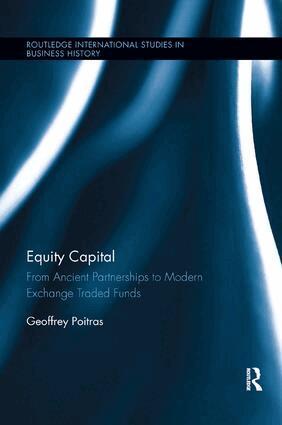
Capitalism is historically pervasive. Despite attempts through the centuries to suppress or control the private ownership of commercial assets, production and trade for profit has survived and, ultimately, flourished. Against this backdrop, accounting provides a fundamental insight: the ‘value’ of physical and intangible capital assets that are used in production is identically equal to the sum of the debt liabilities and equity capital that are used to finance those assets. In modern times, this appears as the balance sheet relationship. In determining the ‘value’ of items on the balance sheet, equity capital appears as a residual calculated as the difference between the ‘value’ of assets and liabilities. Through the centuries, the organization of capitalist activities has changed considerably, dramatically impacting the methods used to value, trade and organize equity capital. To reflect these changes, this book is divided into four parts that roughly correspond to major historical changes in equity capital organization.
The first part of this book examines the rudimentary commercial ventures that characterized trading for profit from ancient times until the contributions of the medieval scholastics that affirmed the moral value of equity capital. The second part deals with the evolution of equity capital organization used in seaborne trade of the medieval and Renaissance Italian city states and in the early colonization ventures of western European powers and ends with the emergence in the market for tradeable equity capital shares during the 17th century. The third part begins with the 1719-1720 Mississippi scheme and South Sea bubbles in northern Europe and continues to cover the transition from joint stock companies to limited liability corporations with autonomous shares in England, America and France during the 19th century. This part ends with a fundamental transition in the social conception of equity capital from a concern with equity capital organization to the problem of determining value. The final part is concerned with the evolving valuation and management of equity capital from the 1920s to the present. This period includes the improvement corporate accounting for publicly traded shares engendered by the Great Depression that has facilitated the use of ‘value investing’ techniques and the conflicting emergence of portfolio management methods of modern Finance.
Equity Capital is aimed at providing material relevant for academic presentations of equity valuation history and methods, and is targeted at researchers, academics, students and professionals alike.
819 kr
Läs direkt efter köp
Capitalism is historically pervasive. Despite attempts through the centuries to suppress or control the private ownership of commercial assets, production and trade for profit has survived and, ultimately, flourished. Against this backdrop, accounting provides a fundamental insight: the ‘value’ of physical and intangible capital assets that are used in production is identically equal to the sum of the debt liabilities and equity capital that are used to finance those assets. In modern times, this appears as the balance sheet relationship. In determining the ‘value’ of items on the balance sheet, equity capital appears as a residual calculated as the difference between the ‘value’ of assets and liabilities. Through the centuries, the organization of capitalist activities has changed considerably, dramatically impacting the methods used to value, trade and organize equity capital. To reflect these changes, this book is divided into four parts that roughly correspond to major historical changes in equity capital organization.
The first part of this book examines the rudimentary commercial ventures that characterized trading for profit from ancient times until the contributions of the medieval scholastics that affirmed the moral value of equity capital. The second part deals with the evolution of equity capital organization used in seaborne trade of the medieval and Renaissance Italian city states and in the early colonization ventures of western European powers and ends with the emergence in the market for tradeable equity capital shares during the 17th century. The third part begins with the 1719-1720 Mississippi scheme and South Sea bubbles in northern Europe and continues to cover the transition from joint stock companies to limited liability corporations with autonomous shares in England, America and France during the 19th century. This part ends with a fundamental transition in the social conception of equity capital from a concern with equity capital organization to the problem of determining value. The final part is concerned with the evolving valuation and management of equity capital from the 1920s to the present. This period includes the improvement corporate accounting for publicly traded shares engendered by the Great Depression that has facilitated the use of ‘value investing’ techniques and the conflicting emergence of portfolio management methods of modern Finance.
Equity Capital is aimed at providing material relevant for academic presentations of equity valuation history and methods, and is targeted at researchers, academics, students and professionals alike.
638 kr
Skickas inom 5-8 vardagar
1 923 kr
Skickas inom 5-8 vardagar
443 kr
Läs direkt efter köp
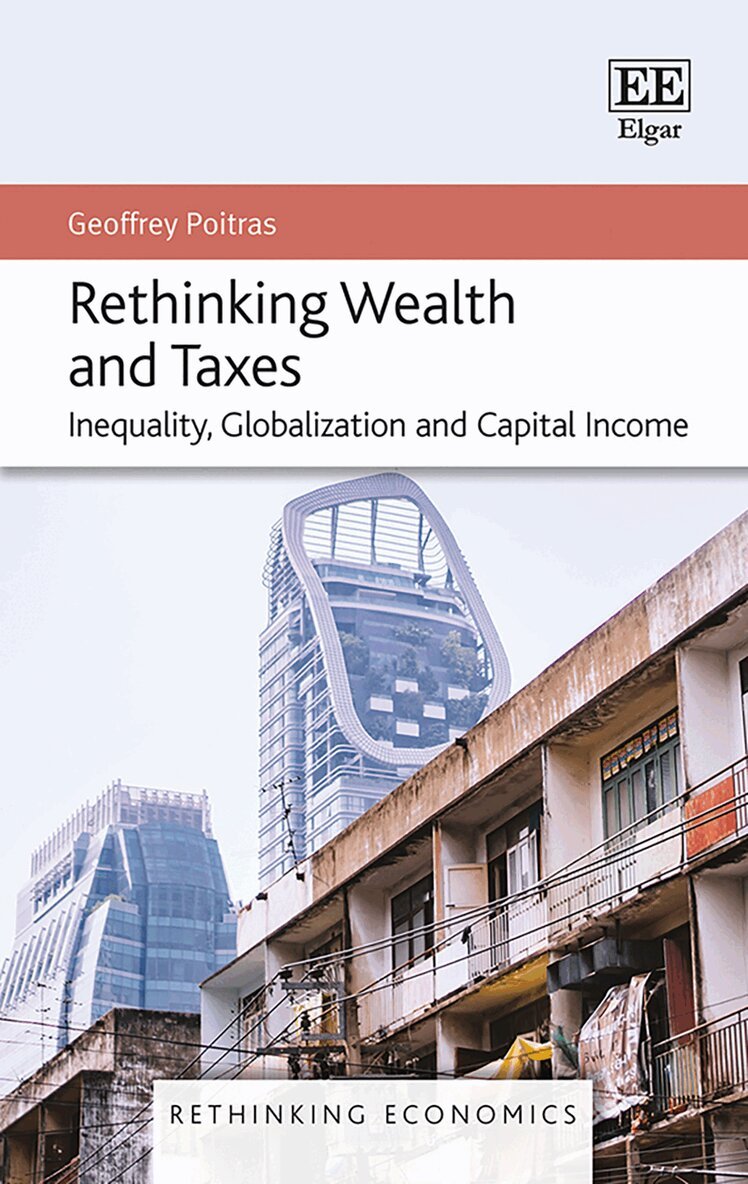
Rethinking Wealth and Taxes explores these problems and considers the possibilities for increasing taxes on wealth to address the increasingly unequal distribution of wealth, and income. Concerned with exploring the implications of globalization for government revenue policy and increasing inequality in wealth and income, it identifies the connection between ongoing inequality and the ability of the wealthy to avoid income taxes by exploiting differential treatment of capital income and wage income. The author explores the various ways in which the emergence of globalization has impacted the traditional national model of raising income tax revenue. He then offers policy recommendations that shift government revenue sources to taxes that are difficult for the wealthy to avoid and that better capture the goals of vertical and horizontal tax equity.
This book will appeal to those directly involved in industry and public policy and may be used in university courses at all levels in public finance, financial economics, actuarial science and management. It will also be of interest to research libraries, individuals working in government and readers in the general public curious about topics such as ''the one percent''.
3 044 kr
Skickas inom 5-8 vardagar
2 009 kr
Skickas inom 5-8 vardagar
1 992 kr
Skickas inom 5-8 vardagar
2 889 kr
Skickas inom 5-8 vardagar
1 163 kr
Skickas inom 5-8 vardagar