Hersh Shefrin - Böcker
Visar alla böcker från författaren Hersh Shefrin. Handla med fri frakt och snabb leverans.
9 produkter
9 produkter
1 012 kr
Skickas inom 7-10 vardagar
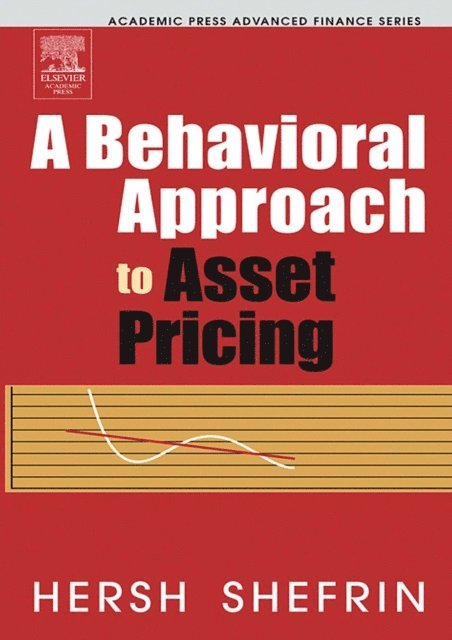
Behavioral finance is the study of how psychology affects financial decision making and financial markets. It is increasingly becoming the common way of understanding investor behavior and stock market activity. Incorporating the latest research and theory, Shefrin offers both a strong theory and efficient empirical tools that address derivatives, fixed income securities, mean-variance efficient portfolios, and the market portfolio. The book provides a series of examples to illustrate the theory. The second edition continues the tradition of the first edition by being the one and only book to focus completely on how behavioral finance principles affect asset pricing, now with its theory deepened and enriched by a plethora of research since the first edition
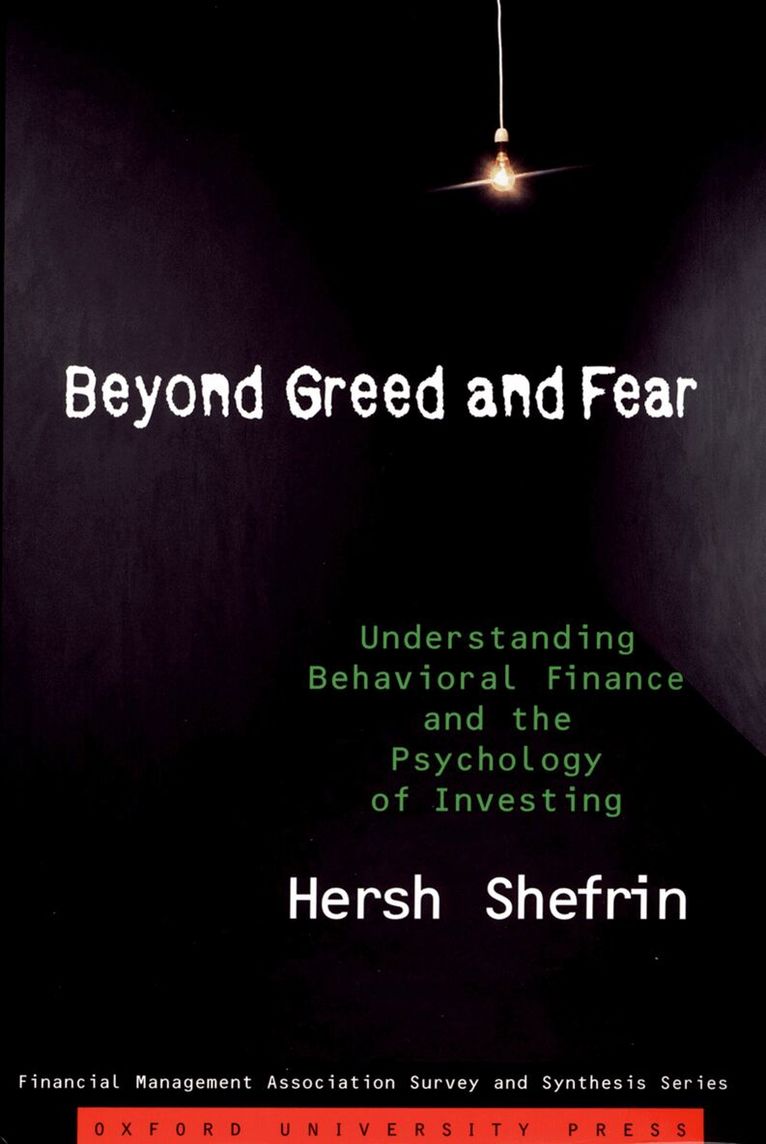
Beyond Greed and Fear
Understanding Behavioral Finance and the Psychology of Investing
Häftad, Engelska, 2007
328 kr
Skickas inom 5-8 vardagar
This book provides a comprehensive treatment of behavioural finance. With the use of the latest psychological research, Shefrin helps us to understand the human behaviour that guides stock selection, financial services, and corporate financial strategy. He argues that financial practitioners must acknowledge and understand behavioural finance - the application of psychology to financial behaviour - in order to avoid many of the investment pitfalls caused by human error. Shefrin points out the common but costly mistakes that money managers, security analysts, financial planners, investment bankers, and corporate leaders make, so that readers gain valuable insights into their own financial decisions and those of their employees, asset managers, and advisors.
1 285 kr
Skickas inom 5-8 vardagar
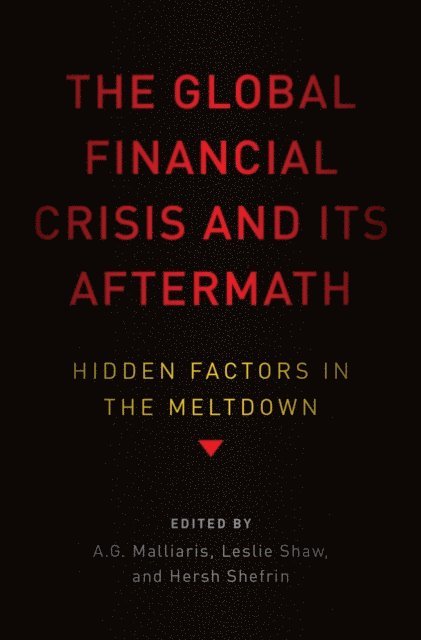
In The Global Financial Crisis, contributors argue that the complexity of the Global Financial Crisis challenges researchers to offer more comprehensive explanations by extending the scope and range of their traditional investigations. To achieve this, the volume views the financial crisis simultaneously through three different lenses---economic, psychological, and social values. Contributors offer a constructive methodology suitable for exploring financial crises. They recognize how current economic analysis did not prepare academic economists, business economists, traders, and regulators to anticipate economic and financial crises. So, they search more extensively within the broader discipline of economics for ideas related to crises but neglected perhaps because they were not mathematically rigorous. They affirm that the complexity of financial crises necessitates complementary research. Thus, to put the focal purpose of this book differently, they explore the Global Financial Crisis from three interconnected frameworks: the standards of orthodox economic analysis, Minskyan economics, and the role of ideas and values in economics. Values are the subject of both philosophy and psychology and can contribute to a better understanding of the Global Financial Crisis. Values, in general, have been relatively neglected by economists. This is not because there is doubt about their significance, but rather because welfare economics and collective choice still operate within the neoclassical paradigm. This volume argues that analyzing the value implications requires moving from the neoclassical framework to something that is broader and multidisciplinary.
216 kr
Skickas
The main goal of this Element is to provide a psychological explanation for why actual global climate policy is so greatly at odds with the prescriptions of most neoclassical economists. To be sure, the behavioral approach does focus on why neoclassical models are often psychologically unrealistic. However, in this Element the author argues that the unrealistic elements are minor compared to the psychological pitfalls driving politically determined climate policy. Why this is the case is what the author describes as the 'big behavioral question.' More precisely, the big behavioral question asks about unsettling behaviors, why there is a huge gap between actual policy and even the weakest of the prescriptions in the range of plausible recommendations coming from neoclassical economists' integrated assessment models. This title is also available as Open Access on Cambridge Core.
753 kr
Skickas inom 7-10 vardagar
The main goal of this Element is to provide a psychological explanation for why actual global climate policy is so greatly at odds with the prescriptions of most neoclassical economists. To be sure, the behavioral approach does focus on why neoclassical models are often psychologically unrealistic. However, in this Element the author argues that the unrealistic elements are minor compared to the psychological pitfalls driving politically determined climate policy. Why this is the case is what the author describes as the 'big behavioral question.' More precisely, the big behavioral question asks about unsettling behaviors, why there is a huge gap between actual policy and even the weakest of the prescriptions in the range of plausible recommendations coming from neoclassical economists' integrated assessment models. This title is also available as Open Access on Cambridge Core.
Behavioral Risk Management
Managing the Psychology That Drives Decisions and Influences Operational Risk
Inbunden, Engelska, 2016
854 kr
Skickas inom 10-15 vardagar
The psychological dimension of managing risk is of crucial importance, and its study has led to the identification of specific do's and don'ts. Those with an understanding of the psychology underlying risk and the skills to recognize its manifestation in practice, have the opportunity to develop frameworks that embody the do's and don'ts, thereby producing sound judgments and good decisions. Those lacking the understanding and the skills are destined to be more hit and miss in their approach to risk management, doing the don'ts and not doing the do's. Virtually every major risk management catastrophe in the last fifteen years has psychological pitfalls at its root. The list of catastrophes includes the 2008 bankruptcy of Lehman Brothers and subsequent global financial crisis, the 2010 explosion at BP's Macondo well in the Gulf of Mexico and the 2011 nuclear meltdown at the Fukushima Daiichi power plant. A critical lesson from psychological studies for those involved in risk management is that people's judgments and decisions about risk vary with type of circumstance. In Behavioral Risk Management readers will learn that there are specific actions that organizations can undertake to incorporate understanding, recognition, and behavioral interventions into the practice of risk management. There are many examples throughout the book that illustrate doing the don'ts. The chapters in the first part of the book introduce the main ideas, and the chapters in the latter part provide insight into how to apply those ideas to the practical world in which risk managers operate.
370 kr
Skickas inom 3-6 vardagar
Behavioral Corporate Finance provides instructors with a comprehensive pedagogical approach for teaching students how behavioral concepts apply to corporate finance. The primary goal is to identify the key psychological obstacles to value maximizing behavior, along with steps that managers can take to mitigate the effects of these obstacles.
2 023 kr
Tillfälligt slut
Behavioral Corporate Finance provides instructors with a comprehensive pedagogical approach for teaching students how behavioral concepts apply to corporate finance. The primary goal is to identify the key psychological obstacles to value maximizing behavior, along with steps that managers can take to mitigate the effects of these obstacles.
Del 10 - The International Library of Critical Writings in Financial Economics series
Behavioral Finance
Inbunden, Engelska, 2001
16 437 kr
Skickas inom 7-10 vardagar
Behavioral finance is the study of how psychology affects financial decision making and financial markets. A valuable resource for both academics and practitioners, this authoritative collection brings together the main works in both psychology and finance, dealing with the debate between proponents of the behavioral school and advocates of the efficient market school. The first volume contains works written by leading psychologists that underlie behavioral finance, focusing on general issues in asset pricing theory, and the studies on over-reaction and under-reaction. The second volume contains key works that develop and extend these themes. Topics include the psychology of prediction, reactions to corporate announcements, the term structure of interest rates, the equity premium, and options prices. The final volume is devoted to the psychology of decisions by individuals, both investors and corporate managers.