Jaroslaw Piekalkiewicz – författare
Visar alla böcker från författaren Jaroslaw Piekalkiewicz. Handla med fri frakt och snabb leverans.
2 produkter
2 produkter
568 kr
Skickas inom 10-15 vardagar
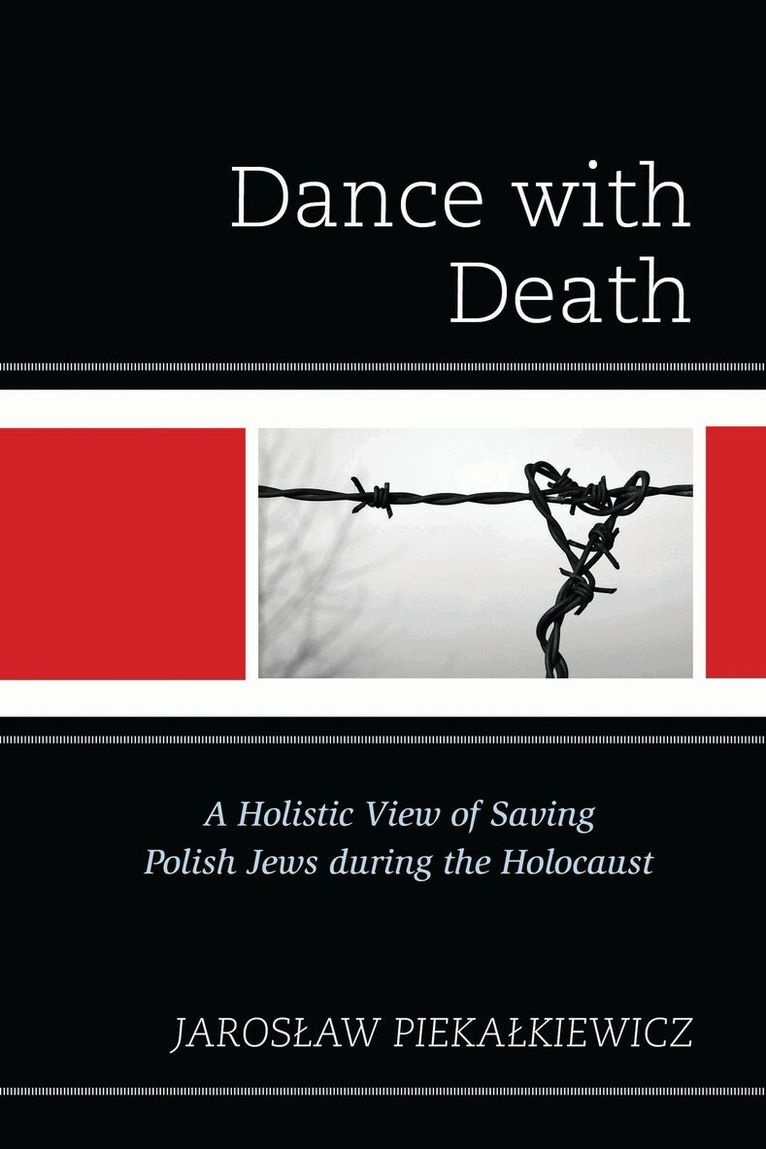
More than seventy-five years have passed since the Holocaust and the terrors visited by German Nazis on occupied Europe. Yet this history continues to be the subject of research, debate, and controversy. One particularly delicate issue is the question of whether non-Jews did all they could to help Jews during the war. In this book, Jaroslaw Piekalkiewicz examines this issue in detail as it relates to Poland—the country that experienced the harshest German occupation and was slated for permanent incorporation into the German Reich. He examines all the different factors influencing the capacity and willingness of Poles to save Jews and documents the efforts made to save them despite these impediments. Unlike other books on the subject, Piekalkiewicz chooses to start with a chapter on the thousand-year-long history of Jews in Poland. This allows readers to understand why one-third of the world’s Jews lived in Poland before WWII and to learn about their rich and diverse culture. Equally clear are the dark clouds that gathered before the war in the form of fascism and antisemitism expanding in Poland and elsewhere in Europe. Piekalkiewicz is a political scientist who participated in the Polish Resistance as a teenager along with other members of his family. This combination of academic rigor and personal experience gives readers a more realistic understanding than usually available of resistance under German occupation and amid the Holocaust. He provides a detailed understanding of German occupation of Poland and the operations of the Polish Underground and goes on to describe efforts by Poles from many walks of life to save Jews. The text is interspersed with his vivid personal testimonies of surviving and fighting in occupied Poland. At the same time, the author does not shrink from revealing the dark side of the German occupation: fear, envy, greed, demoralization, and collaboration with the Germans to betray Jews, the Poles who hid them, resistance members, and even personal enemies. This book provides readers with the basic elements to understand Polish-Jewish relations during WWII as well as what is probably the last testimony that will ever be published of a former resistance fighter.
353 kr
Skickas inom 11-20 vardagar
Explains why and how ideocratic and totalitarian governments emerge, establish themselves, evolve, eventually collapse, and disintegrate or transform themselves into new ideocracies.Expanding upon the concept of totalitarianism, this study introduces the concept of ideocracy to encompass all those political systems that legitimize their actions by reference to an all-inclusive utopian ideology. It distinguishes pluralist systems, marked by competing schools of thought, from monistic systems in which a utopian ideology is dominant. Focusing on twentieth-century regimes, the authors develop Weberian ideal-type models to clarify different forms of ideocracy and pluralism; explore the ideal-type model of ideocracy; and analyze the dynamics of political life using models that allow readers to examine the contradictions and evolutionary paths of specific political systems. In addition, they examine diverse psychological, social, and environmental factors in analyzing the emergence of ideocracies and their subsequent evolution and emphasize that although these systems may persist for extended periods, they may also evolve into other forms of government through processes ranging from radical transformation to gradual erosion.