Lesley le Grange – författare
Visar alla böcker från författaren Lesley le Grange. Handla med fri frakt och snabb leverans.
4 produkter
4 produkter
Häftad, Engelska, 2023
175 kr
Skickas inom 5-8 vardagar
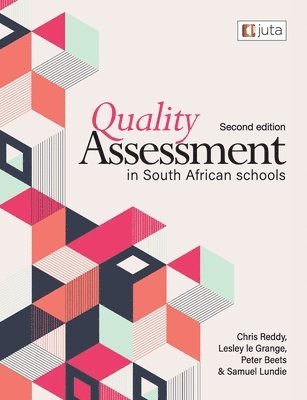
Quality Assessment provides a balanced view of assessment in terms of the policy statement on assessment for South African schools. The book offers guidance through recommended assessment guidelines and principles which will help teachers to design and implement sound, meaningful learner assessment strategies.
Häftad, Engelska, 2019
366 kr
Skickas inom 5-8 vardagar
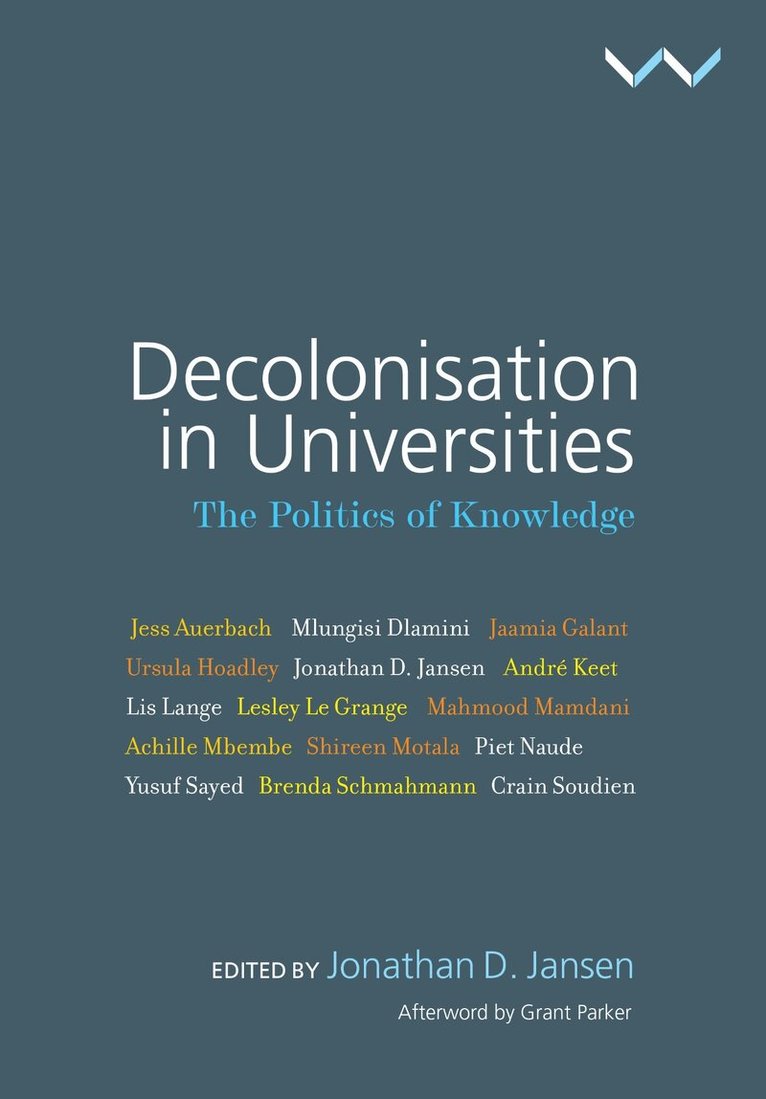
In this collection of case studies and stories from the field, South African scholars come together to trade stories on how to decolonise the universityShortly after the giant bronze statue of Cecil John Rhodes came down at the University of Cape Town, student protestors called for the decolonisation of universities. It was a word hardly heard in South Africa's struggle lexicon and many asked: What exactly is decolonisation? This edited volume brings together the best minds in curriculum theory to address this important question. In the process, several critical questions are raised: Is decolonisation simply a slogan for addressing other pressing concerns on campuses and in society? What is the colonial legacy with respect to curriculum and can it be undone? How is the project of curriculum decolonisation similar to or different from the quest for postcolonial knowledge, indigenous knowledge or a critical theory of knowledge? What does decolonisation mean in a digital age where relationships between knowledge and power are shifting?The book combines strong conceptual analyses with novel case studies of attempts to 'do decolonisation' in settings as diverse as South Africa, Uganda, Tanzania and Mauritius. Such a comparative perspective enables reasonable judgements to be made about the prospects for institutional take-up within the curriculum of century-old universities.
E-bok
PDF, Engelska, 2019375 kr
Läs direkt efter köp
Shortly after the giant bronze statue of Cecil John Rhodes came down at the University of Cape Town, student protestors called for the decolonisation of universities. It was a word hardly heard in South Africa’s struggle lexicon and many asked: What exactly is decolonisation? This book brings together some of the most innovative thinking on curriculum theory to address this important question. In the process, several critical questions are raised: Is decolonisation simply a slogan for addressing other pressing concerns on campuses and in society? What is the colonial legacy with respect to curricula and can it be undone? How is the project of curricula decolonisation similar to or different from the quest for post-colonial knowledge, indigenous knowledge or a critical theory of knowledge? What does decolonisation mean in a digital age where relationships between knowledge and power are shifting? Strong conceptual analyses are combined with case studies of attempts to ‘do decolonisation’ in settings as diverse as South Africa, Uganda, Tanzania and Mauritius. This comparative perspective enables reasonable judgments to be made about the prospects for institutional take-up within the curriculum of century-old universities. Decolonisation in Universities is essential reading for undergraduate teaching, postgraduate research and advanced scholarship in the field of curriculum studies.
E-bok
Engelska, 2019375 kr
Läs direkt efter köp
Shortly after the giant bronze statue of Cecil John Rhodes came down at the University of Cape Town, student protestors called for the decolonisation of universities. It was a word hardly heard in South Africa’s struggle lexicon and many asked: What exactly is decolonisation? This book brings together some of the most innovative thinking on curriculum theory to address this important question. In the process, several critical questions are raised: Is decolonisation simply a slogan for addressing other pressing concerns on campuses and in society? What is the colonial legacy with respect to curricula and can it be undone? How is the project of curricula decolonisation similar to or different from the quest for post-colonial knowledge, indigenous knowledge or a critical theory of knowledge? What does decolonisation mean in a digital age where relationships between knowledge and power are shifting? Strong conceptual analyses are combined with case studies of attempts to ‘do decolonisation’ in settings as diverse as South Africa, Uganda, Tanzania and Mauritius. This comparative perspective enables reasonable judgments to be made about the prospects for institutional take-up within the curriculum of century-old universities. Decolonisation in Universities is essential reading for undergraduate teaching, postgraduate research and advanced scholarship in the field of curriculum studies.