Nadja El Kassar - Böcker
Visar alla böcker från författaren Nadja El Kassar. Handla med fri frakt och snabb leverans.
4 produkter
4 produkter
1 953 kr
Skickas inom 10-15 vardagar
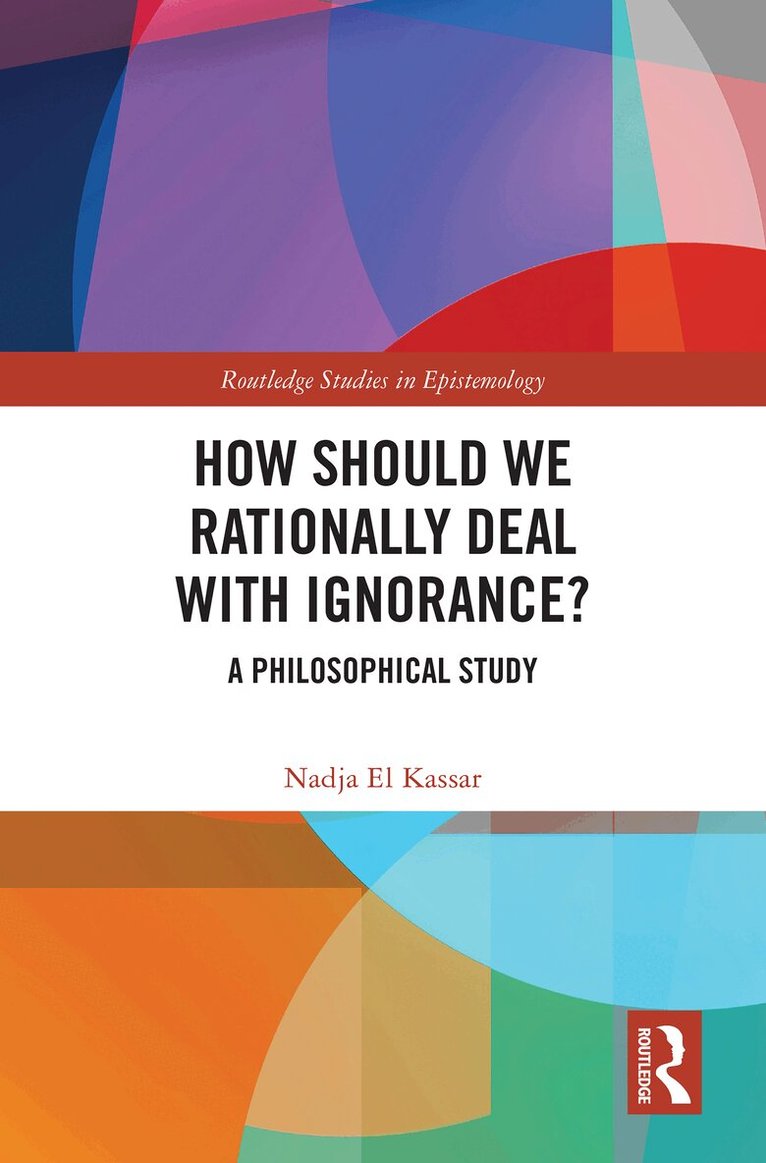
This book addresses two questions that are highly relevant for epistemology and for society: What is ignorance and how should we rationally deal with it? It proposes a new way of thinking about ignorance based on contemporary and historical philosophical theories.In the first part of the book, the author shows that epistemological definitions of ignorance are quite heterogeneous and often address different phenomena under the label "ignorance." She then develops an integrated conception of ignorance that recognizes doxastic, attitudinal, and structural constituents of ignorance. Based on this new conception, she carves out suggestions for dealing with ignorance from the history of philosophy that have largely been overlooked: virtue-theoretic approaches based on Aristotle and Socrates, consequentialist approaches derived from James, and deontological approaches based on Locke, Clifford, and Kant. None of these approaches individually provide a satisfying approach to the task of rationally dealing with ignorance, and so the author develops an alternative maxim-based answer that extends Kant’s maxims of the sensus communis to the issue of ignorance. The last part of the book applies this maxim-based answer to different contexts in medicine and democracies.How Should We Rationally Deal with Ignorance? will appeal to scholars and advanced students working in epistemology, political philosophy, feminist philosophy, and the social sciences.
675 kr
Kommande
This book addresses two questions that are highly relevant for epistemology and for society: What is ignorance and how should we rationally deal with it? It proposes a new way of thinking about ignorance based on contemporary and historical philosophical theories.In the first part of the book, the author shows that epistemological definitions of ignorance are quite heterogeneous and often address different phenomena under the label "ignorance." She then develops an integrated conception of ignorance that recognizes doxastic, attitudinal, and structural constituents of ignorance. Based on this new conception, she carves out suggestions for dealing with ignorance from the history of philosophy that have largely been overlooked: virtue-theoretic approaches based on Aristotle and Socrates, consequentialist approaches derived from James, and deontological approaches based on Locke, Clifford, and Kant. None of these approaches individually provide a satisfying approach to the task of rationally dealing with ignorance, and so the author develops an alternative maxim-based answer that extends Kant’s maxims of the sensus communis to the issue of ignorance. The last part of the book applies this maxim-based answer to different contexts in medicine and democracies.How Should We Rationally Deal with Ignorance? will appeal to scholars and advanced students working in epistemology, political philosophy, feminist philosophy, and the social sciences.
Towards a Theory of Epistemically Significant Perception
How We Relate to the World
Inbunden, Engelska, 2015
1 703 kr
Skickas inom 5-8 vardagar
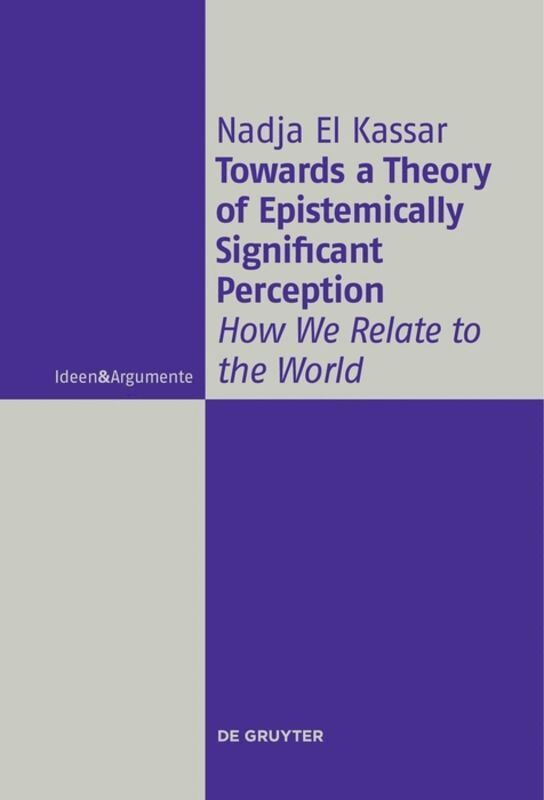
How does perceptual experience make us knowledgeable about the world? In this book Nadja El Kassar argues that an informed answer requires a novel theory of perception: perceptual experience involves conceptual capacities and consists in a relation between a perceiver and the world. Contemporary theories of perception disagree about the role of content and conceptual capacities in perceptual experience. In her analysis El Kassar scrutinizes the arguments of conceptualist and relationist theories, thereby exposing their limitations for explaining the epistemic role of perceptual experience. Against this background she develops her novel theory of epistemically significant perception. Her theory improves on current accounts by encompassing both the epistemic role of perceptual experiences and its perceptual character. Central claims of her theory receive additional support from work in vision science, making this book an original contribution to the philosophy of perception.
Towards a Theory of Epistemically Significant Perception
How We Relate to the World
Häftad, Engelska, 2017
333 kr
Skickas inom 5-8 vardagar
How does perceptual experience make us knowledgeable about the world? In this book Nadja El Kassar argues that an informed answer requires a novel theory of perception: perceptual experience involves conceptual capacities and consists in a relation between a perceiver and the world. Contemporary theories of perception disagree about the role of content and conceptual capacities in perceptual experience. In her analysis El Kassar scrutinizes the arguments of conceptualist and relationist theories, thereby exposing their limitations for explaining the epistemic role of perceptual experience. Against this background she develops her novel theory of epistemically significant perception. Her theory improves on current accounts by encompassing both the epistemic role of perceptual experiences and its perceptual character. Central claims of her theory receive additional support from work in vision science, making this book an original contribution to the philosophy of perception.