Peeter Nõges – författare
Visar alla böcker från författaren Peeter Nõges. Handla med fri frakt och snabb leverans.
4 produkter
4 produkter
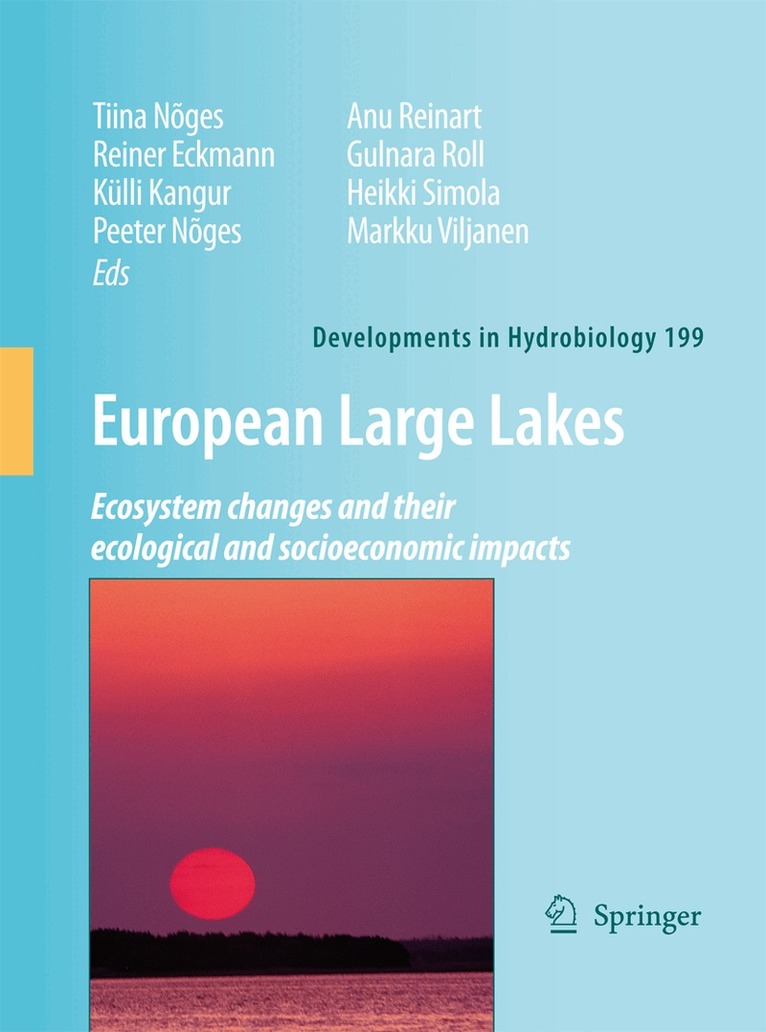
European Large Lakes
Ecosystem changes and their ecological and socioeconomic impacts
Inbunden, Engelska, 2008
1 589 kr
Skickas inom 10-15 vardagar
Large lakes are important because of their size and ecological distinctiveness as well as their economic and cultural value. Optimal management of them requires a proper understanding of anthropogenic impacts both on the lake ecosystems as such and on the services they provide for society. The specific structural and functional properties of large lakes, e.g. morphology, hydrography, biogeochemical cycles and food-web structure, are all directly related to their size. Although large lakes are among the best-studied ecosystems in the world, the application to them of environmental regulations such as the European Water Framework Directive is a challenging task and requires that several natural and management aspects specific to these water bodies are adequately considered. These vulnerable ecosystems often suffer from accelerated eutrophication, over-fishing, toxic contamination and invasive species. Large lakes offer socio-economic benefits and can be used in many ways, and are often areas in which economic, cultural and political interests overlap. In this book the problems regarding the present status of European large lakes and the directions of change are discussed. Threats caused by direct human impact and by climate change, protection needs and restoration measures are considered.
European Large Lakes
Ecosystem changes and their ecological and socioeconomic impacts
Häftad, Engelska, 2010
1 589 kr
Skickas inom 10-15 vardagar
Large lakes are important because of their size and ecological distinctiveness as well as their economic and cultural value. Optimal management of them requires a proper understanding of anthropogenic impacts both on the lake ecosystems as such and on the services they provide for society. The specific structural and functional properties of large lakes, e.g. morphology, hydrography, biogeochemical cycles and food-web structure, are all directly related to their size. Although large lakes are among the best-studied ecosystems in the world, the application to them of environmental regulations such as the European Water Framework Directive is a challenging task and requires that several natural and management aspects specific to these water bodies are adequately considered. These vulnerable ecosystems often suffer from accelerated eutrophication, over-fishing, toxic contamination and invasive species. Large lakes offer socio-economic benefits and can be used in many ways, and are often areas in which economic, cultural and political interests overlap. In this book the problems regarding the present status of European large lakes and the directions of change are discussed. Threats caused by direct human impact and by climate change, protection needs and restoration measures are considered.
1 589 kr
Skickas inom 10-15 vardagar
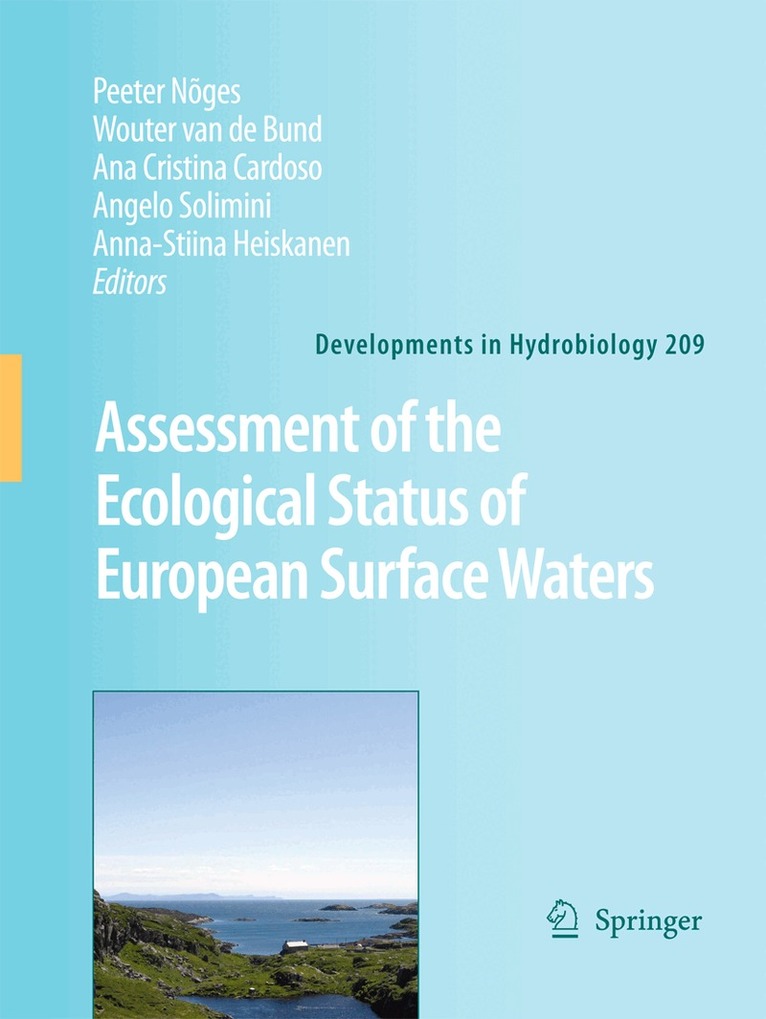
The complex impact that man has on aquatic ecosystems creates a need for assessment systems that are able to adequately appraise and integrate the effects of various pressures. Chemical analysis alone can easily overlook some factors vital for life. With the adoption of the EU Water Framework Directive (WFD) in the year 2000 which defined the ecological status of surface water as ‘‘… an expression of the quality of the structure and functioning of aquatic ecosystems associated with surface waters", biological indicators were brought to the forefront for the first time and became drivers to the water management practices.Assessment of ecological status and quantification of its relationships with anthropogenic pressures critically depend on knowledge of relevant biotic and abiotic settings and processes. Needs raised by the implementation of WFD have urged scientific research in many fields in order to find more stable and robust biological metrics and to diminish the uncertainty of assessment results. The number of WFD related scientific publications has increased linearly and exceeded 1500 in the year 2008. This book comprises a small set of this large flow of publications and is mainly focused on the development of biological assessment methods and intercalibration of the assessment results.
1 589 kr
Skickas inom 10-15 vardagar
The complex impact that man has on aquatic ecosystems creates a need for assessment systems that are able to adequately appraise and integrate the effects of various pressures. Chemical analysis alone can easily overlook some factors vital for life. With the adoption of the EU Water Framework Directive (WFD) in the year 2000 which defined the ecological status of surface water as ‘‘… an expression of the quality of the structure and functioning of aquatic ecosystems associated with surface waters", biological indicators were brought to the forefront for the first time and became drivers to the water management practices.Assessment of ecological status and quantification of its relationships with anthropogenic pressures critically depend on knowledge of relevant biotic and abiotic settings and processes. Needs raised by the implementation of WFD have urged scientific research in many fields in order to find more stable and robust biological metrics and to diminish the uncertainty of assessment results. The number of WFD related scientific publications has increased linearly and exceeded 1500 in the year 2008. This book comprises a small set of this large flow of publications and is mainly focused on the development of biological assessment methods and intercalibration of the assessment results.