Peter Heywood – författare
Visar alla böcker från författaren Peter Heywood. Handla med fri frakt och snabb leverans.
3 produkter
3 produkter
Häftad, Engelska, 2013
361 kr
Skickas inom 5-8 vardagar
This is the first complete publication of a rare collection of letters and poems written from 1790 to 1792--many of which have never appeared in print--telling the true story of Peter Heywood, a young Royal Navy midshipman on H.M.S. Bounty accused of mutiny, and his devoted sister, Nessy, who worked tirelessly to save him from being condemned and executed for this crime. This edition is a faithful transcription of a manuscript held at the Newberry Library in Chicago--one of only five surviving manuscripts.
Häftad, Engelska, 2014
354 kr
Skickas inom 7-10 vardagar
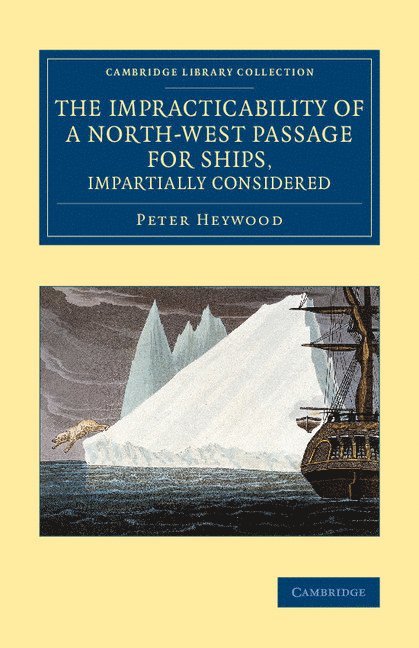
Peter Heywood (1772-1831) became known for his involvement in the 1789 mutiny aboard the Bounty. After evading a death sentence thanks to a royal pardon, he was able to advance himself in a distinguished naval career, achieving the rank of post-captain. The question of the North-West Passage, a sea route through the Arctic that would connect the Atlantic and Pacific oceans, remained an obsession for the British for much of the nineteenth century. Drawing on his experience as a naval hydrographer and writing under the pseudonym 'Scrutator', Heywood considers the question of the North-West Passage in this 1824 publication by surveying accounts of recent expeditions to the Arctic. While he does not dispute the existence of the much-sought route, he argues that the icy waters would not be navigable for ships. It was not until the early twentieth century that Roald Amundsen and his crew achieved the seemingly impossible.
Häftad, Engelska, 2022
569 kr
Skickas inom 7-10 vardagar
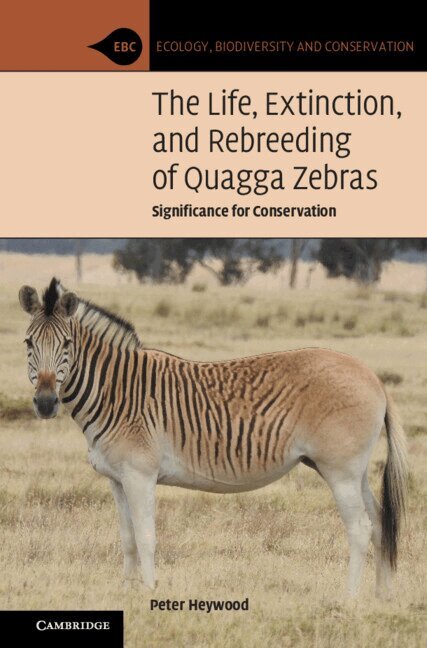
Quaggas were beautiful pony-sized zebras in southern Africa that had fewer stripes on their bodies and legs, and a browner body coloration than other zebras. Indigenous people hunted quaggas, portrayed them in rock art, and told stories about them. Settlers used quaggas to pull wagons and to protect livestock against predators. Taken to Europe, they were admired, exhibited, harnessed to carriages, illustrated by famous artists and written about by scientists. Excessive hunting led to quaggas' extinction in the 1880s but DNA from museum specimens showed rebreeding was feasible and now zebras resembling quaggas live in their former habitats. This rebreeding is compared with other de-extinction and rewilding ventures and its appropriateness discussed against the backdrop of conservation challenges-including those facing other zebras. In an Anthropocene of species extinction, climate change and habitat loss which organisms and habitats should be saved, and should attempts be made to restore extinct species?