Renfu Lu – författare
Visar alla böcker från författaren Renfu Lu. Handla med fri frakt och snabb leverans.
3 produkter
3 produkter
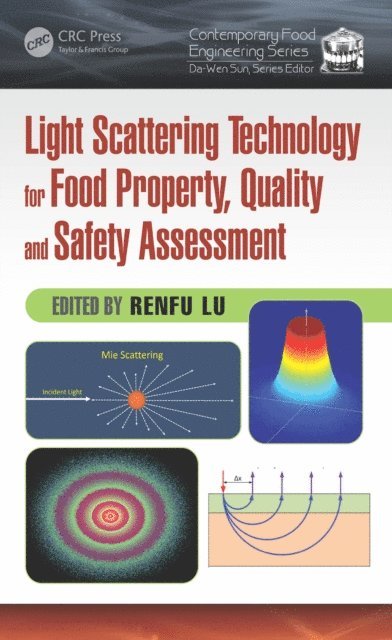
Light Scattering Technology for Food Property, Quality and Safety Assessment
Inbunden, Engelska, 2016
3 755 kr
Skickas inom 5-8 vardagar
Light Scattering Technology for Food Property, Quality and Safety Assessment discusses the development and application of various light scattering techniques for measuring the structural and rheological properties of food, evaluating composition and quality attributes, and detecting pathogens in food. The first four chapters cover basic concepts, principles, theories, and modeling of light transfer in food and biological materials. Chapters 5 and 6 describe parameter estimation methods and basic techniques for determining optical absorption and scattering properties of food products.Chapter 7 discusses the spatially-resolved measurement technique for determining the optical properties of food and biological materials, whereas Chapter 8 focuses on the time-resolved spectroscopic technique for measuring optical properties and quality or maturity of horticultural products. Chapter 9 examines practical light scattering techniques for nondestructive quality assessment of fruits and vegetables. Chapter 10 presents the theory of light transfer in meat muscle and the measurement of optical properties for determining the postmortem condition and textural properties of muscle foods and meat analogs.Chapter 11 covers the applications of spatially-resolved light scattering techniques for assessing quality and safety of animal products. Chapter 12 looks into light scattering for milk and dairy processing. Chapter 13 examines the applications of dynamic light scattering for measuring the microstructure and rheological properties of food. Chapter 14 shows the applications of a biospeckle technique for assessing the quality and condition of fruits and vegetables. Chapter 15 provides a detailed description of Raman scattering spectroscopic and imaging techniques in food quality and safety assessment. Chapter 16, the final chapter, focuses on applications of light scattering techniques for the detection of food-borne pathogens.
1 712 kr
Skickas inom 10-15 vardagar
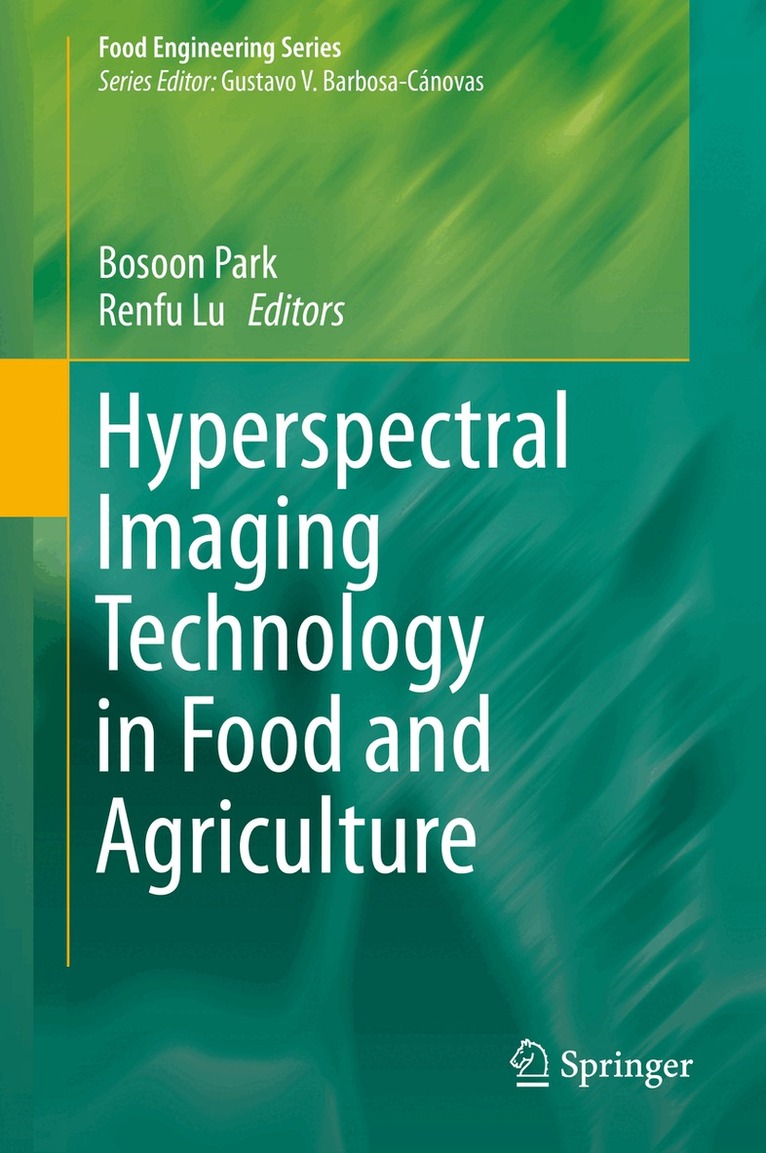
Hyperspectral imaging or imaging spectroscopy is a novel technology for acquiring and analysing an image of a real scene by computers and other devices in order to obtain quantitative information for quality evaluation and process control. Image processing and analysis is the core technique in computer vision. With the continuous development in hardware and software for image processing and analysis, the application of hyperspectral imaging has been extended to the safety and quality evaluation of meat and produce. Especially in recent years, hyperspectral imaging has attracted much research and development attention, as a result rapid scientific and technological advances have increasingly taken place in food and agriculture, especially on safety and quality inspection, classification and evaluation of a wide range of food products, illustrating the great advantages of using the technology for objective, rapid, non-destructive and automated safety inspection as well as quality control. Therefore, as the first reference book in the area, Hyperspectral Imaging Technology in Food and Agriculture focuses on these recent advances. The book is divided into three parts, which begins with an outline of the fundamentals of the technology, followed by full covering of the application in the most researched areas of meats, fruits, vegetables, grains and other foods, which mostly covers food safety and quality as well as remote sensing applicable for crop production.Hyperspectral Imaging Technology in Food and Agriculture is written by international peers who have both academic and professional credentials, with each chapter addressing in detail one aspect of the relevant technology, thus highlighting the truly international nature of the work. Therefore the book should provide the engineer and technologist working in research, development, and operations in the food and agricultural industry with critical, comprehensive and readily accessible information on the art and science of hyperspectral imaging technology. It should also serve as an essential reference source to undergraduate and postgraduate students and researchers in universities and research institutions.
1 233 kr
Skickas inom 10-15 vardagar
Hyperspectral imaging or imaging spectroscopy is a novel technology for acquiring and analysing an image of a real scene by computers and other devices in order to obtain quantitative information for quality evaluation and process control. Image processing and analysis is the core technique in computer vision. With the continuous development in hardware and software for image processing and analysis, the application of hyperspectral imaging has been extended to the safety and quality evaluation of meat and produce. Especially in recent years, hyperspectral imaging has attracted much research and development attention, as a result rapid scientific and technological advances have increasingly taken place in food and agriculture, especially on safety and quality inspection, classification and evaluation of a wide range of food products, illustrating the great advantages of using the technology for objective, rapid, non-destructive and automated safety inspection as well as quality control. Therefore, as the first reference book in the area, Hyperspectral Imaging Technology in Food and Agriculture focuses on these recent advances. The book is divided into three parts, which begins with an outline of the fundamentals of the technology, followed by full covering of the application in the most researched areas of meats, fruits, vegetables, grains and other foods, which mostly covers food safety and quality as well as remote sensing applicable for crop production.Hyperspectral Imaging Technology in Food and Agriculture is written by international peers who have both academic and professional credentials, with each chapter addressing in detail one aspect of the relevant technology, thus highlighting the truly international nature of the work. Therefore the book should provide the engineer and technologist working in research, development, and operations in the food and agricultural industry with critical, comprehensive and readily accessible information on the art and science of hyperspectral imaging technology. It should also serve as an essential reference source to undergraduate and postgraduate students and researchers in universities and research institutions.