Criminal Justice, Delinquency, and Corrections – serie
Visar alla böcker i serien Criminal Justice, Delinquency, and Corrections. Handla med fri frakt och snabb leverans.
9 produkter
9 produkter
Inbunden, Engelska, 2003
1 048 kr
Skickas inom 10-15 vardagar
Almost a third of all African American men in their twenties in the United States are in jail or prison, or on probation or parole. African Americans, who comprise approximately 13% of the general population, make up about half of the prison population. Between 1980 and 2000, 38 states added more African American men to their prison systems than were added to their respective systems of higher education. However, these statistics fail to tell the entire story. To understand how the dynamics of disproportionate minority confinement came to exist, one must examine the historical and cultural antecedents that affected (and continue to affect) this group. Examining proposed solutions and providing alternative perspectives, this volume addresses the overrepresentation of African Americans in the criminal justice system by critically examining the significance of race in American society and criminal justice responses to crime and African Americans.Offering a critical examination of the issues, this collection begins with a discussion of the marginalization of African Americans in the academic discipline of criminal justice and in the larger society, an assessment of the impact of the legacy of slavery on private prisons and mass imprisonment, and an empirical examination of the depiction of African Americans in prime-time television crime programs. Part II looks at racial profiling, the underrepresentation of African Americans in hate crime victimization research, the impact of race on presentencing, the trend toward trying juveniles in adult court, and the discriminatory treatment of African Americans in capital-eligible cases. Finally, Part III discusses the impact of African American police officers on the profession, analyzes black juror nullification, proposes an increase in the presence of African American jurors, and assesses the potential ameliorative impact of restorative justice on the current racial imbalance in the criminal justice system.
Inbunden, Engelska, 2005
840 kr
Skickas inom 10-15 vardagar
The social acceptance of tobacco use obscures the fact that it is the single greatest preventable cause of death in the U.S., and approximately 80% of those who use tobacco products began using them before the age of 18. Indeed, tobacco companies in the past routinely targeted youth in their marketing and advertising, hoping to hook kids young and keep them with their original brand. Snell explores the tobacco industry's campaign to attract youth smokers and provides an overview of the FDA's investigation of the tobacco industry and how those investigations revealed the industry's deceptions and their specific intent to target youth. As a result, many anti-smoking advocacy groups and youth-led programs have sprung up to educate other youths about the deadly nature of tobacco addiction and the industry's marketing strategies. Parents, teens, teachers, and community and policy leaders here find an engaging, thoughtful, and informative discussion of a problem that has vexed this country for decades.As a result of the Master Settlement with the tobacco industry, many states have developed comprehensive programs that have resulted in a substantial decline in youth tobacco use. While national efforts at tobacco regulation have largely failed, local tobacco control efforts have mostly been successful. Snell shows that the future of youth tobacco policy depends on the continued funding of tobacco prevention programs at the state and local level and illustrates that there is considerable evidence that the tobacco industry is shifting its marketing approach to minority populations and developing nations.
E-bok
PDF, Engelska, 2005908 kr
Läs direkt efter köp
The social acceptance of tobacco use obscures the fact that it is the single greatest preventable cause of death in the U.S., and approximately 80% of those who use tobacco products began using them before the age of 18. Indeed, tobacco companies in the past routinely targeted youth in their marketing and advertising, hoping to hook kids young and keep them with their original brand. Snell explores the tobacco industry's campaign to attract youth smokers and provides an overview of the FDA's investigation of the tobacco industry and how those investigations revealed the industry's deceptions and their specific intent to target youth. As a result, many anti-smoking advocacy groups and youth-led programs have sprung up to educate other youths about the deadly nature of tobacco addiction and the industry's marketing strategies. Parents, teens, teachers, and community and policy leaders here find an engaging, thoughtful, and informative discussion of a problem that has vexed this country for decades.As a result of the Master Settlement with the tobacco industry, many states have developed comprehensive programs that have resulted in a substantial decline in youth tobacco use. While national efforts at tobacco regulation have largely failed, local tobacco control efforts have mostly been successful. Snell shows that the future of youth tobacco policy depends on the continued funding of tobacco prevention programs at the state and local level and illustrates that there is considerable evidence that the tobacco industry is shifting its marketing approach to minority populations and developing nations.
E-bok
PDF, Engelska, 2005636 kr
Läs direkt efter köp
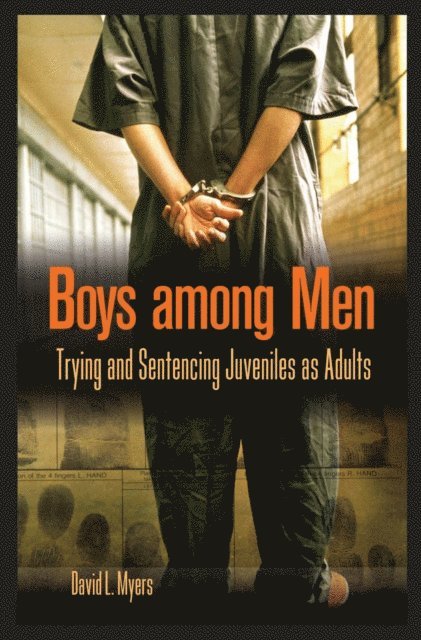
Images of youngsters in handcuffs and prison uniforms have become common on the nightly news in the United States. As America's fascination with crime and justice has grown, so has attention to the ways in which youthful offenders are charged, tried, and sentenced. While they may once have been viewed as misguided youth, more and more juveniles are being charged as adults and sentenced to adult prisons. Myers questions whether doing so is an effective deterrent for young offenders, if rehabilitation is out of the question, and if youth and society are better served by sending children away to adult prisons rather than juvenile detention facilities. These questions and others are addressed in this careful analysis of the history and evolution of transfer laws that are increasingly prevalent throughout the United States.The move toward charging juvenile delinquents as adult criminals initially coincided with an increase in violent crimes committed by youthful offenders. However, as such policies have grown and expanded, the methods by which youth are formally treated as adults in the criminal justice system have changed. Here, Myers examines the demographic, legal, criminal, and social characteristics of those youth who are waived to adult courts, assessing the nature, use, and effectiveness of punishment and rehabilitation efforts in modern juvenile and criminal justice systems. He concludes that as long as separate juvenile and adult justice systems are maintained, there will be a desire and perceived need for transferring some youth to adult court. However, he suggests that such transfers should be facilitated on a much more limited basis, while greater resources and funding for prevention and early intervention should be implemented to prevent youth from offending in the first place. This controversial topic receives a thorough accounting in this volume, which will open readers' eyes to the realities of juvenile delinquency and its treatment by the criminal justice system.
E-bok
PDF, Engelska, 2004876 kr
Läs direkt efter köp
This volume details the experiences of Vietnamese immigrant women who have experienced intimate violence in the United States. It focuses on the diversity of their responses to abuse and their various encounters with the criminal justice system and victim service agencies. Also revealed are the effects of traditional culture, acculturation, and economic adaptation on the participation of these women as witnesses in the criminal justice process. It points to the roles of gender, economic power, legal status, and the organizational structure of the criminal justice system in shaping the experiences of women charged with domestic violence. The limitations of the criminal justice are exposed when it fails to provide abused women with long term protection, forces women to choose between personal safety and family life, and allows domestic violence laws to reinforce male domination.This work is among the few that highlights the need for more research into how the United States criminal justice system's policies affect abused Vietnamese immigrant women's safety and family lives. It incorporates interviews from women living in various communities in the United States. Professionals, victim advocates, social scientists, and students in criminal justice, justice studies, women's studies, and social work programs will all benefit from this insightful book.
E-bok
PDF, Engelska, 20031 135 kr
Läs direkt efter köp
Almost a third of all African American men in their twenties in the United States are in jail or prison, or on probation or parole. African Americans, who comprise approximately 13% of the general population, make up about half of the prison population. Between 1980 and 2000, 38 states added more African American men to their prison systems than were added to their respective systems of higher education. However, these statistics fail to tell the entire story. To understand how the dynamics of disproportionate minority confinement came to exist, one must examine the historical and cultural antecedents that affected (and continue to affect) this group. Examining proposed solutions and providing alternative perspectives, this volume addresses the overrepresentation of African Americans in the criminal justice system by critically examining the significance of race in American society and criminal justice responses to crime and African Americans.Offering a critical examination of the issues, this collection begins with a discussion of the marginalization of African Americans in the academic discipline of criminal justice and in the larger society, an assessment of the impact of the legacy of slavery on private prisons and mass imprisonment, and an empirical examination of the depiction of African Americans in prime-time television crime programs. Part II looks at racial profiling, the underrepresentation of African Americans in hate crime victimization research, the impact of race on presentencing, the trend toward trying juveniles in adult court, and the discriminatory treatment of African Americans in capital-eligible cases. Finally, Part III discusses the impact of African American police officers on the profession, analyzes black juror nullification, proposes an increase in the presence of African American jurors, and assesses the potential ameliorative impact of restorative justice on the current racial imbalance in the criminal justice system.
E-bok
PDF, Engelska, 2003876 kr
Läs direkt efter köp
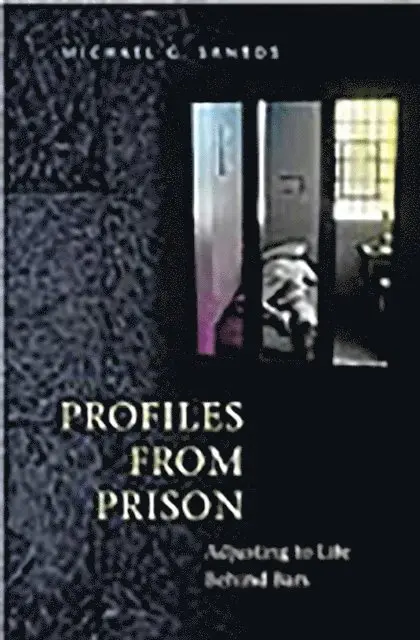
Written by an inmate serving 45 years for a drug conviction when he was 23, this is an in-depth view living behind bars from the perspective of prisoners themselves. Sections of the book are based on length of imprisonment. Prisoners in Fort Dix, N.J., detail their unique experiences, thoughts, and feelings about life on the inside. Some describe the actions that lead to their confinement, or detail the complexities of living in all-male communities. Others reveal the ways they cope with their terms, or the expectations they have for life after prison.Santos offers the gripping stories of men serving a variety of terms, providing commentary and analysis as he guides readers through the prison experience. How men adjust to their confinement, and how they utilize their time while serving their sentences, can be a predictor of future success or failure both in prison and society upon their release. Through these often-difficult accounts, readers gain a greater understanding of what it means to be a prisoner, and how the system itself can contribute to both positive adjustment and negative outcomes alike.
E-bok
PDF, Engelska, 20011 135 kr
Läs direkt efter köp
The relationship between police and the communities and citizens they serve has long been a topic of study and controversy. Sung provides a place-oriented theory of policing to guide strategies for crime control and problem-oriented policing. He contends that community policing is a product of power relations among communities. Sung also explores: •how police and citizens interact with each other in stratified and residentially segregated communities •how services are delivered by police •how citizens respond to those charged with protecting them and enforcing the law Illuminating the police-neighborhood and advancing a clear hypothesis for explaining and predicting changes in police behavior, this both provides a conceptual platform for public policy debate, planning, and evaluation of police, public safety, and democratic governance.According to Sung, place has everything to do with the success of community policing, and the attitudes of both police and citizens contribute to the success or failure of police initiatives as well as the level of crime inherent in a community. By focusing on the social and political forces that shape the residential patterns of American cities and the organization of police work, Sung provides a theoretical framework for considering the relations between police and citizens in different neighborhoods. He concludes that current modes of police-community relations and crime prevention will improve only if the policies adopted encourage the transformation of marginal communities into communities where citizens feel a shared responsibility for maintaining and peace and order. This unique contribution to a growing field of study provides an ecological theory of police-citizen relations that begins with the inequality and segregation inherent in many American cities.
E-bok
PDF, Engelska, 20071 810 kr
Läs direkt efter köp
Juvenile crime and violence has always piqued the public's interest. Indeed, each generation of Americans tends to define the youth crime problem as more serious than any previous generation. Even though juvenile homicides have been decreasing since the mid-1990s, the media is still quick to provide dramatic examples of juvenile monsters who are terrorizing their communities. Shootings at school, gang banging and trafficking drugs, school bullies, and charging juveniles as adults are subjects that have recently received wide media coverage. This three volume set on the nature, incidence, consequences, and treatment of youth crime and violence will help readers understand the true nature of youth crime and violence from a variety of perspectives. Each volume covers a different area and experts write on topics ranging from sex offending to fire starting, from gangs to guns, from juvenile probation to charging youths as adults, from mandatory mental health treatment to police in school settings, and more.What drives a teenager to steal? To kill? Why does youth crime and violence occur? Why are youths such vulnerable targets? What can be done to stop youth offenders, and what can be done to help youthful victims? How does the criminal justice system respond? What do communities do to punish and protect youths? What can schools do to intervene? All these questions and more are answered in this set on this timely and important topic. Our youth are our most precious commodity, and protecting vulnerable children as well as helping offenders is of paramount importance for steering them toward safe and productive lives. These volumes help readers better understand the causes and consequences of youth violence and crime and consider ways to address the problems.