Bernardin Center Series – serie
Visar alla böcker i serien Bernardin Center Series. Handla med fri frakt och snabb leverans.
3 produkter
3 produkter
Häftad, Engelska, 2004
448 kr
Skickas inom 10-15 vardagar
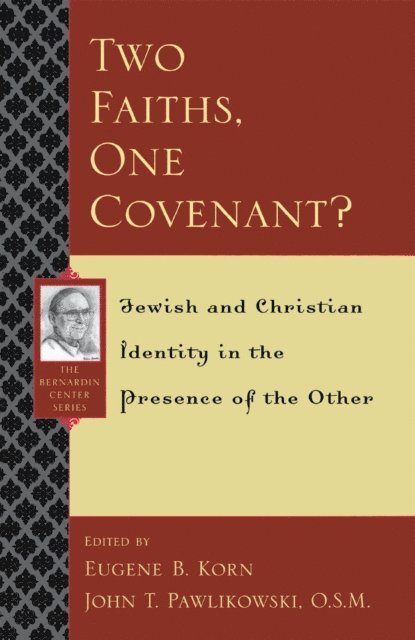
Judaism and Christianity are religions bound together by their claims to the same biblical covenant initiated by God with Abraham and his descendants. Yet, despite the inseparable connection between the election of Israel and that of the church, between the 'old' and the 'new' covenant, this shared spiritual patrimony has been the source of a type of violent sibling rivalry competing for the same paternal love and inherited entitlement. God, it seemed, had but one blessing to bestow. It could be given to either Jacob or Esau—but not both. In the twenty-first century, however, Jews and Christians are challenged to reconsider their theological assumptions by two inescapable truths: the moral tragedy of the holocaust demands that Christian thinkers acknowledge the violent effects of theologically de-legitimizing Jews and Judaism, and the pervasive reality of cultural and religious pluralism calls both Christian and Jewish theologians to rethink the covenant in the presence of the Other. Two Faiths, One Covenant? Jewish and Christian Identity in the Presence of the Other is a breakthrough work that embraces this contemporary challenge and charts a path toward fruitful interfaith dialogue. The Christian and Jewish theologians in this book explore the ways that both religions have understood the covenant in biblical, rabbinic, medieval, and modern religious writings and reflect on how the covenant can serve as a reservoir for a positive theological relationship between Christianity and Judaism—not merely one of non-belligerent tolerance, but of respect and theological pluralism, however limited.
E-bok
Engelska, 2004484 kr
Läs direkt efter köp
Judaism and Christianity are religions bound together by their claims to the same biblical covenant initiated by God with Abraham and his descendants. Yet, despite the inseparable connection between the election of Israel and that of the church, between the ''old'' and the ''new'' covenant, this shared spiritual patrimony has been the source of a type of violent sibling rivalry competing for the same paternal love and inherited entitlement. God, it seemed, had but one blessing to bestow. It could be given to either Jacob or Esau-but not both. In the twenty-first century, however, Jews and Christians are challenged to reconsider their theological assumptions by two inescapable truths: the moral tragedy of the holocaust demands that Christian thinkers acknowledge the violent effects of theologically de-legitimizing Jews and Judaism, and the pervasive reality of cultural and religious pluralism calls both Christian and Jewish theologians to rethink the covenant in the presence of the Other. Two Faiths, One Covenant? Jewish and Christian Identity in the Presence of the Other is a breakthrough work that embraces this contemporary challenge and charts a path toward fruitful interfaith dialogue. The Christian and Jewish theologians in this book explore the ways that both religions have understood the covenant in biblical, rabbinic, medieval, and modern religious writings and reflect on how the covenant can serve as a reservoir for a positive theological relationship between Christianity and Judaism-not merely one of non-belligerent tolerance, but of respect and theological pluralism, however limited.
Inbunden, Engelska, 2001
503 kr
Skickas inom 10-15 vardagar
Jewish and Christian scholars consider the Vatican document, "We Remember: A Reflection on the 'Shoah'."Robert Schreiter, Gerard Sloyan, Irving Greenberg, Cardinal Edward Cassidy, Michael Marrus, Steven Katz, John Morley, Judith H. Banki, and Ronald Modras address four major points of controversy, including the legacy of anit-Semitism in the church and the role of Pius XII during the Holocaust.Michael Berenbaum, John Pawlikowski, John Michalczyk, Peter Hass, Peter Hayes, and Donald Dietrich confront three major ethical themes, including what we can learn about today's economic and social structures based on the transformation of German business from reluctant supporters to full participants in Nazism.