Psychology, Crime and Law - Böcker
Visar alla böcker i serien Psychology, Crime and Law. Handla med fri frakt och snabb leverans.
8 produkter
8 produkter
1 546 kr
Tillfälligt slut
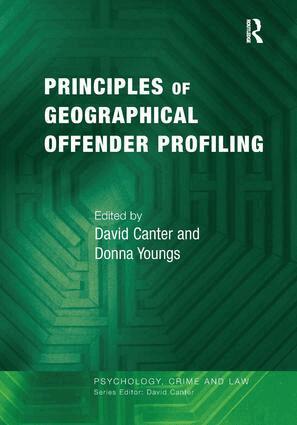
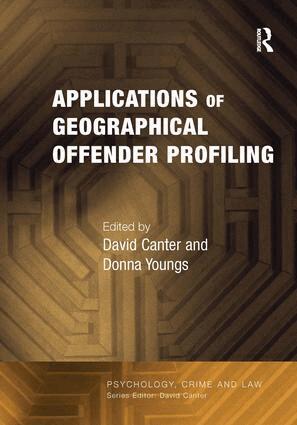
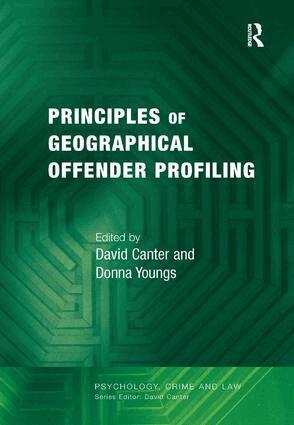
Geographical Offender Profiling (GOP) is the term that has emerged for the examination of where offences take place and the use of that examination to formulate views on the nature of the offender and where s/he might be based. As such, it has become the cornerstone of 'offender profiling'. By its nature, GOP bridges psychology, geography, criminology and forensic science and is of academic interest to all those disciplines as well as practical significance to police investigators. This book brings together a cross-section of the major papers published in the field that lay out the concepts and foundations of this area - including some widely quoted but difficult to obtain 'classic' papers - with an introduction that puts the papers into an overall context and a concluding extensive bibliography of the publications relevant to this rapidly growing area.
654 kr
Skickas inom 10-15 vardagar
Geographical Offender Profiling (GOP) is the term that has emerged for the examination of where offences take place and the use of that examination to formulate views on the nature of the offender and where s/he might be based. As such, it has become the cornerstone of 'offender profiling'. By its nature, GOP bridges psychology, geography, criminology and forensic science and is of academic interest to all those disciplines as well as practical significance to police investigators. This book brings together a cross-section of the major papers published in the field that lay out the concepts and foundations of this area - including some widely quoted but difficult to obtain 'classic' papers - with an introduction that puts the papers into an overall context and a concluding extensive bibliography of the publications relevant to this rapidly growing area.
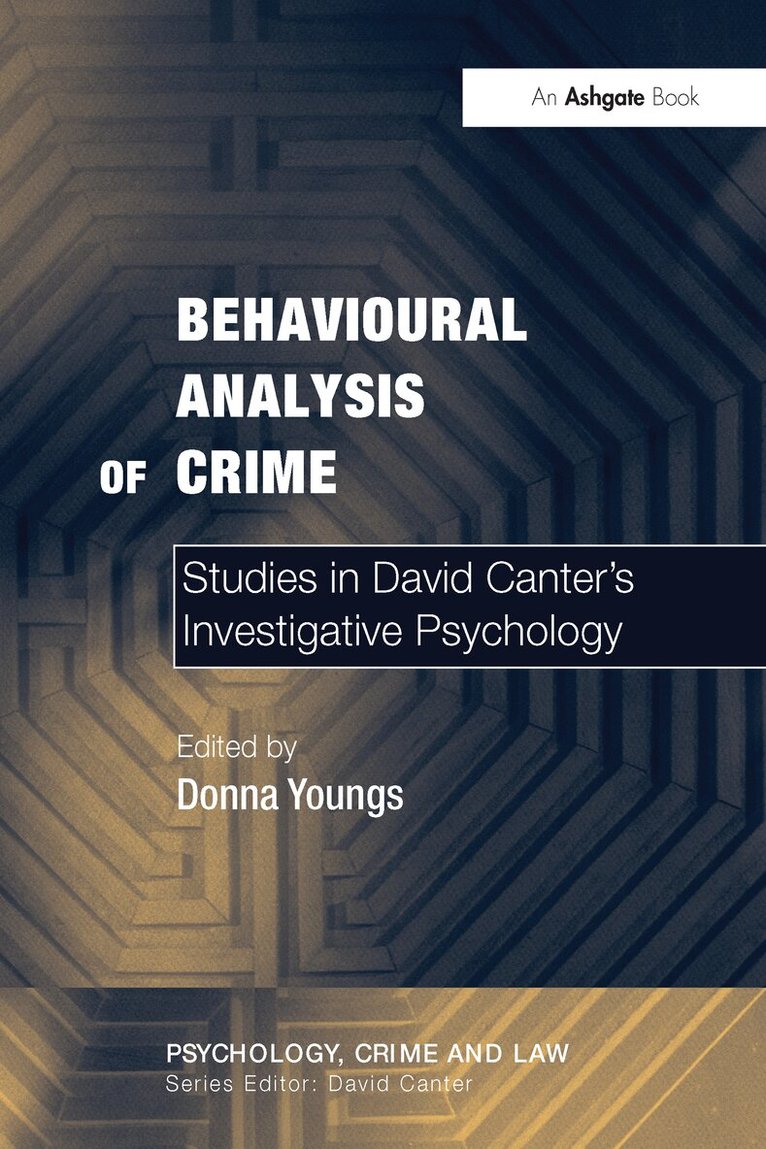
Behavioural Analysis of Crime
Studies in David Canter's Investigative Psychology
Inbunden, Engelska, 2013
1 944 kr
Skickas inom 10-15 vardagar
The intense interest in 'offender profiling' generated by FBI special agents, gave rise to an explosion of studies in a new area called ’investigative psychology’ by its originator David Canter. This develops understanding of offenders' behaviour that can be harnessed to improve investigations. In this rapidly developing area much has been learnt about what offenders reveal about themselves through their styles of offending. Beyond criminals’ actions the location of their crimes can also reveal where the offender lives or which offences can be linked as part of the same series. Investigative psychologists also explore how to interview witnesses and suspects and assess the veracity of accounts given. The variation in criminal style across crimes as diverse as arson, burglary, hostage negotiation, serial killing and sexual assault is reviewed, using narrative theory and criminals’ emotional experience when offending as the basis for explaining these variations. This provides a framework for drawing inferences about offenders' characteristics. Studies in investigative psychology require a special methodology, developed by David Canter to allow scientific explorations in such a challenging field, previously assumed not to be open empirical study. The practical potential and applications of the research are given, as well as a selection of commentaries on the cutting edge debates that are driving the future of the investigative psychology. This new discipline is of relevance to forensic psychologists in many different settings, criminologists and law enforcement agencies, bringing together work that lays out current achievements and sets the agenda for future research in the field.
Behavioural Analysis of Crime
Studies in David Canter's Investigative Psychology
Häftad, Engelska, 2013
856 kr
Skickas inom 10-15 vardagar
The intense interest in 'offender profiling' generated by FBI special agents, gave rise to an explosion of studies in a new area called ’investigative psychology’ by its originator David Canter. This develops understanding of offenders' behaviour that can be harnessed to improve investigations. In this rapidly developing area much has been learnt about what offenders reveal about themselves through their styles of offending. Beyond criminals’ actions the location of their crimes can also reveal where the offender lives or which offences can be linked as part of the same series. Investigative psychologists also explore how to interview witnesses and suspects and assess the veracity of accounts given. The variation in criminal style across crimes as diverse as arson, burglary, hostage negotiation, serial killing and sexual assault is reviewed, using narrative theory and criminals’ emotional experience when offending as the basis for explaining these variations. This provides a framework for drawing inferences about offenders' characteristics. Studies in investigative psychology require a special methodology, developed by David Canter to allow scientific explorations in such a challenging field, previously assumed not to be open empirical study. The practical potential and applications of the research are given, as well as a selection of commentaries on the cutting edge debates that are driving the future of the investigative psychology. This new discipline is of relevance to forensic psychologists in many different settings, criminologists and law enforcement agencies, bringing together work that lays out current achievements and sets the agenda for future research in the field.
2 131 kr
Skickas inom 10-15 vardagar
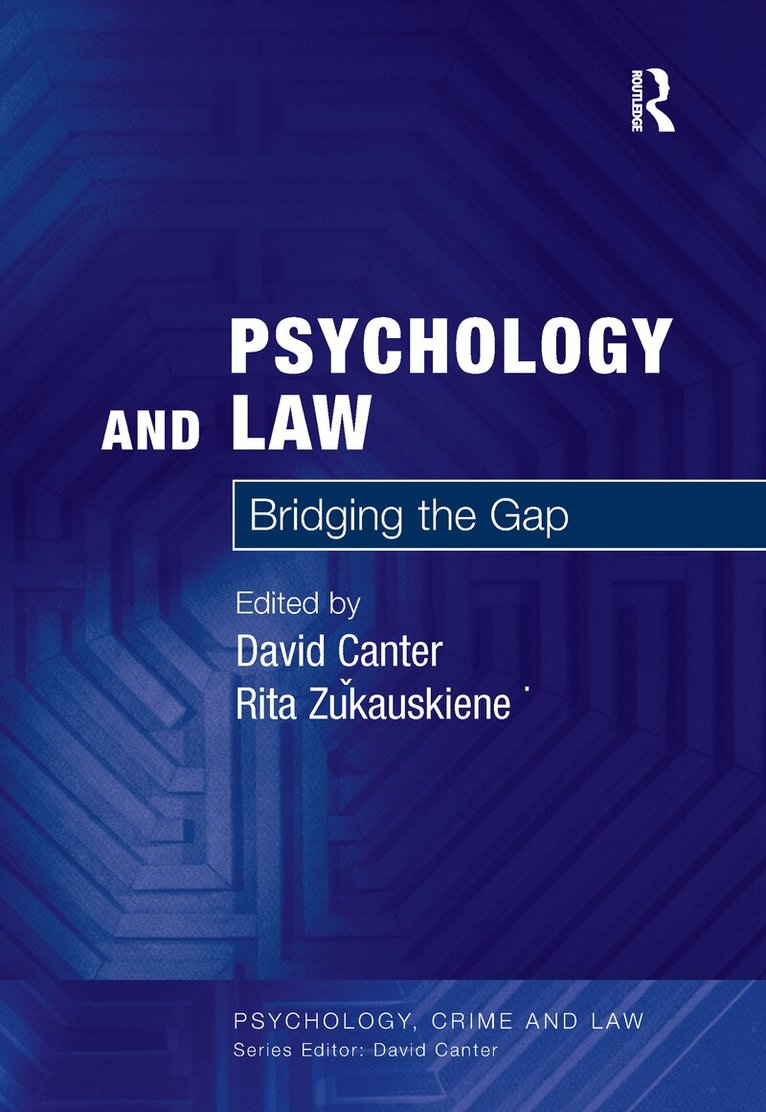
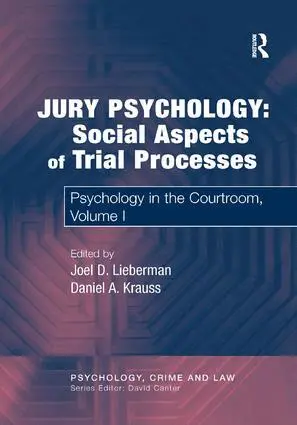
This important book captures contemporary attempts to build bridges between the two very different disciplines of law and psychology and to establish the true nature of the interaction between the two. Including international contributions from lawyers, psychologists, sociologists and criminologists, the book bridges the inherent gap between the practice of law and the profession of psychology at an international level. It throws light on how psychology connects with, inter alia, the courts, prisons, community care, clinics, long-stay hospitals, police investigations and legislative bodies. More recent contributions of social science to legal proceedings are also covered, such as the liability that arises from lack of crime prevention, or the systematic prediction of likely violence by an offender. The book will be essential reading not only for academics and professionals in psychology, the law and related disciplines wishing to understand the broadening base of psychology within the legal process, but also for students trying to form an understanding of the emerging science and the associated career opportunities for this exciting field.
694 kr
Skickas inom 10-15 vardagar
This important book captures contemporary attempts to build bridges between the two very different disciplines of law and psychology and to establish the true nature of the interaction between the two. Including international contributions from lawyers, psychologists, sociologists and criminologists, the book bridges the inherent gap between the practice of law and the profession of psychology at an international level. It throws light on how psychology connects with, inter alia, the courts, prisons, community care, clinics, long-stay hospitals, police investigations and legislative bodies. More recent contributions of social science to legal proceedings are also covered, such as the liability that arises from lack of crime prevention, or the systematic prediction of likely violence by an offender. The book will be essential reading not only for academics and professionals in psychology, the law and related disciplines wishing to understand the broadening base of psychology within the legal process, but also for students trying to form an understanding of the emerging science and the associated career opportunities for this exciting field.
2 119 kr
Skickas inom 10-15 vardagar
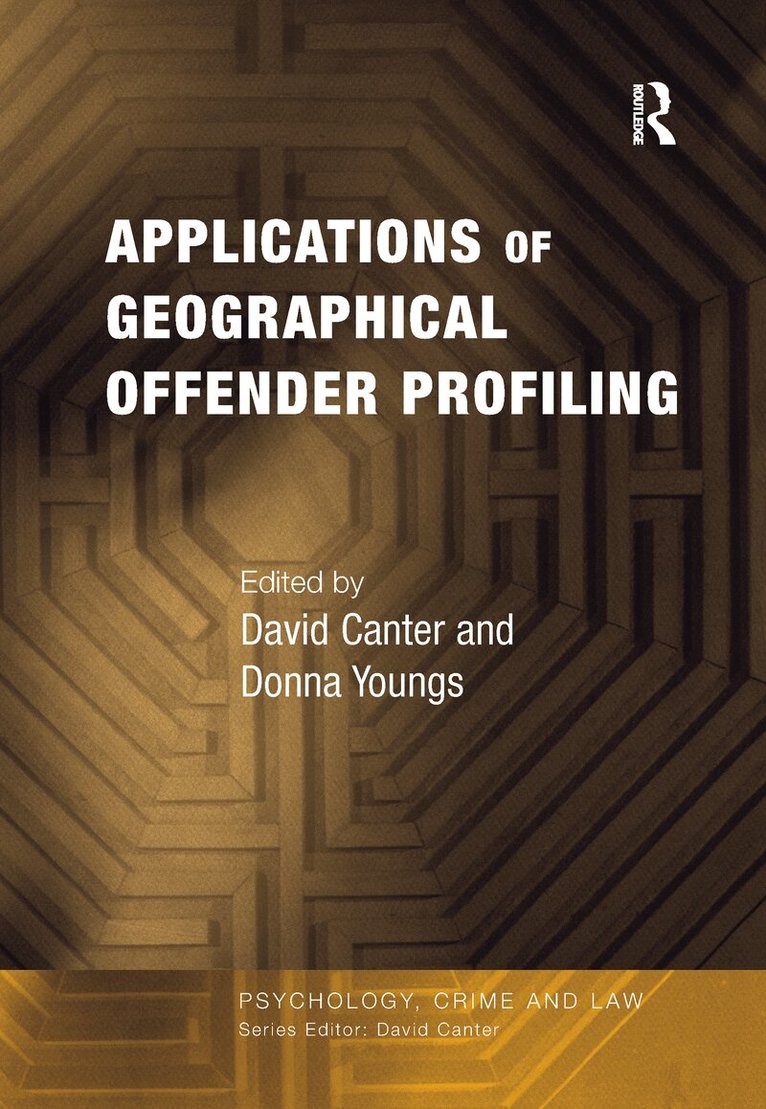
Many law enforcement agencies are now analyzing where a crime is committed, to develop predictions on the offender, their location and other factors that could help with the investigation. Known as Geographical Offender Profiling (GOP), this approach relies on a combination of principles and methodologies drawn from many different disciplines, including psychology, geography, criminology and forensic science. This book brings together a cross-section of the major papers published in the field of GOP to explain the scope and application of GOP in different criminal contexts. For the first time some widely quoted but difficult to obtain 'classic' papers have been published together with an introduction that provides an up-to-the-minute context and an extensive bibliography of the most relevant publications in this burgeoning area of study.
654 kr
Skickas inom 10-15 vardagar
Many law enforcement agencies are now analyzing where a crime is committed, to develop predictions on the offender, their location and other factors that could help with the investigation. Known as Geographical Offender Profiling (GOP), this approach relies on a combination of principles and methodologies drawn from many different disciplines, including psychology, geography, criminology and forensic science. This book brings together a cross-section of the major papers published in the field of GOP to explain the scope and application of GOP in different criminal contexts. For the first time some widely quoted but difficult to obtain 'classic' papers have been published together with an introduction that provides an up-to-the-minute context and an extensive bibliography of the most relevant publications in this burgeoning area of study.