KDI series in Economic Policy and Development - Böcker
Visar alla böcker i serien KDI series in Economic Policy and Development. Handla med fri frakt och snabb leverans.
3 produkter
3 produkter
1 947 kr
Skickas inom 7-10 vardagar
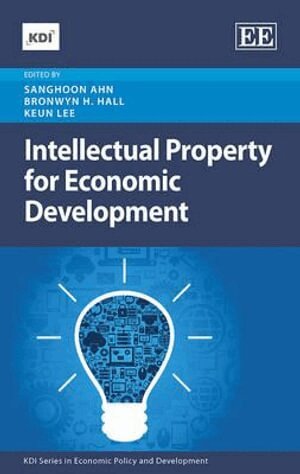
Protection of intellectual property rights (IPRs) serves a dual role in economic development. While it promotes innovation by providing legal protection of inventions, it may retard catch-up and learning by restricting the diffusion of innovations. Does stronger IPR protection in a developing country encourage technology development in or technology transfer to that country? This book aims to address the issue, covering diverse forms of IPRs, varied actors in innovation, and multiple case studies from Asia and Latin America. IPRs and their interaction with other factors such as such as the quality of knowledge institutions (e.g. academia, public research institutes or industrial research centers such as science parks), availability of trained human capital, and networks for research collaboration or interaction (e.g. university-industry research collaboration or international collaboration) in a development context, is the subject of this book.Intellectual Property for Economic Development:- Considers the diverse forms of IPRs and technology transfer and their implications for economic development.- Analyzes the role of inventors in different contexts including those in universities and in domestic and international mobility and collaborations.- Presents in-depth analyses of specific issues involving IPRs in the context of countries at different levels of development, including Mexico, China and Korea. Focus is paid to the differences between East Asia and Latin America.This book will appeal to academics and researchers in the areas of development economics, the economics of IP, law and economics and IP innovation. Contributors: S.A. Ahn, C.R. Durán, B.H. Hall, A. Hu, S. Karmakar, J. Kim, Y.K. Kim, K. Lee, S. Lee, D.C. Lippoldt, G. Marschke, F. Montobbio, S. Nagaoka, T. Naotoshi, K.-H. Park, W.G. Park, V. Sterzi, J. Suh
2 263 kr
Skickas inom 7-10 vardagar
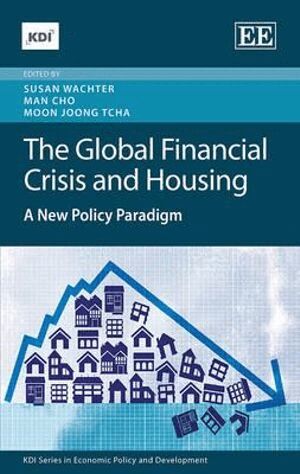
This innovative book analyses the role played by real estate markets in global financial stability and examines the fragile link between the two.Through what transmission channels do housing market cycles influence broader economic systems? How has the Global Financial Crisis shifted our view and understanding of these linkages? This detailed book answers these questions in an international comparative perspective. Specific topics covered include macroeconomic transmission channels of the housing cycle, the role of housing in the finance system, construction financing as a cycle amplifier, and various related public policy issues such as the policy remedies needed to deal with housing and mortgage-driven crises.Eminent scholars in the field provide insightful and original contributions, which will appeal to academics in the areas of macroeconomics, policy analysis and financial regulation. Practitioners involved in real estate and the mortgage market will also find it to be of interest.Contributors: C.-O. Chang, M.-C. Chen, M. Cho, G. Dell'Ariccia, H.-J. Dübel, M. Hwang, M. Iacoviello, D. Igan, K. Kim, K.-H. Kim, Y.I. Kim, C.-M. Lee, Y.-M. Lee, J.-y. Son, I. Song, S.H. Suh, M.J. Tcha, S. Wachter, T.T. Yang, J.Y. Zhang
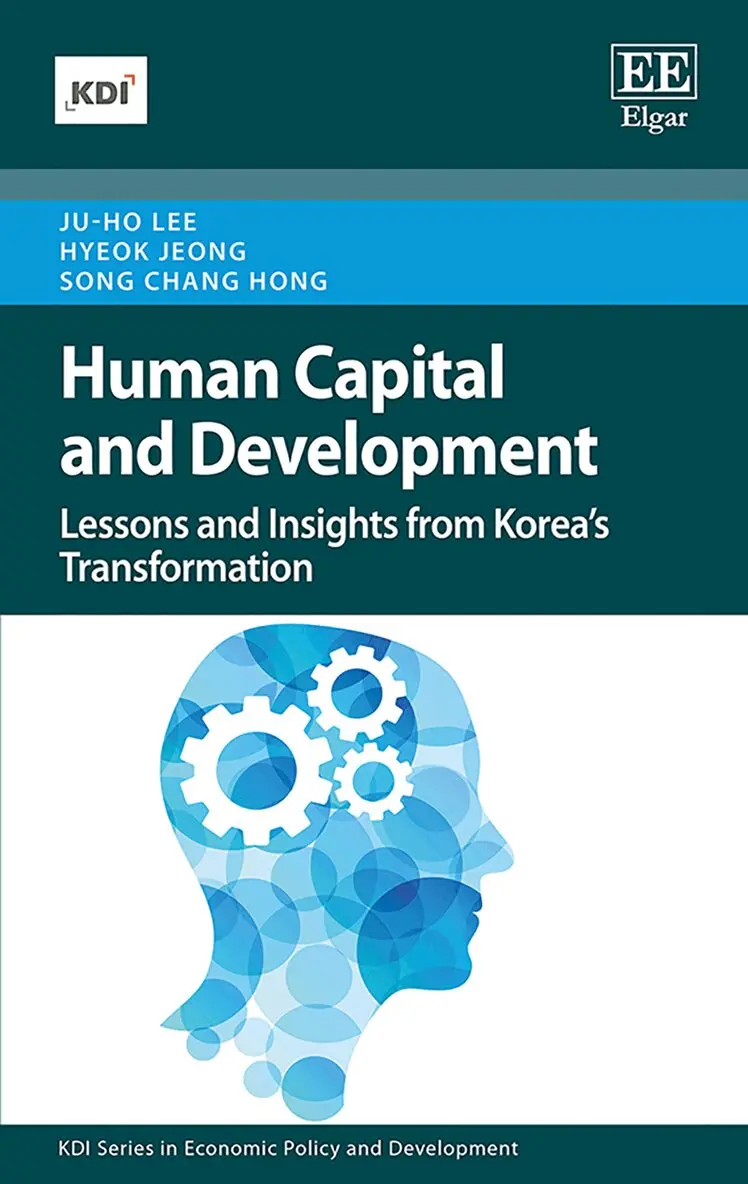
Human Capital and Development
Lessons and Insights from Korea's Transformation
Inbunden, Engelska, 2018
2 062 kr
Skickas inom 7-10 vardagar
Over the last 70 years, Korea has experienced a rapid and remarkable transformation from a devastatingly poor nation to one of the world's leading advanced economies, achieving both sustained economic growth and a successful democracy. This pioneering work focuses on the key role of sustained investment in human capital behind Korea's phenomenal success. Human Capital and Development analyzes the importance of balancing diverse aspects of the educational system at different stages of development. The need to balance general and vocational education, top-down and bottom-up reform, as well as qualitative and quantitative expansion are highlighted. Adapting Korea's development experience to general principles shows that rather than seeking universal strategies and rules, the key to successful transformation is the provision of educational systems that can evolve over time depending on socio-economic and technological conditions for both developing and advanced countries. For researchers and students of economic development, education, and Asian development, this book is an excellent tool to discover possible ways for developing countries to initiate and accelerate their paths of economic growth and development. This book also provides a useful reference for policy makers of advanced as well as developing countries in designing their education systems and policies.