New Directions in Italian Philosophy – serie
Visar alla böcker i serien New Directions in Italian Philosophy. Handla med fri frakt och snabb leverans.
3 produkter
3 produkter
Inbunden, Engelska, 2027
1 436 kr
Kommande
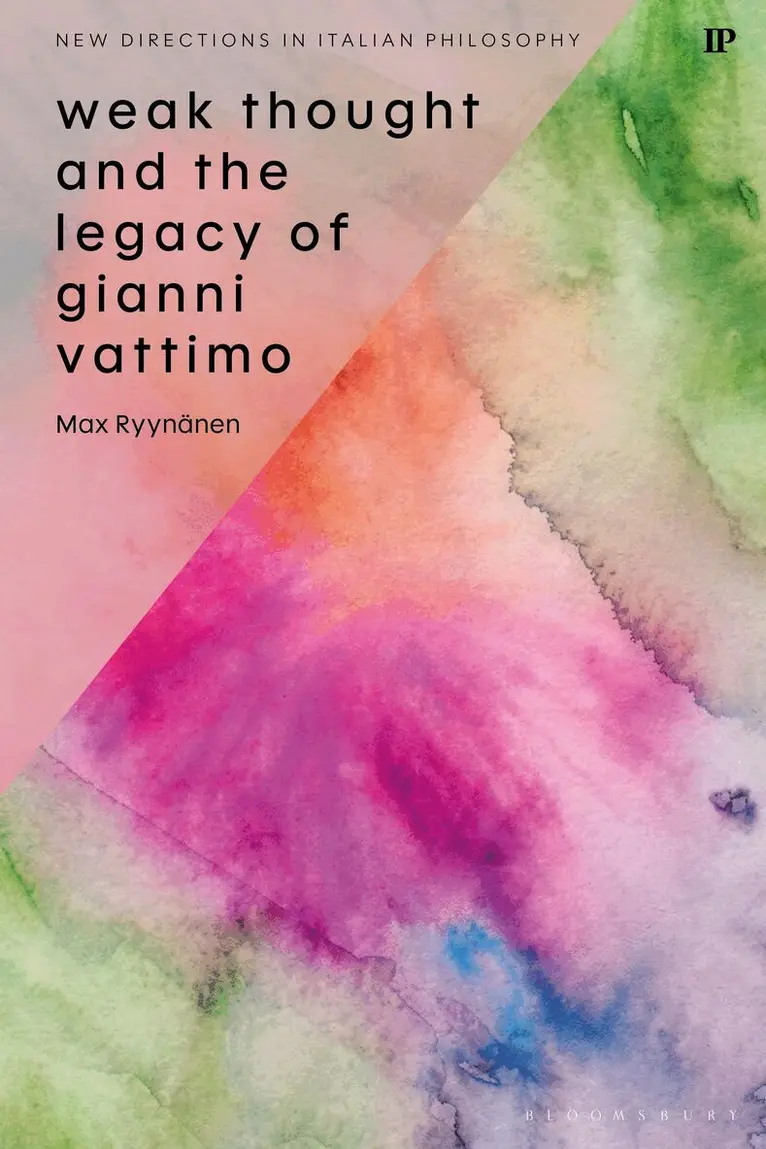
Following the death of Gianni Vattimo in 2023, this is the first volume to critically examine the implications of weak thought for a variety of subject areas, including aesthetics, hermeneutics, the empirical study of religion, and political philosophy. Weak thought first garnered critical attention in 1983, with the publication of Vattimo and Rovatti’s homonymous book. The main idea – that we may not need to overcome modernity as fully, or strongly as we believed – grew into a whole network of ‘weaknesses’ in both Vattimo’s writing and beyond. But what about weak thought today? With chapters from leading scholars such as Santiago Zabala, Silvia Mazzini, and Martin Jay, this collection demonstrates the continued relevance of weak thinking. Themes explored range from Vattimo’s ideas on secularization and how they can help us understand why non-believers still find religion attractive to Vattimo’s ‘weak’ philosophical irony and the connections between weak thought and global pop culture. Beginning with an editorial introduction providing a detailed overview of the esteemed philosopher’s life and work, Weak Though Revisited analyses Vattimo’s legacy both critically and positively, not shying away from the controversies that his philosophy sparked. This is a much-needed reappraisal of weak thought and its significance as a philosophical method today.
Inbunden, Engelska, 2027
1 436 kr
Kommande
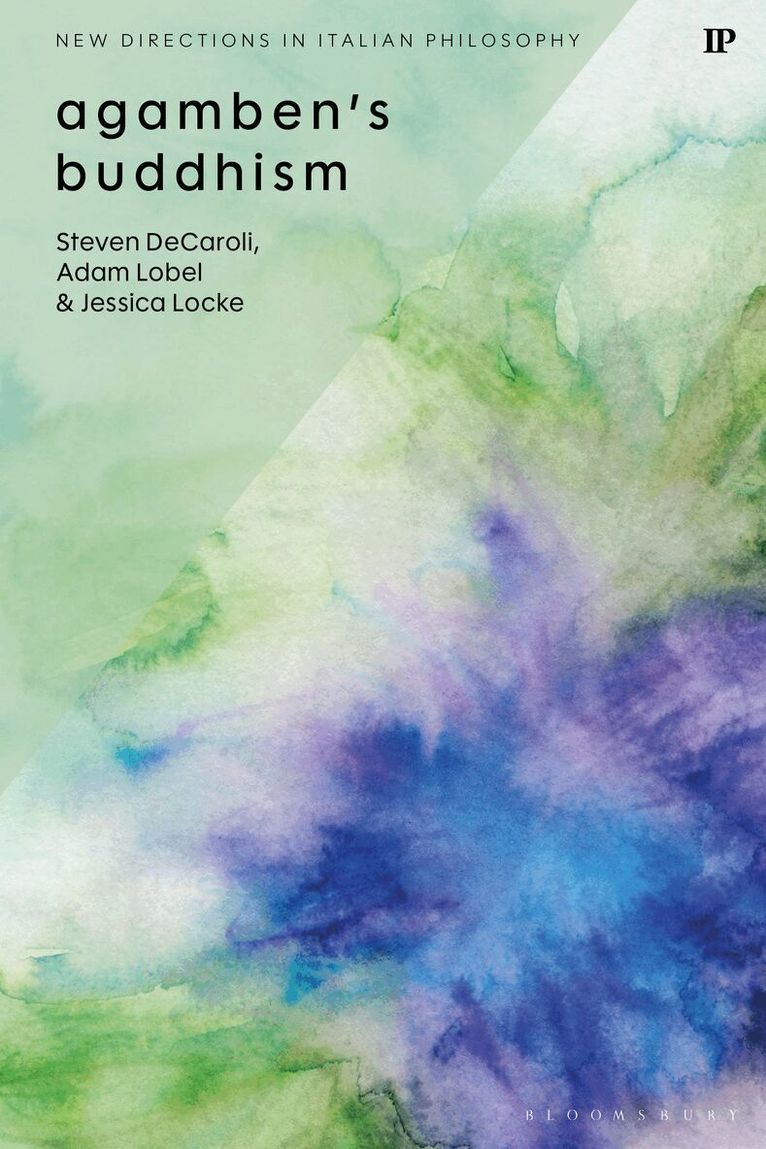
Offering a fresh perspective on the work of leading Italian philosopher Giorgio Agamben, this ground-breaking volume explores the affinities between Agamben’s philosophy and the core principles of Buddhism. The centrepiece of the book is an extensive interview with Agamben himself, conducted over nine months. In this exclusive dialogue Agamben explains with remarkable subtlety how his thinking has, over many years, been shaped by Buddhism and the Indian tradition more broadly.Subsequent chapters authored by Steven DeCaroli, Adam Lobel, and Jessica Locke take seriously these points of connection and further probe the depth of Agamben’s engagement with Buddhist principles in both his early and recent works. Topics examined include the influence of Nagarjuna’s philosophy of emptiness on Agamben’s political ontology; similarities between Agamben’s sense of inoperative contemplation and the Tibetan Buddhist “Great Completion” tradition (Dzogchen); and his explorations into the notion of fault in Karman, inspired by the etymological link between the Sanskrit ‘karman’ and Latin ‘crimen’. With a foreword by esteemed Agamben translator Adam Kotsko, Agamben’s Buddhism opens up a completely new area of research into Agamben’s philosophy. It uncovers for the first time how Agamben, long considered a scholar of the Western tradition, in fact challenges parochial views in Western thought and, in doing so, demonstrates the great richness that cross-cultural dialogue can bring to philosophy.
Inbunden, Engelska, 2027
1 436 kr
Kommande
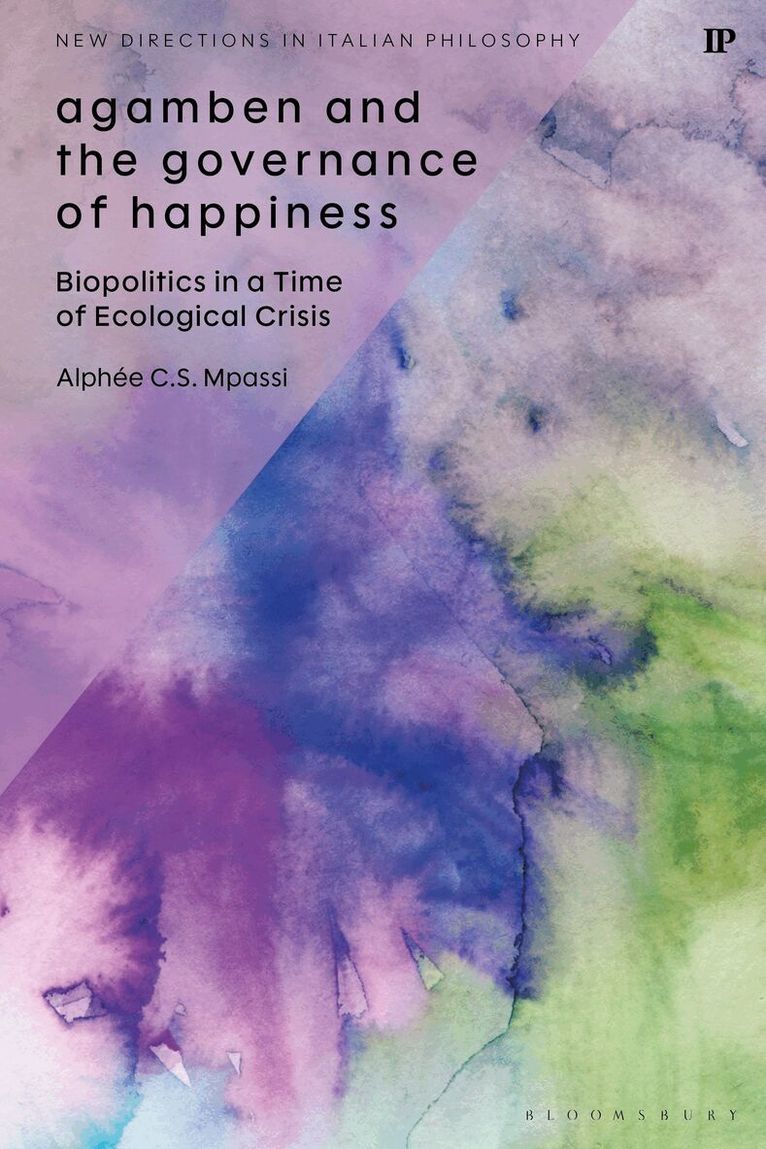
This is the first book to offer a systematic reconstruction of the concept of happiness within Giorgio Agamben’s biopolitical thought, revealing it as a central yet overlooked category that traverses his reflections on sovereignty, economy, and ethics, and connecting it to recent debates in ecocriticism and environmental ethics.While Agamben is most often interpreted through the lenses of sovereignty, bare life, and states of exception, Alphée C. S. Mpassi demonstrates that the question of happiness constitutes a hidden thread connecting the critical (pars destruens) and constructive (pars construens) dimensions of Agamben’s philosophy. Moving beyond readings that reduce Agamben to a purely negative or aporetic thinker, this book shows how happiness functions as the conceptual hinge between his critique of modern apparatuses of government and his search for liberated forms of life beyond economic and sovereign capture.Through close engagement with Agamben’s key texts, especially the Homo Sacer series and his broader philosophical corpus, Mpassi reconstructs a radically alternative conception of happiness grounded not in consumption, productivity, or individual fulfilment, but in use, potentiality, inoperativity, and form-of-life. The book further situates Agamben within contemporary debates on political theology, post-capitalism, environmental ethics, and ecological crisis. In doing so, it foregrounds a neglected ecological dimension of Agamben’s work, arguing that his critique of oikonomia and governmentality also carries profound implications for understanding contemporary forms of environmental devastation.Offering a major new interpretation of Agamben’s philosophy, Agamben and the Biopolitics of Happiness will be essential reading for scholars and students of continental philosophy, political theory, political theology, environmental humanities, and critical theory.