Praeger Series in Political Economy – serie
Visar alla böcker i serien Praeger Series in Political Economy. Handla med fri frakt och snabb leverans.
3 produkter
3 produkter
Inbunden, Engelska, 1994
1 052 kr
Skickas inom 10-15 vardagar
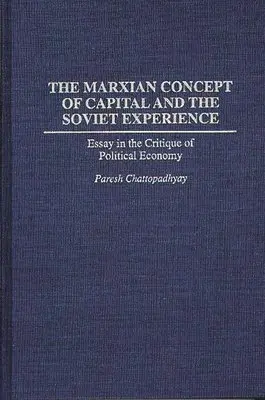
This work establishes the uniqueness of the Marxian category of Capital on the basis of the original texts by Marx. The study has been neglected in the existing literature. The wage-labor relationship is shown to be necessary and sufficient for the existence of capital(ism). Individual ownership is shown to be a particular form of capitalist private property which can also take the form of collective ownership. The author argues the capitalist character of the Soviet economy.
Inbunden, Engelska, 1998
868 kr
Skickas inom 10-15 vardagar
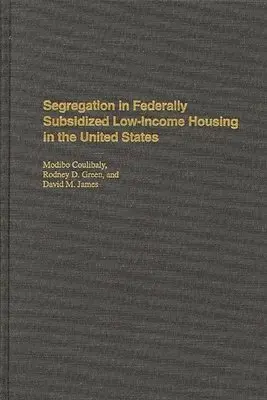
Earlier studies of subsidized housing assume that segregation is a manifestation of white prejudice, and that the Fair Housing Act of 1968 would significantly remedy inequalities in housing and, in the process, narrow the socioeconomic gap between racial groups. This book argues, on the contrary, that segregation by race and income has been an integral part of federal housing policy from its inception and that white prejudice merely obscures the federal government's role in maintaining segregation.Despite formal claims of providing decent, safe, and sanitary housing for the poor, the authors show how federal low-income housing programs have been used as instruments of urban renewal while doing little to realize their formal goals. The authors use a historical and statistical review of federally subsidized low-rent housing to demonstrate their thesis.
E-bok
PDF, Engelska, 19911 135 kr
Läs direkt efter köp
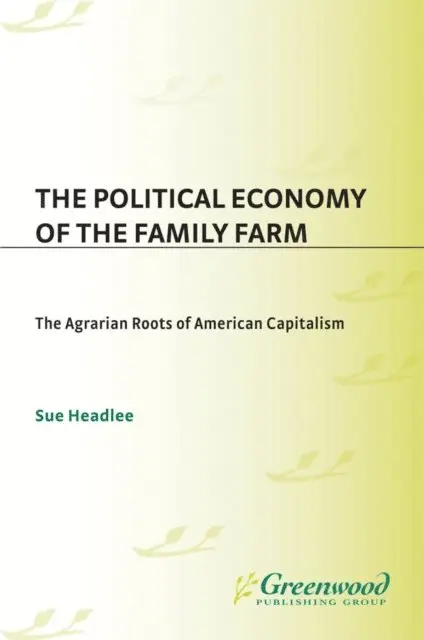
Agriculture played an important role in the transition to capitalism in the United States in the mid-nineteenth century. In her study, Sue Headlee argues that the family farm system, with its progressive nature and egalitarian class structure, revolutionized this transition to capitalism. The family farm is examined in light of its economic and political implications, showing the relationship between the family farm and fledgling industrial capitalism, a relationship that fostered the simultaneous industrial and agricultural revolutions and the creation of an agro-industrial complex. Headlee focuses on the adoption of the horse-drawn mechanical reaper (to harvest wheat) by family farmers in the 1850s. The neoclassical economic explanation, with its emphasis on the farm as a profit-maximizing firm, is criticized for its lack of recognition of the role of the family farm's egalitarian class structure. This look at the economic history of the United States has lessons for the Third World today: agricultural development is vital to the transition to capitalism; the agrarian class structures of Third World countries may be holding back that transition; and a family farm/land reform approach would lead to increases in productivity and in the material well-being of society.Headlee's analysis supports three important debates in political economy, thus providing the historical and theoretical context for understanding the role of agriculture in the transition to capitalism in general and in the particular case of the United States. Her findings conclude that agrarian class structures can explain the differential patterns of development in pre-industrial Europe. Further evidence is presented that the internal class structure of agrarian society is the crucial causal factor in the transition to capitalism and that market developments alone are not sufficient. Lastly and most controversially, Headlee acknowledges the importance of the Civil War in propelling the triumph of American capitalism, allowing the Republican Party (an alliance of family farmers and industrial capitalists) to take control of the state from the Democratic Party of the southern plantation owners. This book will be of interest to scholars in political economy, economic history, agrarian economics, and development economics.