SpringerBriefs in Cybersecurity – serie
Visar alla böcker i serien SpringerBriefs in Cybersecurity. Handla med fri frakt och snabb leverans.
20 produkter
20 produkter
Häftad, Engelska, 2012
500 kr
Skickas inom 10-15 vardagar
Within the last decade, the Internet has developed as a phenomenon encompassing social, cultural, economic and legal facets. It has become common practice to use the Internet for both the retrieval and provision of information, with the result that the Internet has become a valuable tool in everyday life. Many Internet participants are unaware that they leave data tracks on every website they pass; surfing on the World Wide Web is far from being an anonymous activity of no consequence.In recent years a number of networking techniques have been initiated in order to accommodate the netizen’s wish for anonymous communication and the protection of their privacy in the online world. Anonymization explores the legal framework developed to help protect netizens’ privacy and their wish for anonymous communication over the Internet. It debates the value in helping to protect anonymity over a network which sees an increasing number of cybercrimes, and explores governmental interventions into anonymity requests, and whether requests should only be legal if a sufficiently legitimized public interest is given.
Häftad, Engelska, 2013
500 kr
Skickas inom 10-15 vardagar
Much debate has been given as to whether computer security is improved through the full disclosure of security vulnerabilities versus keeping the problems private and unspoken. Although there is still tension between those who feel strongly about the subject, a middle ground of responsible disclosure seems to have emerged. Unfortunately, just as we’ve moved into an era with more responsible disclosure, it would seem that a market has emerged for security vulnerabilities and zero day exploits. Disclosure of Security Vulnerabilities: Legal and Ethical Issues considers both the ethical and legal issues involved with the disclosure of vulnerabilities and explores the ways in which law might respond to these challenges.
Häftad, Engelska, 2013
559 kr
Skickas inom 10-15 vardagar
Malware poses one of the major threats to all currently operated computer systems. The scale of the problem becomes obvious by looking at the global economic loss caused by different kinds of malware, which is estimated to be more than US$ 10 billion every year. Botnets, a special kind of malware, are used to reap economic gains by criminals as well as for politically motivated activities. In contrast to other kinds of malware, botnets utilize a hidden communication channel to receive commands from their operator and communicate their current status. The ability to execute almost arbitrary commands on the infected machines makes botnets a general-purpose tool to perform malicious cyber-activities.Botnets provides a comprehensive analysis of the topic, and comprises both technical and non-technical sections written by leading cybersecurity experts.The non-technical section addresses how botnet infrastructure could be exploited for national security and cybercrime purposes. It approaches the subject as a public policy issue and analyzes the phenomenon of botnets from national security, law enforcement and regulatory policy perspectives, and makes recommendations for policy-makers on different public policies, highlighting the need for international response mechanisms.The technical section provides insight into current botnet techniques and discusses state-of-the-art countermeasures to combat the botnet threat in detail. It includes new detection methods as well as different approaches to actively compromise running botnets.
Häftad, Engelska, 2013
543 kr
Skickas inom 10-15 vardagar
Data Security Breaches and Privacy in Europe aims to consider data protection and cybersecurity issues; more specifically, it aims to provide a fruitful discussion on data security breaches. A detailed analysis of the European Data Protection framework will be examined. In particular, the Data Protection Directive 95/45/EC, the Directive on Privacy and Electronic Communications and the proposed changes under the Data Protection Regulation (data breach notifications) and its implications are considered. This is followed by an examination of the Directive on Attacks against information systems and a discussion of the proposed Cybersecurity Directive, considering its shortcomings and its effects. The author concludes by looking at whether a balance can be drawn by the current and proposed Data Protection framework to protect against data security breaches and considers what more needs to be achieved.
Häftad, Engelska, 2014
500 kr
Skickas inom 10-15 vardagar
With the increasing availability of electronic services, security and a reliable means by which identity is verified is essential.Written by Norberto Andrade the first chapter of this book provides an overview of the main legal and regulatory aspects regarding electronic identity in Europe and assesses the importance of electronic identity for administration (public), business (private) and, above all, citizens. It also highlights the role of eID as a key enabler of the economy.In the second chapter Lisha Chen-Wilson, David Argles, Michele Schiano di Zenise and Gary Wills discuss the user-centric eCertificate system aimed at supporting the eID system.Electronic Identity is essential reading for researchers, lawyers, policy makers, technologists and anyone wishing to understand the challenges of a pan-European eID.
Häftad, Engelska, 2014
500 kr
Skickas inom 10-15 vardagar
Securing privacy in the current environment is one of the great challenges of today’s democracies. Privacy vs. Security explores the issues of privacy and security and their complicated interplay, from a legal and a technical point of view. Sophie Stalla-Bourdillon provides a thorough account of the legal underpinnings of the European approach to privacy and examines their implementation through privacy, data protection and data retention laws. Joshua Philips and Mark D. Ryan focus on the technological aspects of privacy, in particular, on today’s attacks on privacy by the simple use of today’s technology, like web services and e-payment technologies and by State-level surveillance activities.
Häftad, Engelska, 2015
500 kr
Skickas inom 10-15 vardagar
This book on smart grid security is meant for a broad audience from managers to technical experts. It highlights security challenges that are faced in the smart grid as we widely deploy it across the landscape. It starts with a brief overview of the smart grid and then discusses some of the reported attacks on the grid. It covers network threats, cyber physical threats, smart metering threats, as well as privacy issues in the smart grid. Along with the threats the book discusses the means to improve smart grid security and the standards that are emerging in the field. The second part of the book discusses the legal issues in smart grid implementations, particularly from a privacy (EU data protection) point of view.
Häftad, Engelska, 2019
598 kr
Skickas inom 10-15 vardagar
This book describes the methodologies and tools used to conduct social cyber forensic analysis. By applying these methodologies and tools on various events observed in the case studies contained within, their effectiveness is highlighted. They blend computational social network analysis and cyber forensic concepts and tools in order to identify and study information competitors. Through cyber forensic analysis, metadata associated with propaganda-riddled websites are extracted. This metadata assists in extracting social network information such as friends and followers along with communication network information such as networks depicting flows of information among the actors such as tweets, replies, retweets, mentions, and hyperlinks. Through computational social network analysis, the authors identify influential actors and powerful groups coordinating the disinformation campaign. A blended social cyber forensic approach allows them to study cross-media affiliations of the information competitors. For instance, narratives are framed on blogs and YouTube videos, and then Twitter and Reddit, for instance, will be used to disseminate the message. Social cyber forensic methodologies enable researchers to study the role of modern information and communication technologies (ICTs) in the evolution of information campaign and coordination.In addition to the concepts and methodologies pertaining to social cyber forensics, this book also offers a collection of resources for readers including several datasets that were collected during case studies, up-to-date reference and literature surveys in the domain, and a suite of tools that students, researchers, and practitioners alike can utilize. Most importantly, the book demands a dialogue between information science researchers, public affairs officers, and policy makers to prepare our society to deal with the lawless “wild west” of modern social information systems triggering debates and studies on cyberdiplomacy.
Häftad, Engelska, 2019
549 kr
Skickas inom 10-15 vardagar
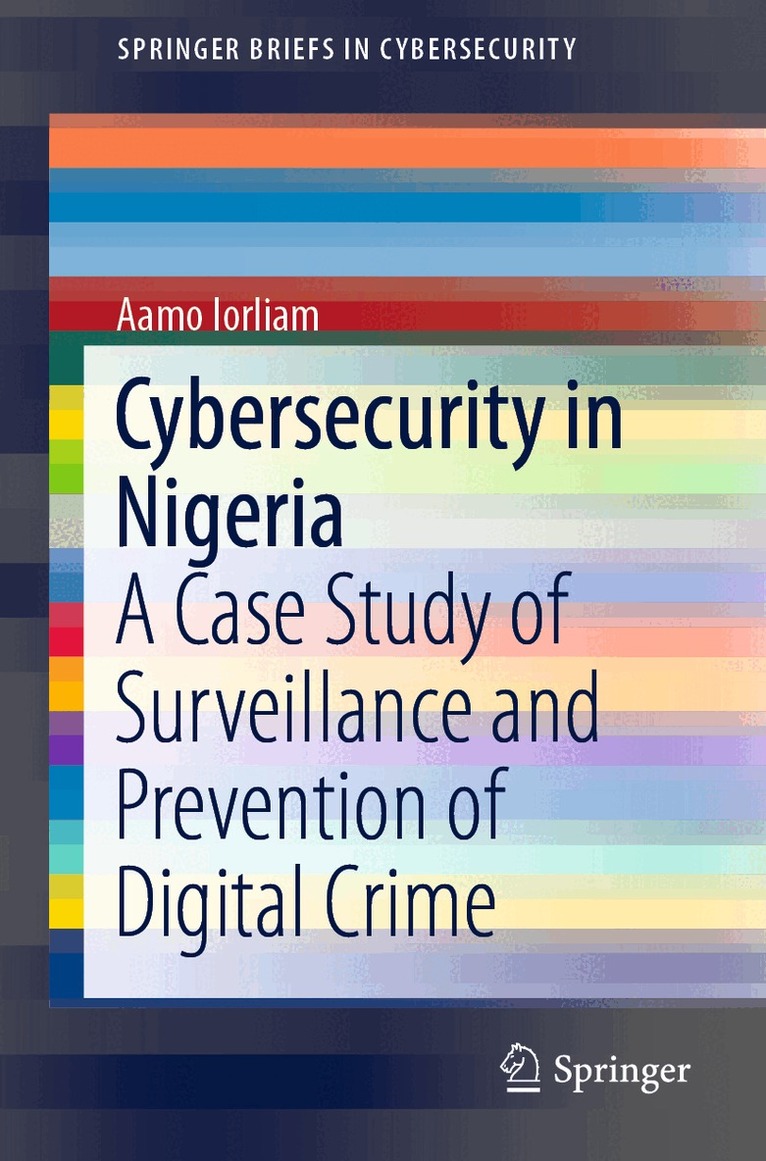
This book reviews the use of digital surveillance for detecting, investigating and interpreting fraud associated with critical cyberinfrastructures in Nigeria, as it is well known that the country’s cyberspace and cyberinfrastructures are very porous, leaving too much room for cyber-attackers to freely operate. In 2017, there were 3,500 successful cyber-attacks on Nigerian cyberspace, which led to the country losing an estimated 450 million dollars. These cybercrimes are hampering Nigeria’s digital economy, and also help to explain why many Nigerians remain skeptical about Internet marketing and online transactions. If sensitive conversations using digital devices are not well monitored, Nigeria will be vulnerable to cyber-warfare, and its digital economy, military intelligence, and related sensitive industries will also suffer. The Nigerian Army Cyber Warfare Command was established in 2018 in order to combat terrorism, banditry, and other attacks by criminal groups in Nigeria. However, there remains an urgent need to produce digital surveillance software to help law enforcement agencies in Nigeria to detect and prevent these digitally facilitated crimes. The monitoring of Nigeria’s cyberspace and cyberinfrastructure has become imperative, given that the rate of criminal activities using technology has increased tremendously. In this regard, digital surveillance includes both passive forensic investigations (where an attack has already occurred) and active forensic investigations (real-time investigations that track attackers). In addition to reviewing the latest mobile device forensics, this book covers natural laws (Benford’s Law and Zipf’s Law) for network traffic analysis, mobile forensic tools, and digital surveillance software (e.g., A-BOT). It offers valuable insights into how digital surveillance software can be used to detect and prevent digitally facilitated crimes in Nigeria, andhighlights the benefits of adopting digital surveillance software in Nigeria and other countries facing the same issues.
Häftad, Engelska, 2021
697 kr
Skickas inom 10-15 vardagar
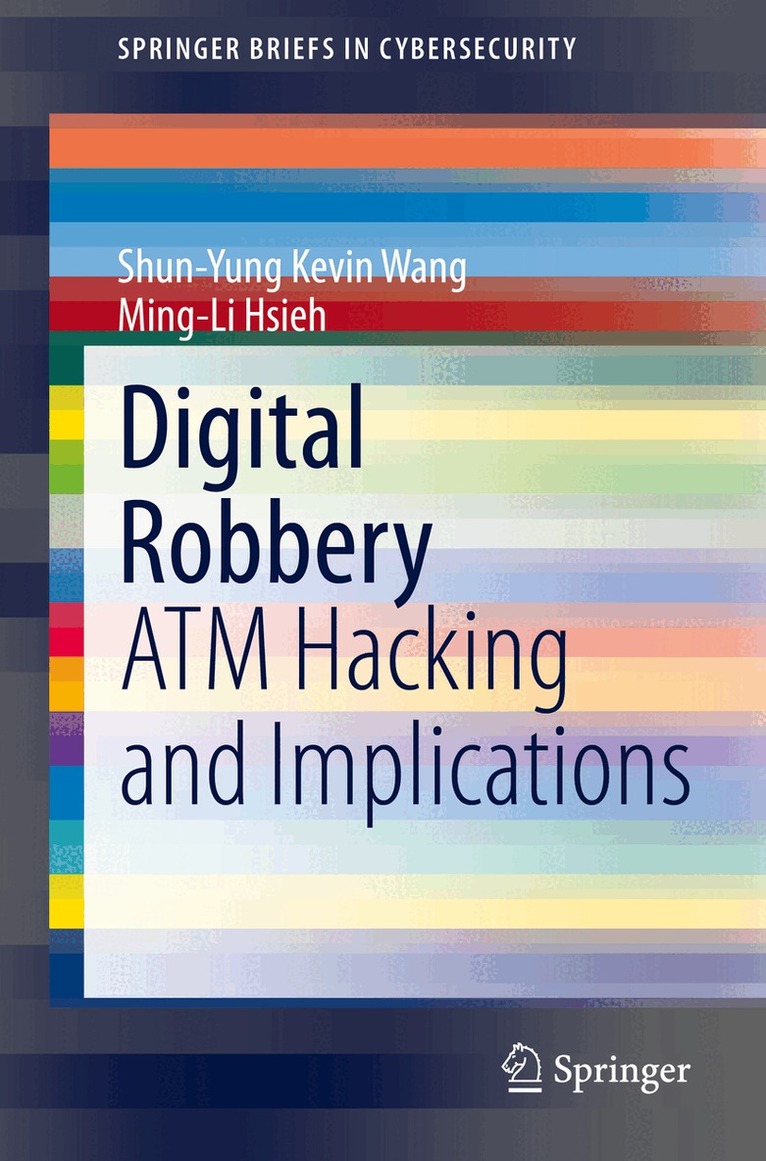
This book begins with a broader discussion of cybercrime and attacks targeting ATMs and then focuses on a specific type of cybercrime named “ATM Hacking.” It discusses ATM Hacking from a more full scope of aspects, including technology, modus operandi, law enforcement, socio-economic and geopolitical context, and theory development. After unpacking a classic case of ATM Hacking and its modus operandi, implications for cybersecurity and prevention, intra- and inter-agency collaboration, and theory development are presented.This book also demonstrates the analysis of extensive qualitative data collected from a high-profile case in which European criminal group hacked into a London voice mail server belonging to a Taiwanese financial institution – First Commercial Bank,. Then it programmed dozens of ATMs to “spit out” millions of dollars of cash. The successful crackdown on this type of crime is rare, if not unique, while the number of similar crimes has increased enormously in recent years and the trend seem to continue unabatingly. Further, the implications go beyond a country or a continent. Intra- and inter-agency collaboration among players of law enforcement is essential to the case especially in the police context of “turf jealousies.”The authors seek to document the ways in which agencies collaborate, as well as the perceived benefits and challenges of cooperation. Whether the broader political and contextual climates in which these agencies operate, limit the extent to which they can cooperate.This book is useful as a reference for researchers and professionals working in the area of cybercrime and cybersecurity. University professors can also use this book as a case study for senior seminars or graduate courses.
Häftad, Engelska, 2022
490 kr
Skickas inom 10-15 vardagar
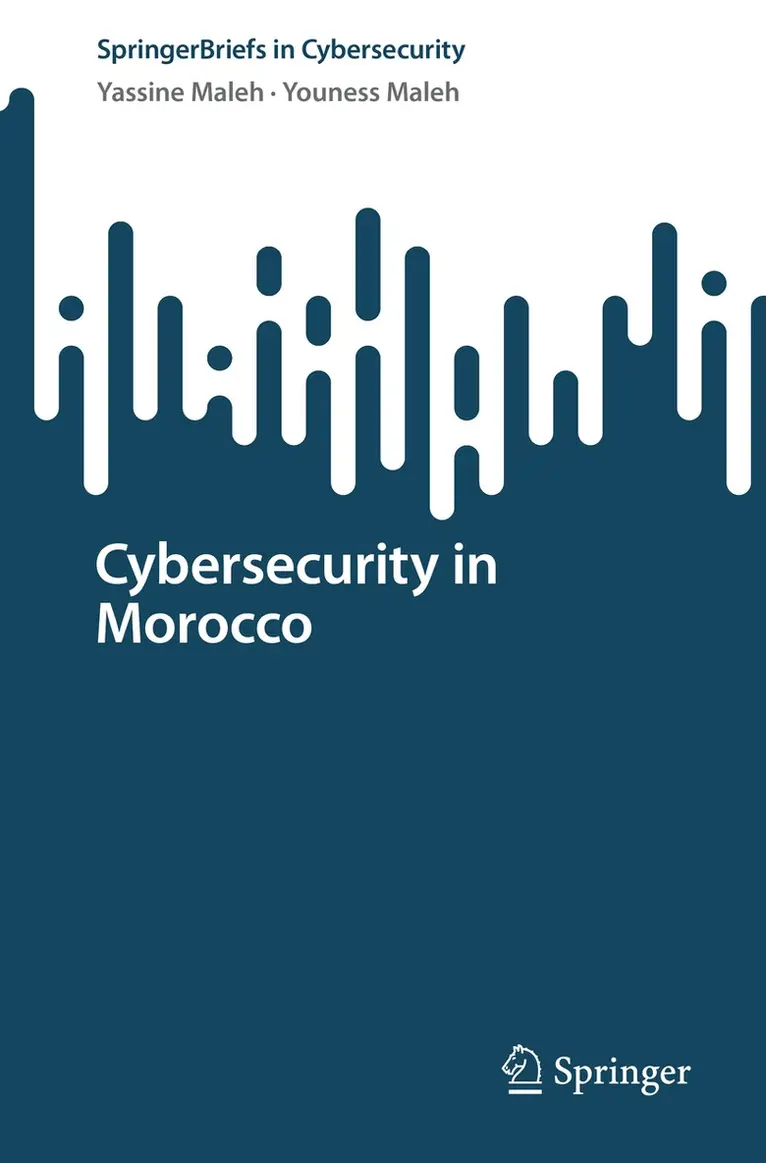
This SpringerBrief contains eight chapters and presents an overview of the evolution of the Moroccan Cybersecurity Strategy. It also draws attention to the development of cybersecurity in Morocco and to ensure national security in the context of the current and developing information confrontation in the international community. However, it cannot promise to provide an in-depth examination. The issue of cybersecurity is simply too wide-ranging for our purposes. This acknowledgment is meant to encourage more detailed research into the broader topics covered in this brief to better inform current approaches to national cybersecurity performance evaluation.This SpringerBrief targets researchers interested in exploring and understanding Morocco and its efforts in implementing its national cybersecurity strategy. This brief is also a relevant reference for diplomats, executives, CISOs, cybersecurity professionals and engineers working in this related field.
Häftad, Engelska, 2024
559 kr
Skickas inom 10-15 vardagar
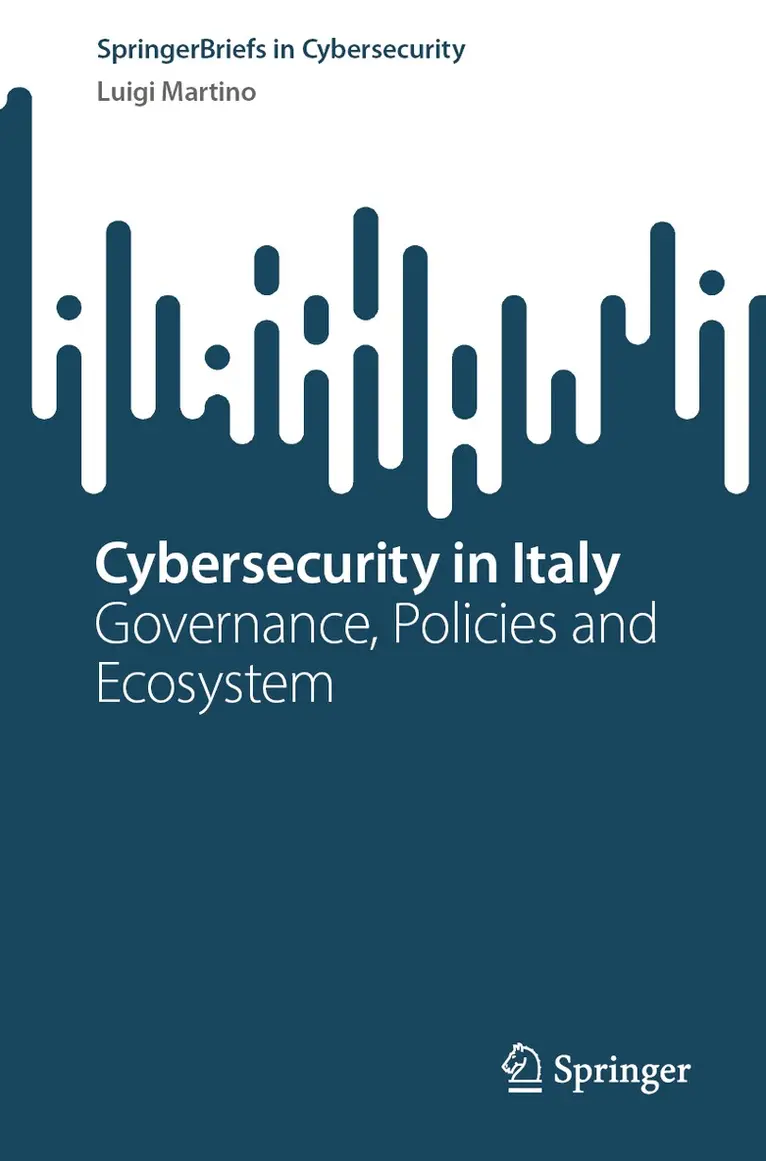
This book presents a detailed and innovative analysis of the governance, policies and ecosystem that define the Italian cybersecurity posture. It explores the complex interplay between technology and policy in shaping national security strategies in the digital era. The author introduces the reader to the critical importance of a policy-driven approach to cyber security, highlighting the challenges and necessary evolution prompted by rapid technological advancements and the expanding relevance of cyberspace. It emphasizes the multifaceted nature of cyber security that extends beyond technological solutions to encompass a broad socio-political analytical framework. The author also illustrates the need for an integrated approach that includes policies development, stakeholder engagement and strategic national objectives.This book delves into the organizational structure and dynamics of Italian national cybersecurity ecosystem, while shedding light on the collaborative interactions among different actors within this complex field. It meticulously outlines the roles and responsibilities of public, private and civil sectors in enhancing Italy’s cyber resilience. Key developments such as the establishment of the National Cybersecurity Agency and the formulation of strategic objectives to safeguard national cyber perimeter are critically examined. This examination not only reflects on the strategies employed but also on the challenges and achievements in fostering a robust cyber security environment able to respond to both current and emerging threats. Through a blend of theoretical insights and practical case studies, supplemented by more than 30 semi-structured interviewees. This book also offers a comprehensive overview of efforts implemented by Italy in 10 years of policy making experience with the aim to structure the appropriate cyber security national institutional architecture. It provides valuable perspectives on the effectiveness of these policies, the ongoing adjustments required to address the fluid nature of cyber threats, and the implications of these efforts on both national and international scales.Upper-under graduate level and graduate level students in computer science or students interested in cybersecurity will want to purchase this book as a study guide. Researchers working in cybersecurity as well as Policy Makers, Legislators, Decision Makers and CISO will also want to purchase this book as a reference book.
Häftad, Engelska, 2025
500 kr
Skickas inom 10-15 vardagar
This work examines the most pressing and contentious issues in cybercrime currently facing the China and Vietnam, and how best to tackle them. The text sets the context for how blocs of nations (including the least ready, the most ready, and those occupying a central position in terms of cybercrime readiness) react to the evolving challenges of cybercrime, with a focus on prevention and control. In this way, the work discusses why certain blocs of nations in the Asia-Pacific region are not at an optimal level of cybercrime readiness despite the rapid pace of technological advancement in this region, and how such nations can become regional leaders in cybercrime readiness.
Häftad, Engelska, 2025
504 kr
Skickas inom 10-15 vardagar
This book explores the most common generative AI (GenAI) tools and techniques used by malicious actors for hacking and cyber-deception, along with the security risks of large language models (LLMs). It also covers how LLM deployment and use can be secured, and how generative AI can be utilized in SOC automation.The rapid advancements and growing variety of publicly available generative AI tools enables cybersecurity use cases for threat modeling, security awareness support, web application scanning, actionable insights, and alert fatigue prevention. However, they also came with a steep rise in the number of offensive/rogue/malicious generative AI applications. With large language models, social engineering tactics can reach new heights in the efficiency of phishing campaigns and cyber-deception via synthetic media generation (misleading deepfake images and videos, faceswapping, morphs, and voice clones). The result is a new era of cybersecurity that necessitates innovative approaches to detect and mitigate sophisticated cyberattacks, and to prevent hyper-realistic cyber-deception.This work provides a starting point for researchers and students diving into malicious chatbot use, system administrators trying to harden the security of GenAI deployments, and organizations prone to sensitive data leak through shadow AI. It also benefits SOC analysts considering generative AI for partially automating incident detection and response, and GenAI vendors working on security guardrails against malicious prompting.
Häftad, Engelska, 2014
500 kr
Skickas inom 10-15 vardagar
Gives the reader a detailed account of how cyber-security in Switzerland has evolved over the years, using official documents and a considerable amount of inside knowledge. It focuses on key ideas, institutional arrangements, on the publication of strategy papers, and importantly, on processes leading up to these strategy documents.The peculiarities of the Swiss political system, which influence the way cyber-security can be designed and practiced in Switzerland are considered, as well as the bigger, global influences and driving factors that shaped the Swiss approach to cyber-security. It shows that throughout the years, the most important influence on the Swiss policy-approach was the international level, or rather the developments of a cyber-security policy in other states. Even though many of the basic ideas about information-sharing and public-private partnerships were influenced by (amongst others) the US approach to critical infrastructure protection, the peculiarities of the Swiss political system has led to a particular “Swiss solution”, which is based on the federalist structures and subsidiary principles, characterized by stability and resilience to external shocks in the form of cyber-incidents.Cybersecurity in Switzerland will be a stimulating read for anybody interested in cyber-security policy, including students, researchers, analysts and policy makers. It contains not only specific material on an interesting case, but also a wealth ofbackground information on different variations of cyber-security, as well as on information-sharing and public-private partnerships.
Häftad, Engelska, 2015
543 kr
Skickas inom 10-15 vardagar
The ever increasing use of computers, networks and the Internet has led to the need for regulation in the fields of cybercrime, cybersecurity and national security. This SpringerBrief provides insights into the development of self- and co-regulatory approaches to cybercrime and cybersecurity in the multi-stakeholder environment. It highlights the differences concerning the ecosystem of stakeholders involved in each area and covers government supported initiatives to motivate industry to adopt self-regulation. Including a review of the drawbacks of existing forms of public-private collaboration, which can be attributed to a specific area (cybercrime, cybersecurity and national security), it provides some suggestions with regard to the way forward in self- and co-regulation in securing cyberspace.
Häftad, Engelska, 2015
543 kr
Skickas inom 10-15 vardagar
This SpringerBrief gives the reader a detailed account of how cybersecurity in Israel has evolved over the past two decades. The formation of the regions cybersecurity strategy is explored and an in-depth analysis of key developments in cybersecurity policy is provided.The authors examine cybersecurity from an integrative national perspective and see it as a set of policies and actions with two interconnected goals: to mitigate security risks and increase resilience and leverage opportunities enabled by cyber-space.Chapters include an insight into the planning and implementation of the National Security Concept strategy which facilitated the Critical Infrastructure Protection (CIP) agreement in 2002, (one of the first of its kind), the foundation of the Israeli Cyber-strategy in 2011, and details of the current steps being taken to establish a National Cyber Security Authority (NCSA).Cybersecurity in Israel will be essential reading for anybody interestedin cyber-security policy, including students, researchers, analysts and policy makers alike.
Häftad, Engelska, 2017
559 kr
Skickas inom 10-15 vardagar
This Brief presents the overarching framework in which each nation is developing its own cyber-security policy, and the unique position adopted by France. Modern informational crises have penetrated most societal arenas, from healthcare, politics, economics to the conduct of business and welfare. Witnessing a convergence between information warfare and the use of “fake news”, info-destabilization, cognitive warfare and cyberwar, this book brings a unique perspective on modern cyberwarfare campaigns, escalation and de-escalation of cyber-conflicts.As organizations are more and more dependent on information for the continuity and stability of their operations, they also become more vulnerable to cyber-destabilization, either genuine, or deliberate for the purpose of gaining geopolitical advantage, waging wars, conducting intellectual theft and a wide range of crimes. Subsequently, the regulation of cyberspace has grown into an international effort where public, private and sovereign interests often collide. By analyzing the particular case of France national strategy and capabilities, the authors investigate the difficulty of obtaining a global agreement on the regulation of cyber-warfare. A review of the motives for disagreement between parties suggests that the current regulation framework is not adapted to the current technological change in the cybersecurity domain. This book suggests a paradigm shift in handling and anchoring cyber-regulation into a new realm of behavioral and cognitive sciences, and their application to machine learning and cyber-defense.
Häftad, Engelska, 2018
746 kr
Skickas inom 10-15 vardagar
This book offers the first benchmarking study of China’s response to the problems of security in cyber space. There are several useful descriptive books on cyber security policy in China published between 2010 and 2016. As a result, we know quite well the system for managing cyber security in China, and the history of policy responses. What we don’t know so well, and where this book is useful, is how capable China has become in this domain relative to the rest of the world. This book is a health check, a report card, on China’s cyber security system in the face of escalating threats from criminal gangs and hostile states. The book also offers an assessment of the effectiveness of China’s efforts. It lays out the major gaps and shortcomings in China’s cyber security policy. It is the first book to base itself around an assessment of China’s cyber industrial complex, concluding that China does not yet have one. As Xi Jinping said in July 2016, the country’s core technologies are dominated by foreigners.
Häftad, Engelska, 2018
597 kr
Skickas inom 10-15 vardagar
In 2016, Germany's government presented its third cybersecurity strategy, which aims to strengthen the national cyber defence architecture, cooperation between the state and industry, and individual users’ agency. For many years, Germany has followed/adopted a preventive and engineering approach to cybersecurity, which emphasizes technological control of security threats in cyberspace over political, diplomatic and military approaches. Accordingly, the technically oriented Federal Office for Information Security (BSI) has played a leading role in Germany’s national cybersecurity architecture. Only in 2016 did the military expand and reorganize its cyber defence capabilities. Moreover, cybersecurity is inextricably linked to data protection, which is particularly emphasised in Germany and has gained high public attention since Edward Snowden’s revelations.On the basis of official documents and their insights from many years of experience in cybersecurity policy, the two authorsdescribe cyber security in Germany in the light of these German peculiarities. They explain the public perception of cybersecurity, its strong link with data protection in Germany, the evolution of Germany's cybersecurity strategies, and the current organisation of cybersecurity across the government and industry. The Brief takes stock of past developments and works out the present and future gaps and priorities in Germany’s cybersecurity policy and strategy, which will be decisive for Germany’s political role in Europe and beyond. This includes the cybersecurity priorities formulated by the current German government which took office in the spring of 2018.